Visualise Science: Physics, Chemistry, Biology Explained by Voice
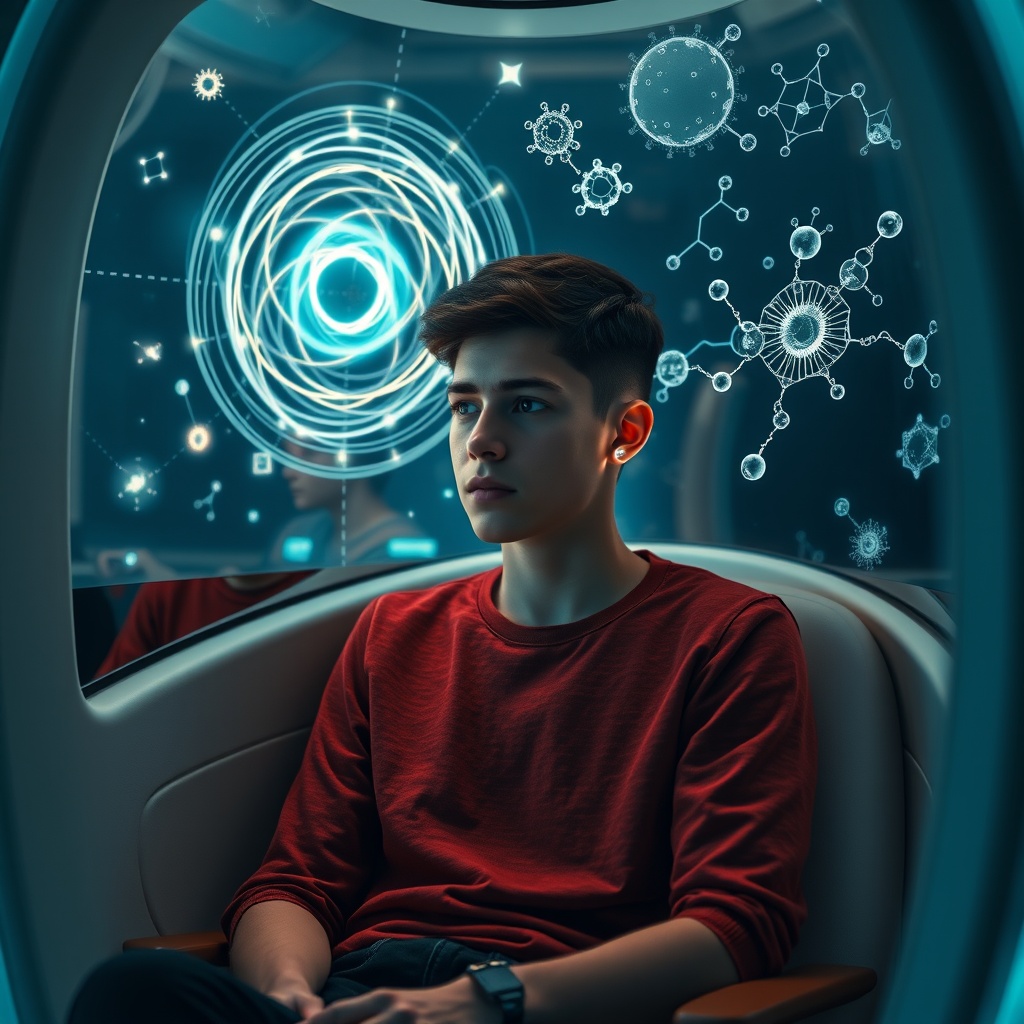
For many students, understanding how an electron orbits a nucleus or how a plant photosynthesizes feels like trying to describe a colour to someone who has never seen it. Textbooks explain the "what," but visualizing complex science concepts in Physics, Chemistry, and Biology often requires a clear, patient explanation that adapts to how a student thinks. Without that mental picture, concepts like molecular geometry or the intricate pathways of the human circulatory system remain abstract, leading to rote memorization rather than true comprehension.
Overview
For many students, understanding how an electron orbits a nucleus or how a plant photosynthesizes feels like trying to describe a colour to someone who has never seen it. Textbooks explain the "what," but visualizing complex science concepts in Physics, Chemistry, and Biology often requires a clear, patient explanation that adapts to how a student thinks. Without that mental picture, concepts like molecular geometry or the intricate pathways of the human circulatory system remain abstract, leading to rote memorization rather than true comprehension.
This struggle is particularly acute when grappling with topics like the Some Basic Concepts Of Chemistry Class 11 Notes or understanding intricate biological diagrams for CBSE exams. The traditional classroom often doesn't allow for repeated, personalised explanations until that "aha!" moment hits. YoLearn AI steps in here as a 24x7 personal AI tutor, bridging the gap between textbook descriptions and genuine conceptual understanding, especially for those who learn best by hearing explanations and seeing mental models built.
History & Background
Early digital learning tools for science often relied on static diagrams or pre-recorded videos, offering a single perspective on a concept. If a student didn't grasp the initial explanation of, say, projectile motion or the structure of a DNA helix, they were often left searching for alternative resources, sometimes piecing together disparate information from various websites without coherent guidance.
The evolution in educational technology moved towards interactive simulations, which provided some dynamic visualization but lacked the conversational element of a human tutor. The next significant shift, which YoLearn AI embodies, was integrating real-time voice-based AI. This allows students not just to see an animation, but to ask "why does it move like that?" or "explain the hydrogen bonding in water again, step-by-step," fostering a deeper, more personal explanatory experience.
Benefits
Applications
Future
The future of visualizing science concepts will likely integrate real-time augmented reality (AR) overlays within study apps. Imagine pointing your phone at a textbook diagram of the human heart, and the AR displays a beating 3D model, complete with blood flow animations and labels, while an AI voice tutor explains each chamber's function.
YoLearn AI is constantly evolving its capabilities, aiming to weave richer interactive visualization tools into its voice-based tutoring. Expect features that move beyond static images to dynamic, AI-generated visual aids that respond to voice queries, building directly on the strengths of its voice conversation engine. For students seeking to truly understand and visualize intricate science, from basic principles to advanced topics, start your journey today and Explore Science Easily with the YoLearn.ai CBSE Science Explainer App: https://play.google.com/store/apps/details?id=com.yolearn.student&hl=en_IN