Why Children Learn Faster from Whiteboard Explanations Than Textbooks
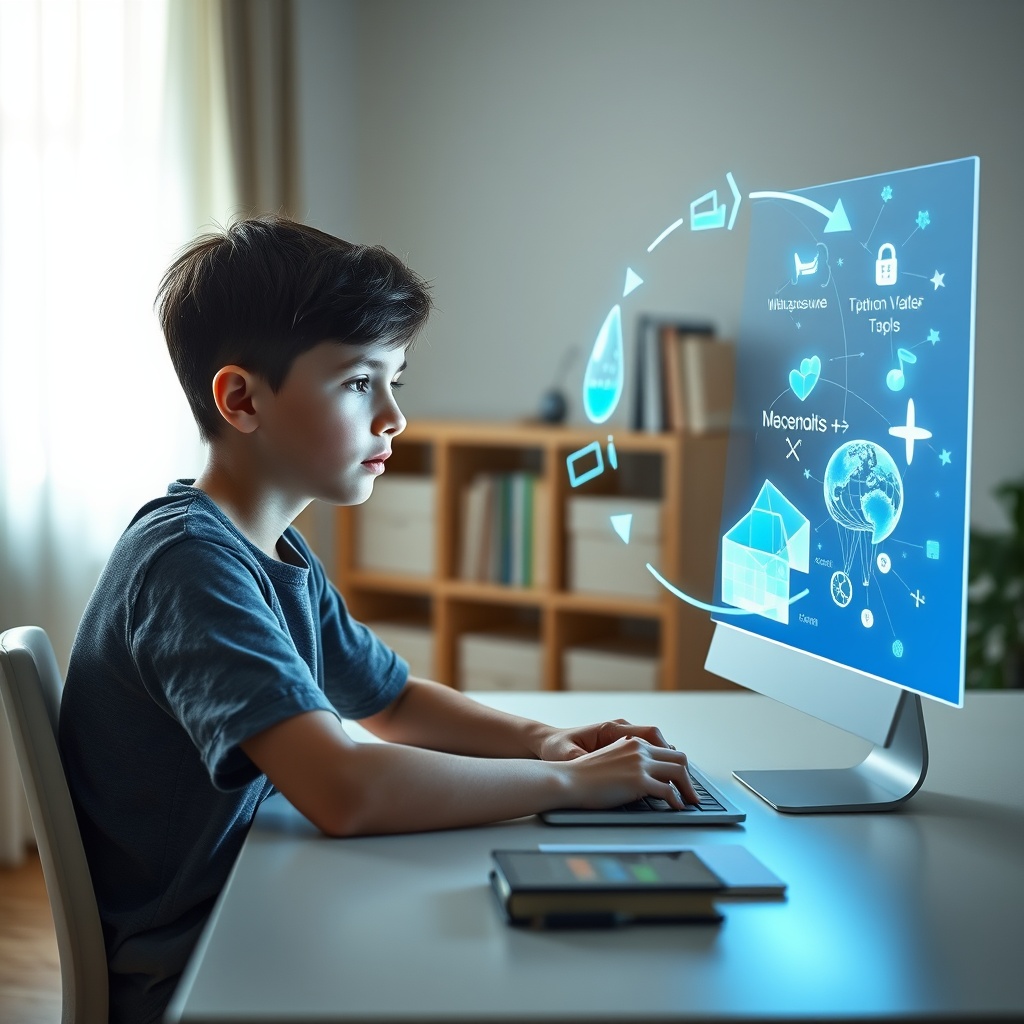
Imagine a Class 5 student staring at a dense paragraph explaining the water cycle in their science textbook. Words like "evaporation," "condensation," and "precipitation" might blur into jargon. Now, picture that same child watching a teacher draw a simple sun, clouds, and a river on a whiteboard, tracing an arrow from the river to the cloud while explaining evaporation. The immediate visual connection makes all the difference in *why children learn faster from a whiteboard explanation than a textbook paragraph*.
Overview
Imagine a Class 5 student staring at a dense paragraph explaining the water cycle in their science textbook. Words like "evaporation," "condensation," and "precipitation" might blur into jargon. Now, picture that same child watching a teacher draw a simple sun, clouds, and a river on a whiteboard, tracing an arrow from the river to the cloud while explaining evaporation. The immediate visual connection makes all the difference in *why children learn faster from a whiteboard explanation than a textbook paragraph*.
Textbooks, while essential for detailed information, often present concepts in a linear, static format that can overwhelm younger minds trying to grasp abstract ideas. The dynamic nature of a whiteboard explanation—where ideas build visually and verbally in real-time—caters directly to how children process new information. This blend of visual and auditory input is crucial, and it's a gap that a personal AI tutor like YoLearn.AI is designed to fill, offering explanations that adapt and clarify beyond static text.
History & Background
For centuries, education relied heavily on oral instruction and written texts. The introduction of blackboards, and later whiteboards, marked a significant pedagogical shift. This wasn't just about writing surfaces; it was about bringing dynamic visual representation directly into the classroom, allowing teachers to illustrate concepts like geometric shapes, the flow of a river, or even algebraic steps in real-time, making abstract ideas tangible.
The evolution continued with interactive whiteboards, integrating digital content and multimedia. This progression highlighted the enduring power of dynamic visuals over static text. Today, AI tutors like YoLearn.AI build on this legacy by offering instant, adaptable explanations that can generate diagrams, step-by-step breakdowns, and even voice-guided tutorials, effectively bringing a personalized, interactive "whiteboard" to every child's device, wherever they are learning.
Benefits
Applications
Future
The future of dynamic explanations for children will move towards AI tutors that can not only generate visuals but also adapt them based on real-time understanding of a child's unique cognitive processing, potentially incorporating elements of augmented reality to make concepts like planetary motion or molecular structures fully immersive.
YoLearn.AI is actively developing its capabilities to offer even richer, more interactive visual learning experiences. Imagine asking YoLearn.AI about the human circulatory system and seeing an animated, 3D model that you can interact with, all explained through voice. This direction aims to continually enhance how AI Explains Textbook Chapters: Your Best Study App, making learning not just easier but genuinely captivating. Start experiencing this dynamic way of learning for yourself: https://play.google.com/store/apps/details?id=com.yolearn.student&hl=en_IN