Nationalism in India
As you have seen, modern nationalism in Europe came to be associated with the formation of nation-states. It also meant a change in people's understanding of who they were, and what defined their identity and sense of belonging. New symbols and icons, new songs and ideas forged new links and redefined the boundaries of communities. In most countries the making of this new national identity was a long process. How did this consciousness emerge in India?
In India and as in many other colonies, the growth of modern nationalism is intimately connected to the anti-colonial movement. People began discovering their unity in the process of their struggle with colonialism. The sense of being oppressed under colonialism provided a shared bond that tied many different groups together. But each class and group felt the effects of colonialism differently, their experiences were varied, and their notions of freedom were not always the same. The Congress under Mahatma Gandhi tried to forge these groups together within one movement. But the unity did not emerge without conflict.
In an earlier textbook you have read about the growth of nationalism in India up to the first decade of the twentieth century. In this chapter we will pick up the story from the 1920s and study the Non-Cooperation and Civil Disobedience Movements. We will explore how the Congress sought to develop the national movement, how different social groups participated in the movement, and how nationalism captured the imagination of people.
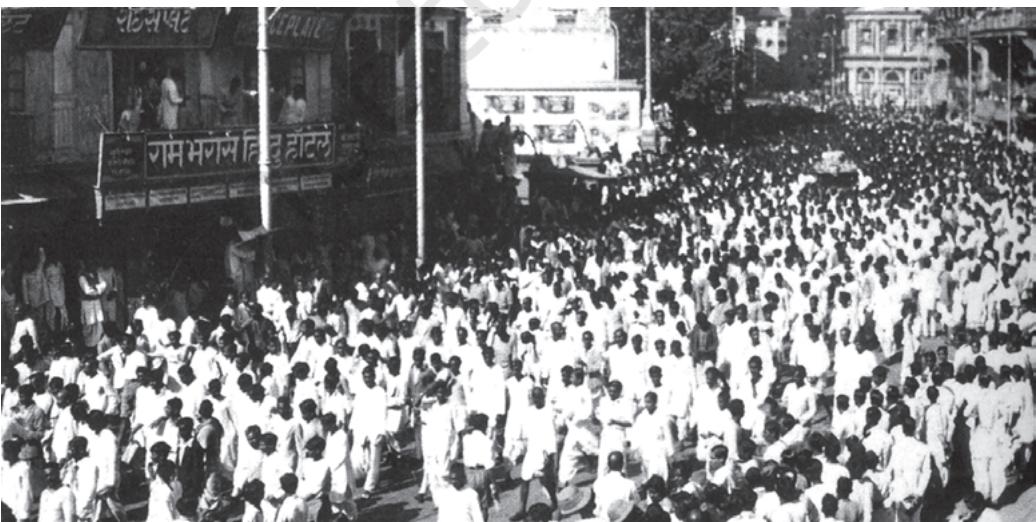
Fig. 1 - 6 April 1919. Mass processions on the streets became a common feature during the national movement.
The First World War, Khilafat and Non-Cooperation
In the years after 1919, we see the national movement spreading to new areas, incorporating new social groups, and developing new modes of struggle. How do we understand these developments? What implications did they have?
First of all, the war created a new economic and political situation. It led to a huge increase in defence expenditure which was financed by war loans and increasing taxes: customs duties were raised and income tax introduced. Through the war years prices increased – doubling between 1913 and 1918 – leading to extreme hardship for the common people. Villages were called upon to supply soldiers, and the forced recruitment in rural areas caused widespread anger. Then in 1918-19 and 1920-21, crops failed in many parts of India, resulting in acute shortages of food. This was accompanied by an influenza epidemic. According to the census of 1921, 12 to 13 million people perished as a result of famines and the epidemic.
People hoped that their hardships would end after the war was over. But that did not happen.
At this stage a new leader appeared and suggested a new mode of struggle.
1.1 The Idea of Satyagraha
Mahatma Gandhi returned to India in January 1915. As you know he had come from South Africa where he had successfully fought
New words
Forced recruitment—A process by which the colonial state forced people to join the army the racist regime with a novel method of mass agitation, which he called satyagraha. The idea of satyagraha emphasised the power of truth and the need to search for truth. It suggested that if the cause was true, if the struggle was against injustice, then physical force was not necessary to fight the oppressor. Without seeking vengeance or being aggressive, a satyagrahi could win the battle through nonviolence. This could be done by appealing to the conscience of the oppressor. People –including the oppressors –had to be persuaded to see the truth, instead of being forced to accept truth through the use of violence. By this struggle, truth was bound to ultimately triumph. Mahatma Gandhi believed that this dharma of non-violence could unite all Indians.
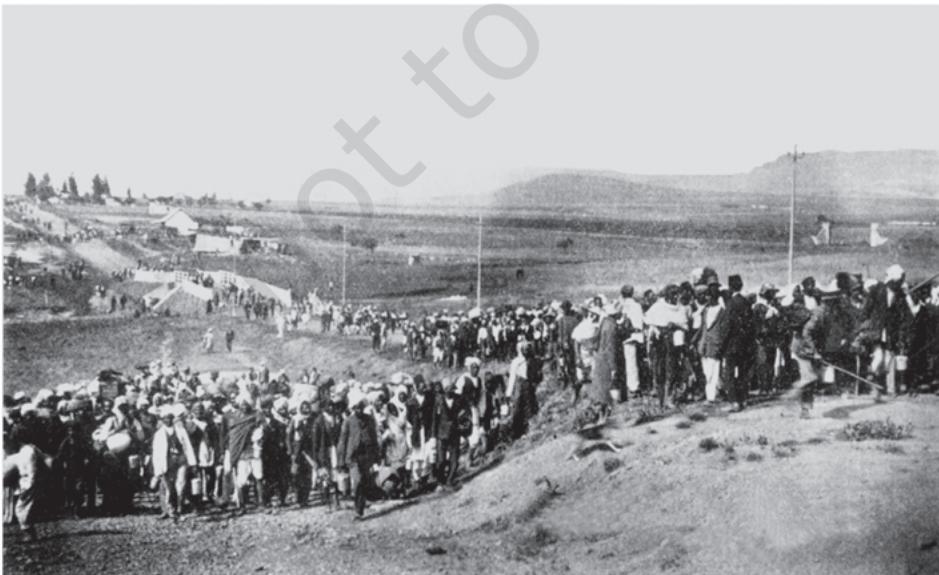
Fig. 2 – Indian workers in South Africa march through Volksrust, 6 November 1913. Mahatma Gandhi was leading the workers from Newcastle to Transvaal. When the marchers were stopped and Gandhi arrested, thousands of more workers joined the satyagraha against racist laws that denied rights to non-whites.
After arriving in India, Mahatma Gandhi successfully organised satyagraha movements in various places. In 1917 he travelled to Champaran in Bihar to inspire the peasants to struggle against the oppressive plantation system. Then in 1917, he organised a satyagraha to support the peasants of the Kheda district of Gujarat. Affected by crop failure and a plague epidemic, the peasants of Kheda could not pay the revenue, and were demanding that revenue collection be relaxed. In 1918, Mahatma Gandhi went to Ahmedabad to organise a satyagraha movement amongst cotton mill workers.
1.2 The Rowlatt Act
Emboldened with this success, Gandhiji in 1919 decided to launch a nationwide satyagraha against the proposed Rowlatt Act (1919). This Act had been hurriedly passed through the Imperial Legislative Council despite the united opposition of the Indian members. It gave the government enormous powers to repress political activities, and allowed detention of political prisoners without trial for two years. Mahatma Gandhi wanted non-violent civil disobedience against such unjust laws, which would start with a hartal on 6 April.
Rallies were organised in various cities, workers went on strike in railway workshops, and shops closed down. Alarmed by the popular upsurge, and scared that lines of communication such as the railways and telegraph would be disrupted, the British administration decided to clamp down on nationalists. Local leaders were picked up from Amritsar, and Mahatma Gandhi was barred from entering Delhi. On 10 April, the police in Amritsar fired upon a peaceful procession, provoking widespread attacks on banks, post offices and railway stations. Martial law was imposed and General Dyer took command.
Source A
Mahatma Gandhi on Satyagraha
'It is said of "passive resistance" that it is the weapon of the weak, but the power which is the subject of this article can be used only by the strong. This power is not passive resistance; indeed it calls for intense activity. The movement in South Africa was not passive but active
'Satyagraha is not physical force. A satyagrahi does not inflict pain on the adversary; he does not seek his destruction …. In the use of satyagraha, there is no ill-will whatever.
'Satyagraha is pure soul-force. Truth is the very substance of the soul. That is why this force is called satyagraha. The soul is informed with knowledge. In it burns the flame of love. …. Nonviolence is the supreme dharma …
'It is certain that India cannot rival Britain or Europe in force of arms. The British worship the war-god and they can all of them become, as they are becoming, bearers of arms. The hundreds of millions in India can never carry arms. They have made the religion of non-violence their own Source
Activity
Read the text carefully. What did Mahatma Gandhi mean when he said satyagraha is active resistance?
On 13 April the infamous Jallianwalla Bagh incident took place. On that day a large crowd gathered in the enclosed ground of Jallianwalla Bagh. Some came to protest against the government's new repressive measures. Others had come to attend the annual Baisakhi fair. Being from outside the city, many villagers were unaware of the martial law that had been imposed. Dyer entered the area, blocked the exit points, and opened fire on the crowd, killing hundreds. His object, as he declared later, was to 'produce a moral effect', to create in the minds of satyagrahis a feeling of terror and awe.
As the news of Jallianwalla Bagh spread, crowds took to the streets in many north Indian towns. There were strikes, clashes with the police and attacks on government buildings. The government responded with brutal repression, seeking to humiliate and terrorise people: satyagrahis were forced to rub their noses on the ground, crawl on the streets, and do salaam (salute) to all sahibs; people were flogged and villages (around Gujranwala in Punjab, now in Pakistan) were bombed. Seeing violence spread, Mahatma Gandhi called off the movement.
While the Rowlatt satyagraha had been a widespread movement, it was still limited mostly to cities and towns. Mahatma Gandhi now felt the need to launch a more broad-based movement in India. But he was certain that no such movement could be organised without bringing the Hindus and Muslims closer together. One way of doing this, he felt, was to take up the Khilafat issue. The First World War had ended with the defeat of Ottoman Turkey. And there were rumours that a harsh peace treaty was going to be imposed on the Ottoman emperor – the spiritual head of the Islamic world (the Khalifa). To defend the Khalifa's temporal powers, a Khilafat Committee was formed in Bombay in March 1919. A young generation of Muslim leaders like the brothers Muhammad Ali and Shaukat Ali, began discussing with Mahatma Gandhi about the possibility of a united mass action on the issue. Gandhiji saw this as an opportunity to bring Muslims under the umbrella of a unified national movement. At the Calcutta session of the Congress in September 1920, he convinced other leaders of the need to start a non-cooperation movement in support of Khilafat as well as for swaraj.
1.3 Why Non-cooperation?
In his famous book Hind Swaraj (1909) Mahatma Gandhi declared that British rule was established in India with the cooperation of
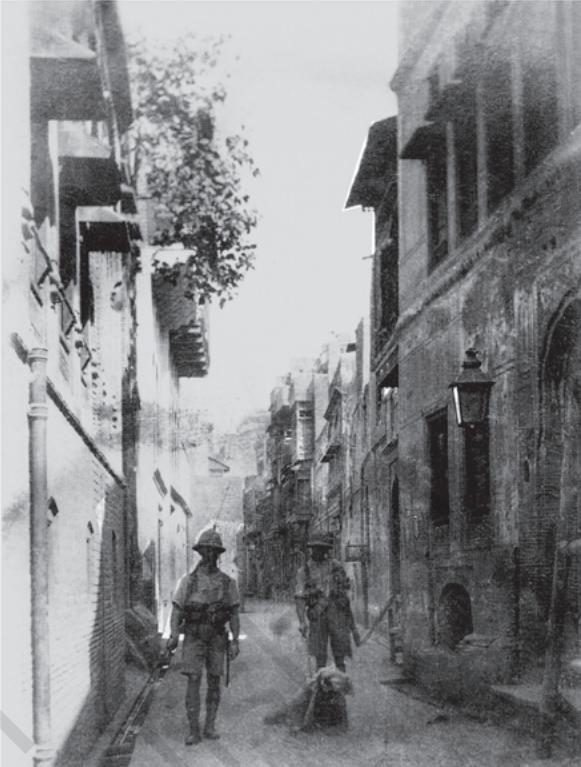
Fig. 3 - General Dyer's 'crawling orders' being administered by British soldiers, Amritsar, Punjab, 1919.
Indians, and had survived only because of this cooperation. If Indians refused to cooperate, British rule in India would collapse within a year, and swaraj would come.
How could non-cooperation become a movement? Gandhiji proposed that the movement should unfold in stages. It should begin with the surrender of titles that the government awarded, and a boycott of civil services, army, police, courts and legislative councils, schools, and foreign goods. Then, in case the government used repression, a full civil disobedience campaign would be launched. Through the summer of 1920 Mahatma Gandhi and Shaukat Ali toured extensively, mobilising popular support for the movement.
Many within the Congress were, however, concerned about the proposals. They were reluctant to boycott the council elections scheduled for November 1920, and they feared that the movement might lead to popular violence. In the months between September and December there was an intense tussle within the Congress. For a while there seemed no meeting point between the supporters and the opponents of the movement. Finally, at the Congress session at Nagpur in December 1920, a compromise was worked out and the Non-Cooperation programme was adopted.
How did the movement unfold? Who participated in it?