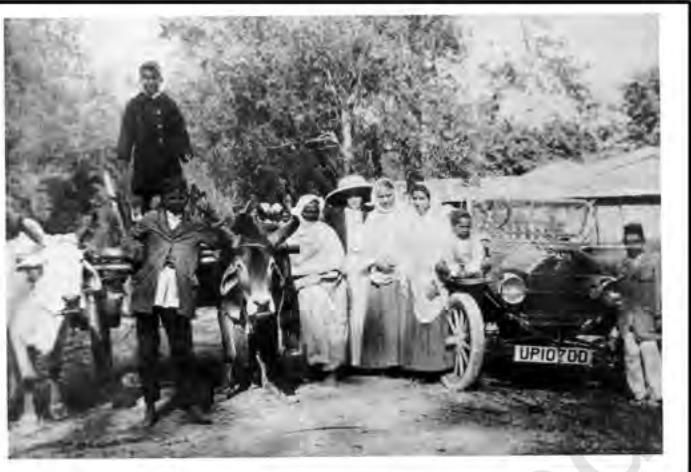
The first Ford T in Dehra Dun. The first ever bicycle in Dehra Dun was brought dismembered and packed in a box by Alfred Massey. Assembled, it caused such a flutter that he decided to bring the first Ford Model T to Massey's Garage. Ford News, January 11, 1980 retells the story: '1914: It was the first car the locals had ever seen...People came by train and bullock cart to see the car. A crowd went to the station to watch the "engine" with rubber tyres being unloaded. It took an hour to fit the wheels and open the hood. The huge packing case was bought by a hawker to serve as a shop. Some 14 men, women, and children climbed on the car and were given their first motor ride up to the family's garage'. Here, Sarah (next to the child) stands with her mother beside the car.
Cultural Change

We saw in the last chapter how colonialism brought in changes that altered the structure of Indian society. Industrialisation and urbanisation transformed the lives of people. Factories replaced fields as places of work for some. Cities replaced villages as places to live for many. Living and working arrangements or structures changed. Changes also took place in culture, ways of life, norms, values, fashions and even body language. Sociologists understand social structure as 'a continuing arrangement of persons in relationships defined or controlled by institutions' and 'culture' as 'socially established norms or patterns of behaviour'. You have already studied about the structural changes that colonialism brought about in Chapter 1. You will observe how important those structural changes are for understanding the cultural changes that this chapter seeks to understand.
This chapter looks at two related developments, both a complex product of the impact of colonial rule. The first deals with the deliberate and conscious efforts made by the $19^{\mathrm{th}}$ century social reformers and early $20^{\mathrm{th}}$ century nationalists to bring in changes in social practices that discriminated against women and 'lower' castes. The second with the less deliberate yet decisive changes in cultural practices that can broadly be understood as the four processes of sanskritisation, modernisation, secularisation and westernisation. Sanskritisation pre-dates the coming of colonial rule. The other three processes can be understood better as complex responses of the people of India to the changes that colonialism brought about.
2.1 SOCIAL REFORM MOVEMENTS IN THE 19TH AND EARLY 20TH CENTURY
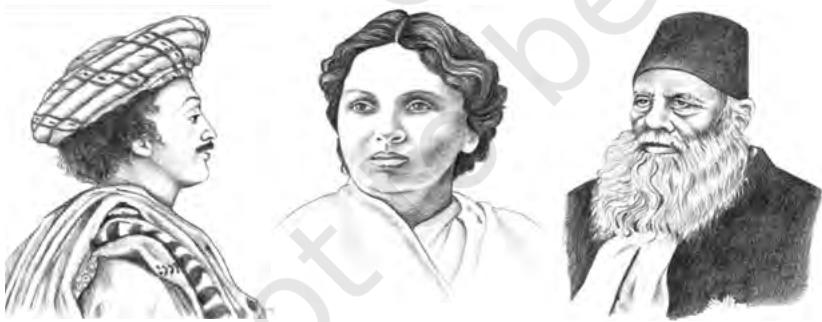
Raja Ram Mohun Roy Pandita Ramabai Sir Syed Ahmed Khan
You have already seen the far-reaching impact of colonialism on our lives. The social reform movements which emerged in India in the $19^{\mathrm{th}}$ century arose to the challenges that colonial Indian society faced. You probably are familiar with what were termed social evils that plagued Indian society. The well-known issues are that of sati, child marriage, ban on widow remarriage and caste discrimination. It is not that attempts were not made to fight social discrimination in pre-colonial India. They were central to Buddhism, Bhakti and Sufi movements. What marked these $19^{\mathrm{th}}$ century social reform attempts was the modern context and mix of ideas. It was a creative combination of modern ideas of western liberalism and a new look on traditional literature.
The mix of ideas
Raja Ram Mohun Roy attacked the practice of sati on the basis of both appeals to humanitarian and natural rights doctrines as well as Hindu shastras. Ranade's writings entitled The Texts of the Hindu Law on the Lawfulness of the Remarriage of Widows and Vedic Authorities for Widow Marriage elaborated the shastric sanction for remarriage of widows. The content of new education was modernising and liberal. The literary content of the courses in the humanities and social sciences was drawn from the literature of the European Renaissance, Reformation and Enlightenment. Its themes were humanistic, secular and liberal. Sir Syed Ahmed Khan's interpretation of Islam emphasised the validity of free enquiry (ijtihad) and the alleged similarities between Koranic revelations and the laws of nature discovered by modern science. Kandukuri Viresalingam's The Sources of Knowledge reflected his familiarity with navyanyaya logic. At the same time he translated the works of Julius Huxley, an eminent biologist.
Sociologist Satish Saberwal elaborates upon the modern context by sketching three aspects to the modern framework of change in colonial India:
- modes of communication
- forms of organisation, and
- the nature of ideas
New technologies speeded up various forms of communication. The printing press, telegraph, and later the microphone, movement of people and goods through steamship and railways helped quick movement of new ideas. Within India, social reformers from Punjab and Bengal exchanged ideas with reformers from Madras and Maharashtra. Keshav Chandra Sen of Bengal visited Madras in 1864. Pandita Ramabai travelled to different corners of the country. Some of them went to other countries. Christian missionaries reached remote corners of present day Nagaland, Mizoram and Meghalaya.
Modern social organisations like the Brahmo Samaj in Bengal and Arya Samaj in Punjab were set up. The All-India Muslim Ladies Conference (Anjuman-E-Khawatn-E-Islam) was founded in 1914. Indian reformers debated not just in public meetings but through public media like newspapers and journals. Translations of writings of social reformers from one Indian language to another took place. For instance, Vishnu Shastri published a Marathi translation of Vidyasagar's book in Indu Prakash in 1868.
New ideas of liberalism and freedom, new ideas of homemaking and marriage, new roles for mothers and daughters, new ideas of self-conscious pride in culture and tradition emerged. The value of education became very important. It was seen as very crucial for a nation to become modern but also
retain its ancient heritage. The idea of female education was debated intensely. Significantly, it was the social reformer Jotiba Phule who opened the first school for women in Pune. Reformers argued that for a society to progress women have to be educated. Some of them believed that in pre-modern India, women were educated. Others contested this on the grounds that this was so only of a privileged few. Thus attempts to justify female education were made by recourse to both modern and traditional ideas. They actively debated the meanings of tradition and modernity. Jotiba Phule thus recalled the glory of pre-Aryan age while others like Bal Gangadhar Tilak emphasised the glory of the Aryan period. In other words, $19^{\mathrm{th}}$ century reform initiated a period of
questioning, reinterpretations and both intellectual and social growth.
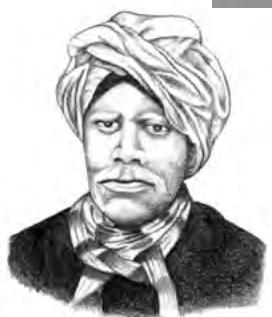
Viresalingam
ACTIVITY 2.1
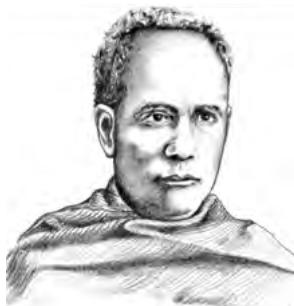
Vidyasagar
Find out about some of the social reformers mentioned below? What issues did they fight for? How did they conduct their campaign? Was there any opposition?
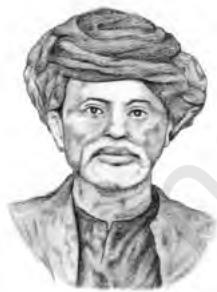
Jotiba Phule
The varied social reform movements did have common themes. Yet there were also significant differences. For some the concerns were confined to the problems that the upper caste, middle class women and men faced. For others the injustices suffered by the discriminated castes were central questions. For some social evils had emerged because of a decline of the true spirit of Hinduism. For others caste and gender oppression was intrinsic to the religion.
- Viresalingam
- Pandita Ramabai
- Vidyasagar
- Dayanand Saraswati
- Jyotiba Phule
- Sri Narayan Guru
- Sir Syed Ahmed Khan
- Any other
Likewise Muslim social reformers actively debated the meaning of polygamy and purdah. For example, a resolution against the evils of polygamy was proposed by Jahanara Shah Nawas at the All India Muslim Ladies Conference. She argued:
...the kind of polygamy which is practiced by certain sections of the Muslims is against the true spirit of the Quran..and it is the duty of the educated women to exercise their influence among the relations to put an end to this practice.
The resolution condemning polygamy caused considerable debate in the Muslim press. Tahsib-e-Niswan, the leading journal for women in the Punjab, came out in favour of the resolve, but others disapproved. (Chaudhuri 1993: 111). Debates within communities were common during this period. For instance, sati was opposed by the Brahmo Samaj. Orthodox members of the Hindu community in Bengal formed an organisation called Dharma Sabha and petitioned the British arguing that reformers had no right to interpret sacred texts.
2.2 DIFFERENT KINDS OF SOCIAL CHANGE
In this chapter each of the four concepts, namely sanskritisation, modernisation, secularisation and westernisation, are dealt with in different sections. But as the discussion unfolds, it will become obvious to you that in many ways they overlap and in many situations they co-exist. In many situations they operate very differently. It is not surprising to find the same person being modern in some ways and traditional in another. This co-existence is often seen as natural to India and many other non-western countries.
But you know that sociology does not rest content with naturalist