The Value of Work
13
When you are doing any work, do not think of anything beyond. Do it as worship, as the highest worship, and devote your whole life to it for the time being.
— Swami Vivekananda
- What are the different types of activities that people engage in?
- What is their contribution to our everyday lives?
Anu and Kabir were playing in the park when they saw their neighbour, Geeta Aunty, getting out of a taxi. She was returning home from work and was in her uniform. A pilot in the Indian Air Force, she is the pride of the whole town.
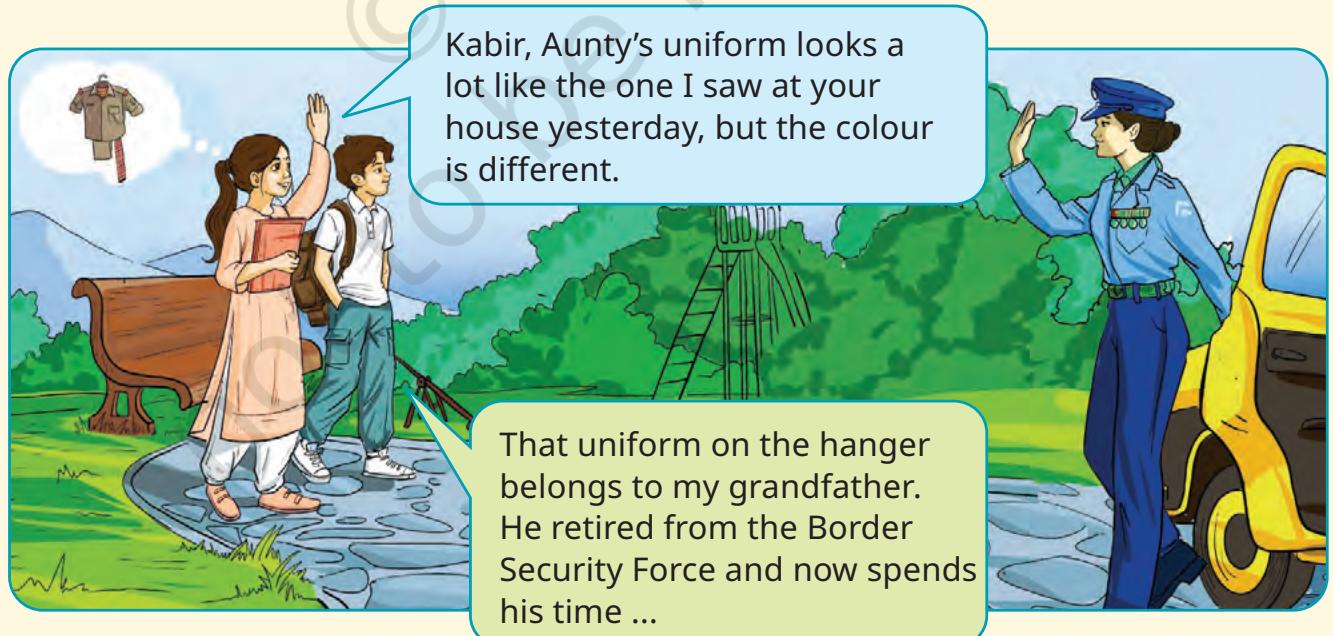
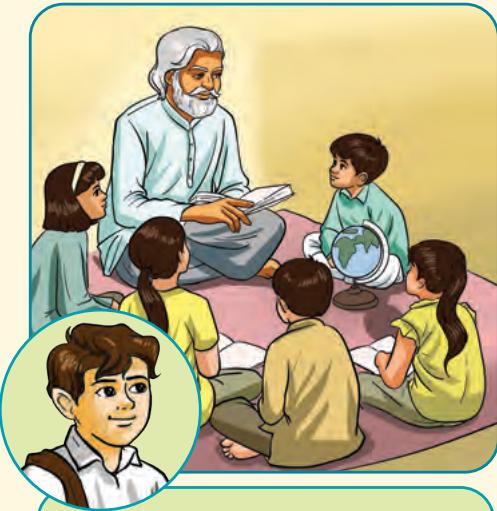
….. providing free Geography classes to the neighbourhood kids ….
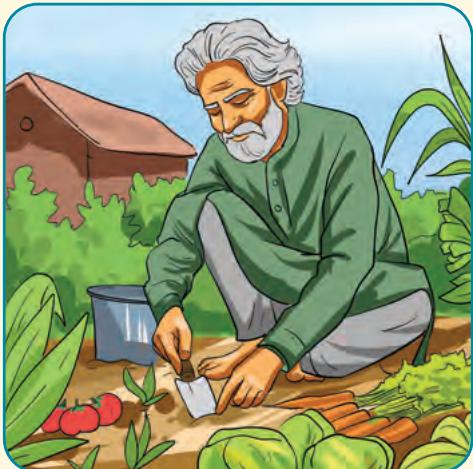
... tending to our vegetable garden, and ..
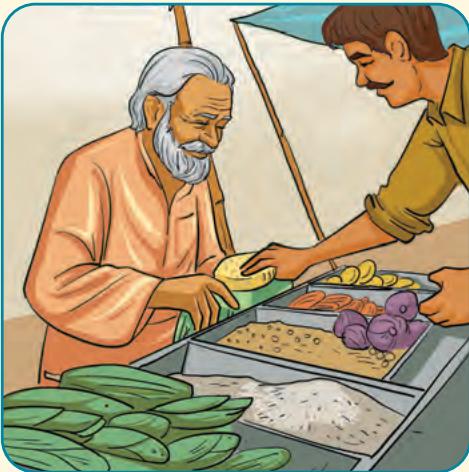
... running errands for the home.
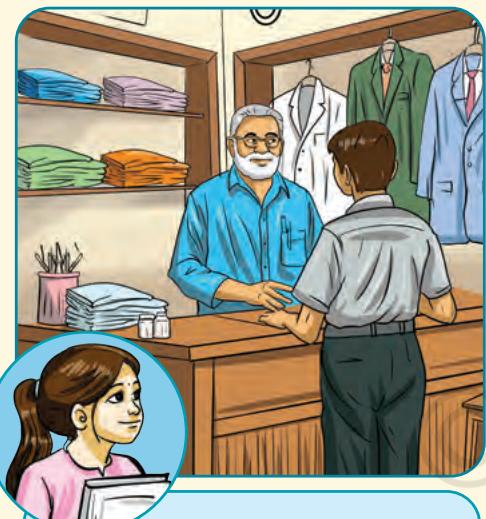
My parents run a shop that sells uniforms and other ready-made garments. Appa leaves early in the morning and Maa joins him in the shop after we leave for school.
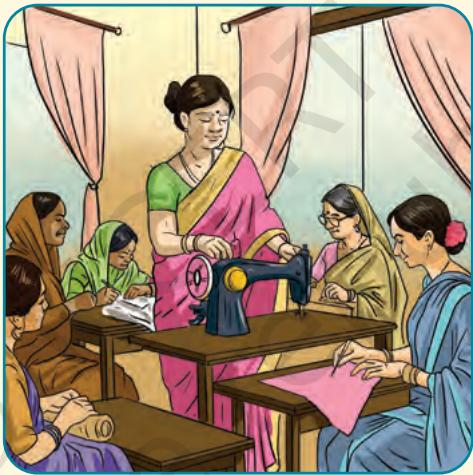
Maa is usually back by the time we return home from school. She also contributes to a voluntary group that teaches knitting to the women in the community.
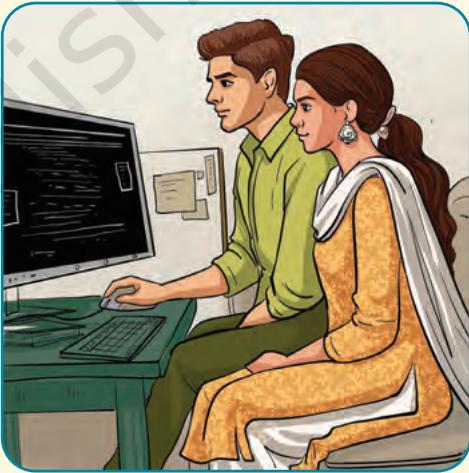
Do you remember my elder brother Rohan? You met him when he came to pick me up from school. He is a software engineer and works in a company that makes computer applications. On the weekends he volunteers to teach computer skills to those who have joined the youth development programme of the nearby college.

Wow, Anu, everyone around us does so many things every day!
LET'S EXPLORE
What activities did the people in Anu's and Kabir's story engage in? Mention them in the table given below:
| Character in the story | Activities they are engaged in |
Different types of activities, like the ones discussed above, are divided into two groups or categories: economic activities and non-economic activities.
Economic activities are those that involve money or are performed in exchange for money or money's worth for the parties involved. For example, a business person selling school bags in the market, a farmer selling produce in the market, a lawyer arguing a case and earning a fee, a truck driver transporting goods from one place to another, workers employed in a car manufacturing factory, etc.
Money's worth: The monetary value that a person places on an object based on the benefit that they derive from it.
Market: A place where people engage in the exchange of goods and services. People may exchange goods and services for other goods but in most markets these are exchanged for money.
Fee: A payment made to a person or organisation in exchange for professional advice or services. For example, a fee paid to a doctor and a lawyer.
Non-economic activities are those that do not generate income or wealth but are done out of feelings like gratitude,
Left to right, top to bottom: A business person selling school bags in the market
Farmers selling their harvest in the market
A lawyer arguing a case
A truck driver transporting goods from one place to another
Workers employed in a car manufacturing factory
0 9 love, care and respect. For instance, parents cooking food for the family or helping their children with schoolwork, youth taking care of the grandparents, family members helping in the renovation of the house, etc.
Left to right: Parents cooking food for the family Mother helping her children with schoolwork
0
Left to right: Youth taking care of the grandparents Family members helping in the renovation of the house
LET'S EXPLORE
In the table given on page 185, did you notice the third empty column? Label this column economic / non-economic activity'. Now classify them according to the nature of activity.
In Anu's and Kabir's story, Geeta Aunty, the Air Force pilot, receives a salary. She serves the country and performs an economic activity too. Anu's brother, Rohan, works for a software company and is given a salary for it. Over the weekend, he also volunteers at the youth development programme of the nearby college, where he teaches computer skills to young adults. This is a non-economic activity.
THINK ABOUT IT
When Kabir's grandfather voluntarily teaches the neighbourhood kids for free, is that an economic activity or a non-economic activity? How is it different from your teachers teaching you at school? Discuss with your classmates. What are some non-economic activities that are important to you and your family? Why are they valuable?
Salary:
A fixed regular payment generally paid monthly by an employer to an employee.
Types of Economic Activities
Kavya was excited to go to her aunt's house in the village of Kamlapur. On the way, she saw that a highway was being built near the village, and the construction site was abuzz with activity. Large machines, such as excavators and bulldozers, were being operated by dedicated technicians.
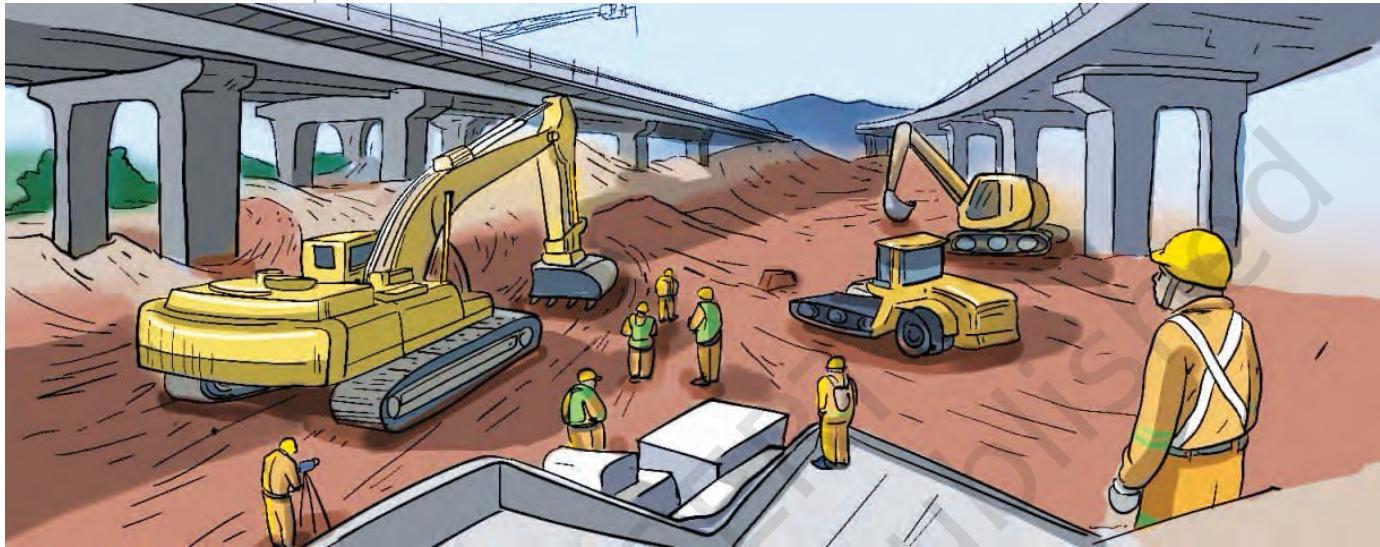
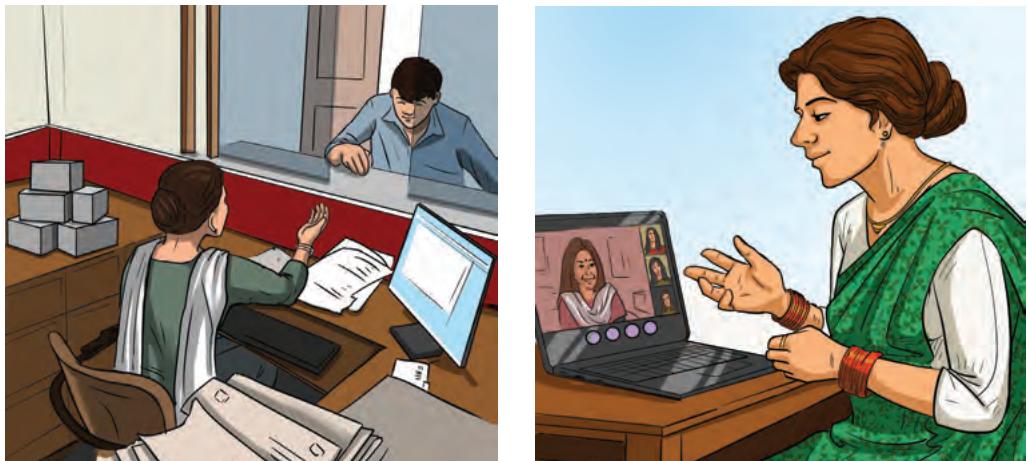
This new highway promised to reduce the travel time to the nearest town from five hours to just two hours. Kavya thought that she would be able to visit her aunt more often once the highway was ready, since it would take less time to travel there. Happy with this thought, Kavya ran to greet her aunt and to eat the delicious jalebis that she had made. They were joined by Kavya's uncle, who had just returned home from work. He is a technician in a construction company and operates a bulldozer. He receives a monthly salary for his services.
The next day, Kavya's aunt woke up early to finish her share of the household chores and left for work. She is
employed at the village post office and is paid a monthly salary. In the evening, after her office work, she also conducts online classes to help students prepare for school exams. She charges a weekly fee for these classes.
On the weekend, Kavya visited a local mango orchard with her aunt to have some delicious mangoes. V
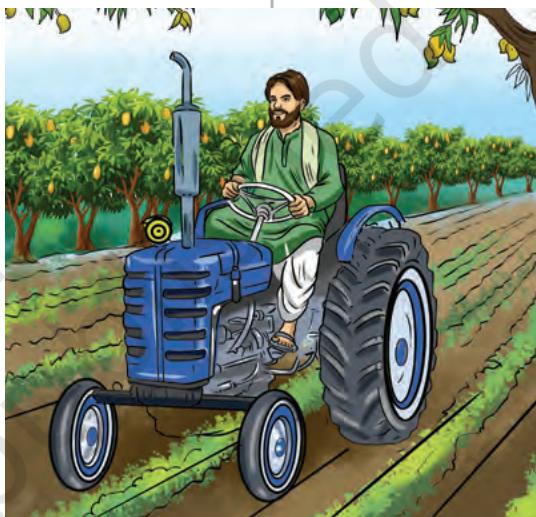
There she saw Sahil, a farm labourer who was using a tractor to till a farmer's land nearby. He earns a daily wage for his efforts. He gets some payment for his work in cash, and the remaining part of the payment in the form of mangoes of equal value. The mangoes that he receives as a part of his work are called payment in kind.
THINK ABOUT IT
On your way from home to school today, can you recall the various economic activities that people are engaged in? In what ways do you think those people are paid?
As we now understand, economic activities are those that have value in terms of money. Economic activities also add value at each stage of the process of transforming something into another form. This is called value addition.
Wage: A payment made by the employer to the worker for a specific period of time.
Payment in kind: A non-cash payment that is received for the work performed.
Let us take the example of Kavya's father, Rajesh, to understand this.
Rajesh is a carpenter who buys wood from a nearby market for $\yen 600$ to make furniture.
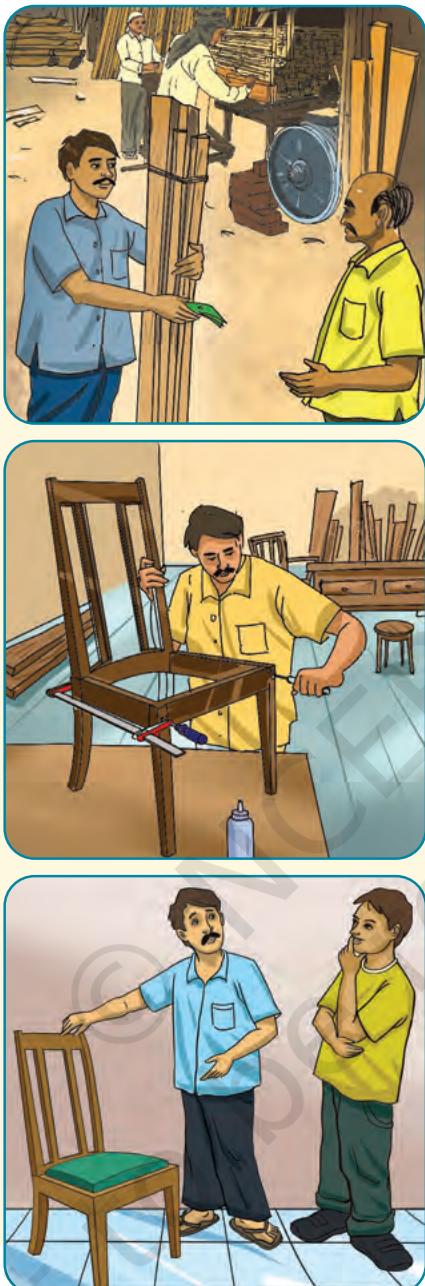
He uses special tools and other materials for building the furniture.
Rajesh sells a chair for ₹1,000 each in the market.
The wood for the chair cost $\yen 600$ .So, what is the remaining ₹400 (₹1,000 –₹600) for? It is the monetary value of Rajesh's skill, time and effort, which went into making that chair. Rajesh has added value to the wood by turning it into furniture. From buying the wood to selling the chair, these activities involve payment. They are, therefore, a part of economic activities.
LET'S EXPLORE
Put a $\checkmark$ against those activities/professions that you think create monetary value. Can you add two activities and examples of money related value creation to the empty rows at the end?
| Activity / Profession | Example ofmoney-relatedvalue creation |
| 1. Baker | |
| 2. Tailor | |
| 3. Farmers repairing their tractor | |
| 4. Doctor | |
| 5. Parents cooking dinner for their family | |
| 6. Scientist | |
| 7. Person taking care of a sick grandparent | D |
| 8. | |
| 9. |
The Importance of Non-Economic Activities
While non-economic activities may not involve money, the value they generate is important in our lives.
Sevá: selfless service
We see sevà in many places such as temples, gurudwaras, mosques and churches. For instance, langars or community kitchens at gurudwaras serve food to every visitor for free. These practices foster a sense of satisfaction and gratitude
for what we have, and they are also a way of contributing to society without expecting anything in return.
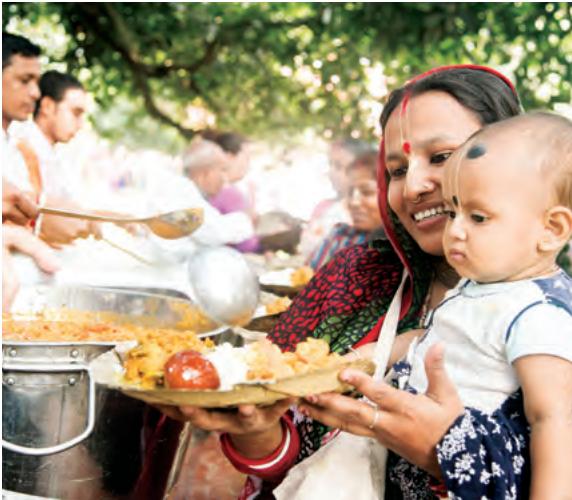 Temple distributing prasäd to devotees
 Swachh Bharat Abhiyan
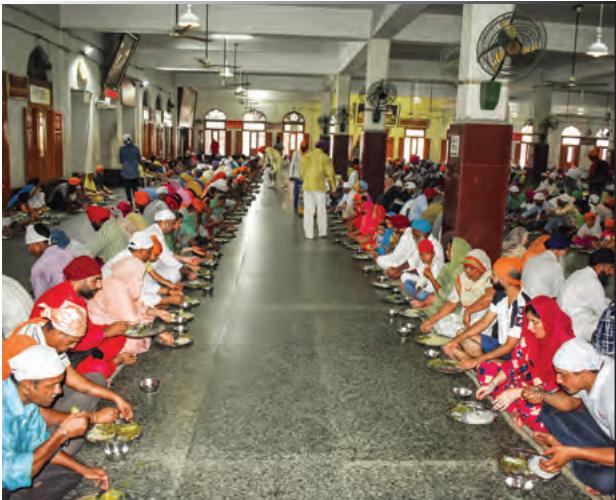 Langar at the Golden Temple
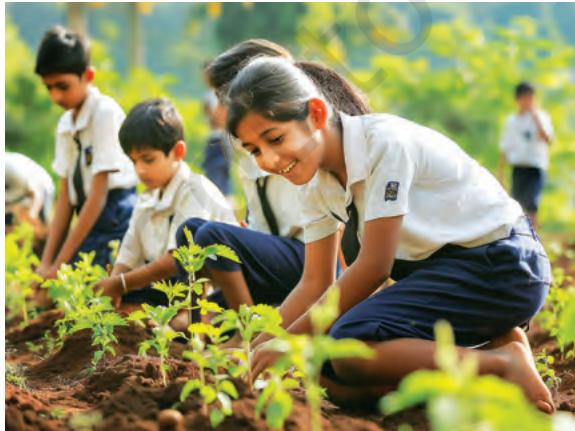 Van Mahotsav
The strength of community participation
The Swachh Bharat Abhiyan is based on the collective efforts of all Indian citizens to keep our surroundings clean. Individually, we keep our homes and surroundings clean. People have also come together to clean up streets, roads, parks and other public places or community areas. Together, these efforts lead to a clean home, neighbourhood, society and nation.
Another example of collective community participation is the celebration of Van Mahotsav (the festival of forests) in India to promote awareness about the value of trees and the conservation
of forests. The initiative brings together members of the community for tree plantation drives.
THINK ABOUT IT
$\circledcirc$ We celebrate many festivals in India. During these festivals, people gather to organise all the various activities. They decorate the place together and share the food that they cook. Are these non-economic activities? Why do you think they still hold value?
Can you identify community programmes that have been undertaken by your school or in your locality? What did you observe during these programmes?
Before we move on...
- In this chapter, we learnt about economic and non-economic activities. We also learnt about the value addition that economic activities create.
- We understood how non-economic activities contribute to social welfare, personal wellbeing and enhance the overall quality of life.
Questions, activities and projects
- How are economic activities different from non-economic activities?
- What kind of economic activities do people engage in? Illustrate with examples.
- There is great value attached to people who are engaged in community service activities. Comment on this statement.
- What are the various ways in which people are compensated for various economic activities? Give some examples.