Natural Resources and Their Use
Concerned social scientists are clear on what we need to do: we must move toward a regenerative economy, an economy that operates in harmony with nature, repurposing used resources, minimizing waste, and replenishing depleted resources. We must return to the innate wisdom of nature herself, the ultimate regenerator and recycler of all resources.
—Christiana Figueres and Tom Rivett-Carnac in The Future We Choose'
Fig. 1.1. Dudhsagar waterfall and the railway bridge, Goa, India
- How do we categorise natural resources?
- What is the connection between the distribution of natural resources and different aspects of life?
- What are the implications of unsustainable use/over exploitation of natural resources?
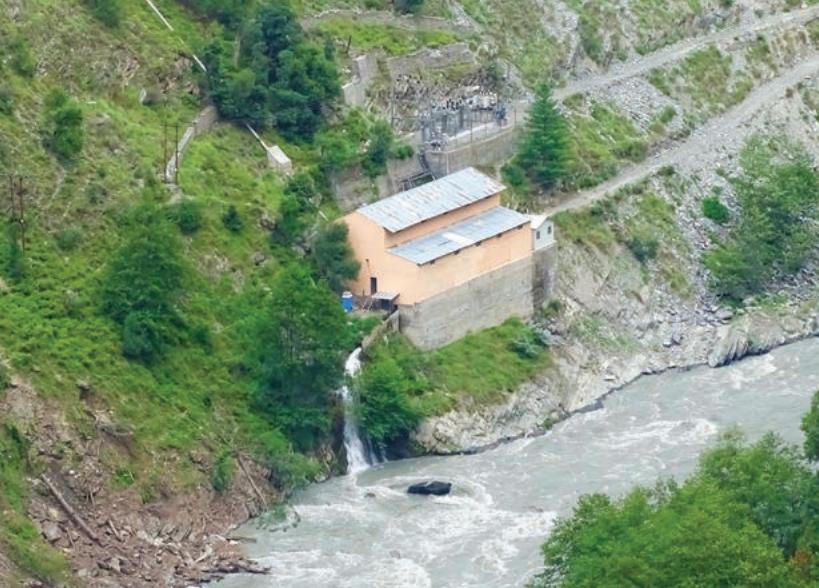 Fig. 1.2. A microhydel plant in Himachal Pradesh—the power of flowing water converted into electricity
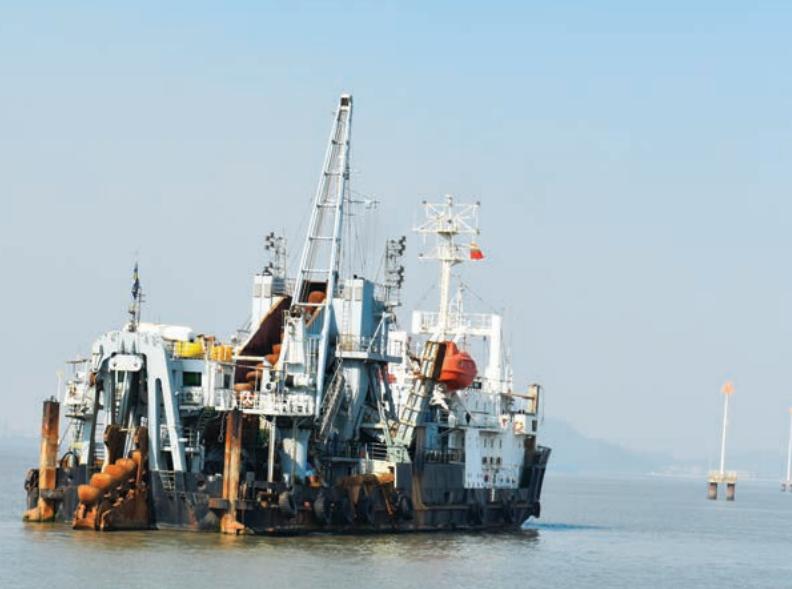 Fig. 1.3. An offshore oil rig extracts petroleum from below the seabed
WHEN DOES NATURE BECOME A RESOURCE?
One of the meanings of the word 'Nature' is the totality of life and non-life forms that are part of our environment but have not been created by humans. When humans use these for their sustenance, or create new things from them for consumption, these elements of Nature become 'resources'. For example, trees are part of the environment; they exist independently of humans. When we cut them and convert their wood into furniture, we see the trees as a resource.
Often these entities are not easily accessible. For example, there may be petroleum in places deep under the ocean that we do not have the technology to access, or the extraction cost may be too high; or it may be culturally unacceptable like cutting trees in sacred groves. So, for an entity to be called a resource, it should be technologically accessible, and its exploitation should be economically feasible and culturally acceptable. (Usually, the word 'exploitation' has a negative connotation; in the context we use it here, it means extraction, utilisation and consumption of 'Natural resources'.)
The Earth has treasures, many of which have formed over millions of years, and which humans have taken and learnt to use. These include the most obvious ones like water, air and soil, and also the not-so-obvious ones like coal, petroleum, precious stones, metal ores, timber, etc.
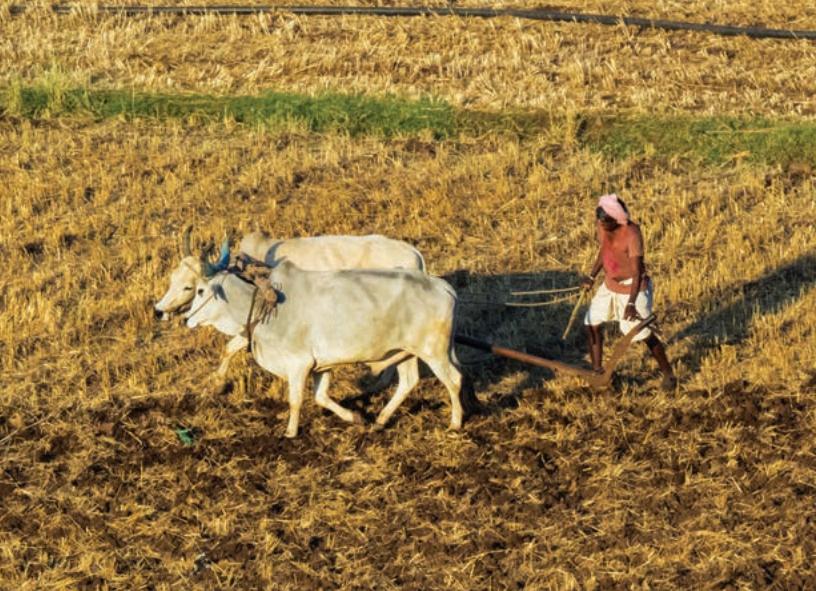 Fig. 1.4. Gentle ploughing causes minimal disturbance to the underground ecosystem and retains soil moisture.
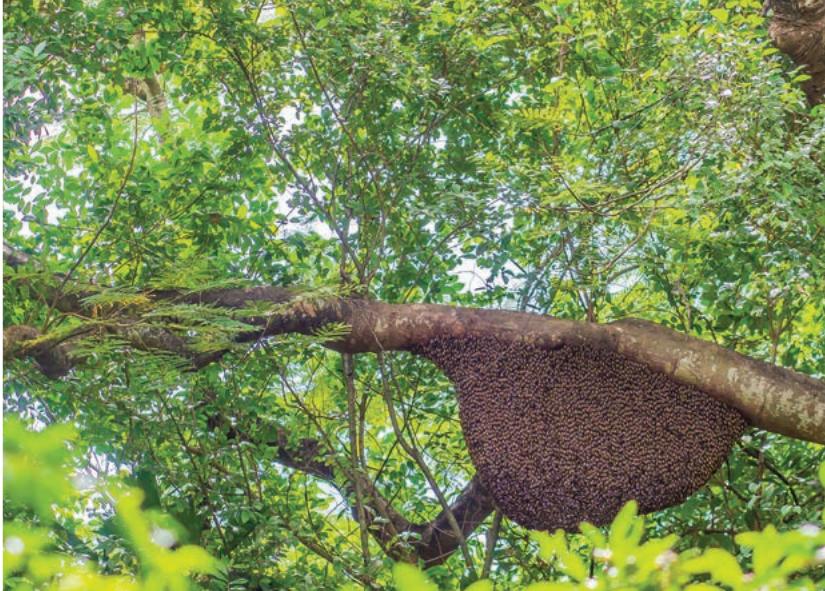 Fig. 1.5. Honey from a beehive
DON'T MISS OUT
In many indigenous traditions of the world, Nature is considered sacred. You have read about this. In such traditions, Nature is a nurturer and nourisher.
Do you know of practices that reflect this?
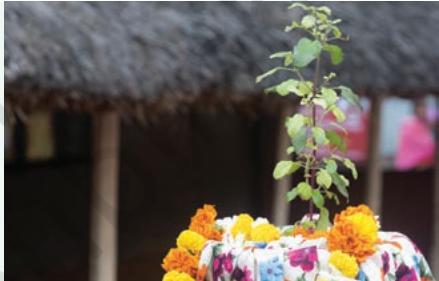 Fig. 1.6. Tulasi puja for wellbeing
THINK ABOUT IT
Take a pause. Look at yourself and the things around you. What is the origin of each of them? At some point they all lead to Nature; even the plastic button on your shirt.
In short, we apply the term 'natural resources' to materials and substances that occur in Nature and are valuable to humans.
CATEGORIES OF NATURAL RESOURCES
In Science, we learn the usefulness of categorisation and naming — we use some shared characteristics (or criteria) when we categorise ideas or things; we name the categories so that we can refer to them with just one word or a short phrase. When these names and meanings are shared across groups of people, it helps
us discuss a set of ideas or things without needing to describe them every time. We can communicate more effectively, too. In earlier classes, you learnt about living and non-living things. As soon as we use these words, you know what they mean. This is a simple example of categories.
We do the same with natural resources.
THINK ABOUT IT
What might be the different criteria we can use to categorise natural resources?
One of the ways we could categorise natural resources is based on the uses we put them to — essential for our life, source for materials and sources for energy.
Resources essential for life
Life could not exist on Earth without the air we breathe, the water we drink and the food we eat. We take these from the atmosphere, the rivers and ponds, and through the cultivation of soil or other living things. We cannot make the air we breathe, the water we drink, or the soil which gives us food.
Resources for materials
Human beings create physical objects out of Nature's gifts. We make them for our utility or to create things of beauty that enrich our lives and those of others — a piece of wood can be transformed into a chair and also carved into a statuette. India's geographical diversity provides us with a wide variety of natural resources, from wood to marble, and coal to gold.
Resources for energy
Energy is a cornerstone of modern living — electricity for our buildings, transportation, and all types of production processes. This energy can come from diverse natural sources: coal, water, petroleum, natural gas, sunlight, wind, etc.
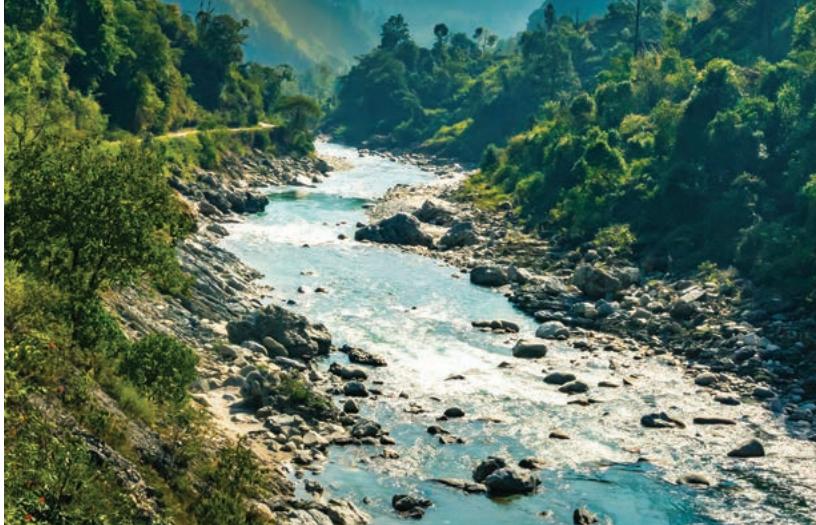 Fig. 1.7. River water a renewable resource as long as glaciers and forests exist
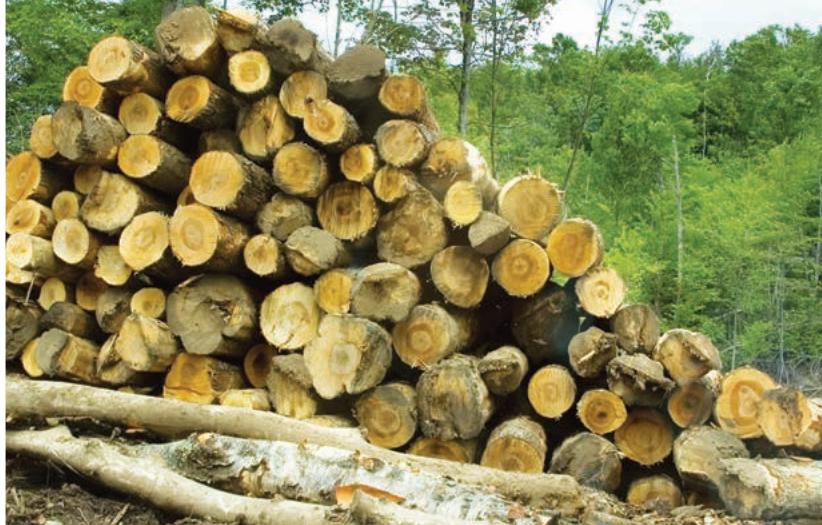 Fig. 1.8. We can take timber from the forest, in limited quantities, for a long time if we allow it to regenerate.
Renewable and non-renewable resources
A second way of categorising natural resources could be based on whether they are renewable or not.
A general principle of Nature is that it functions in a restorative and regenerative way. Restoration is the process of returning something to its original healthy state if it has been degraded or damaged. Nature heals, renews and maintains herself over time. A cut on your skin will normally heal; a forest recovers after a wildfire. Regeneration goes beyond restoration. It is about Nature's ability to create new life and the conditions for thriving.
We plant trees in areas that may have lost them on account of human interventions like clearing forests for housing. Planting the types of trees that were originally growing there restores the ecosystem the trees provide food and shelter for birds, squirrels and other creatures, enabling life to return.
Nature works in cycles where there is no waste. Take a forest. Let's say a tree falls in the forest. It decomposes with the bacteria, fungi and insects feeding on it. The tree becomes part of the soil enriching it. New trees and plants grow from seeds... eventually some will fall and the cycle starts again.
These are examples of Nature's principle of restoration and regeneration in practice.
Renewable resources
Renewable resources exhibit these characteristics over time. Most of India has abundant sunshine. In the natural course, rivers are
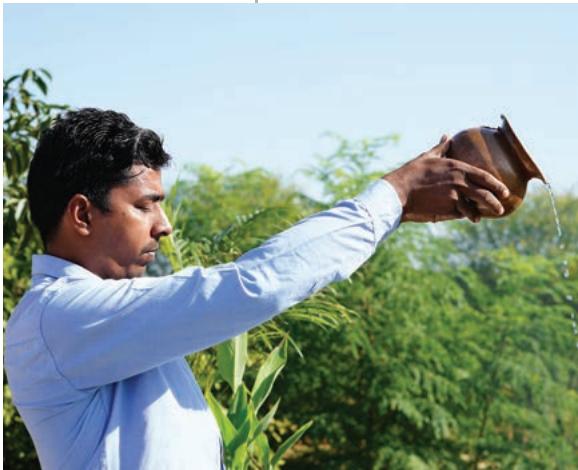 Fig. 1.9. Offering arghyam to Surya, the sun-god, in gratitude.
Arghyam: offering, generally of water, as a mark of respect or gratitude
fed regularly by rain and melting glaciers, forests renew themselves, soil replenishes itself through natural processes, and so on.
Solar energy, wind energy, energy from flowing water, timber from forests are renewable resources as long as we are able to manage them in a sustainable manner.
However, for them to remain renewable there is a condition — the natural rhythm of restoration and regeneration must not be disturbed. If we harvest timber faster than the forest can grow trees, we will eventually deplete the forest. Scientists have shown that through irresponsible human actions, many of Nature's cycles have been disturbed. A combination of several factors interacting — fossil fuel-driven industrialisation and the cutting down of forests for agriculture and other purposes are two of them — has led to rising temperatures that we are experiencing; on account of this, the glaciers in some places in the Himalayas are melting at a rate faster than precipitation can replace them. This has implications on water security for the populations living in the plains dependent on the 'water tower'.
DON'T MISS OUT
Traditionally, communities had a system of regulating (or refraining from) fishing during the spawning season to enable the maintenance of the fish population. However, the commercialisation of fishing resulted in over-fishing. In the case of a type of fish called tuna, for example, the rapid and extensive decline in their population led to some agreements on control of fishing. Nevertheless, this important type of fish that keeps the ocean ecosystem in balance by consuming smaller fish, shrimps, etc., is on a decline.
Do you know of other traditional practices that help the ecosystem to stay in balance?
We need industries to produce the goods we consume. The process also creates wastes that are frequently discharged into rivers and other water bodies. Often, these wastes cannot decay to become the food of some lifeform. Instead, it leads to a disturbance in Nature's cycle of restoration and regeneration, leading to a situation where the river becomes poisonous and cannot support life.
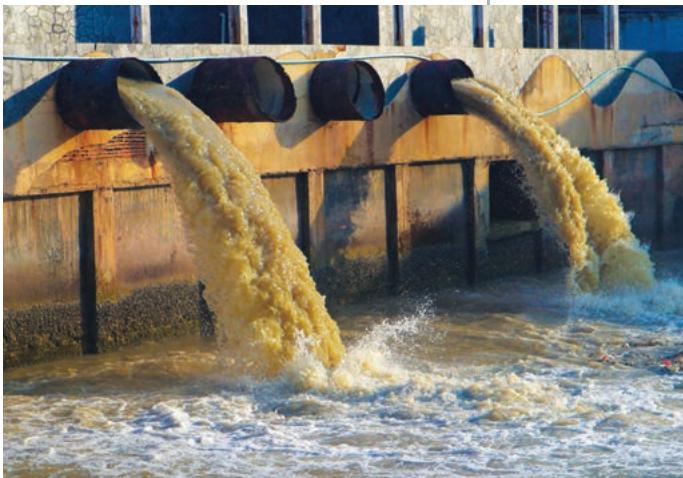 Fig. 1.10. Waste from industries is often disposed without proper treatment
LET'S EXPLORE
Identify human actions in your surroundings that result in Nature losing her ability to restore and regenerate. What types of interventions can be undertaken to restore Nature's cycle?
DON'T MISS OUT
Ecosystem functions and ecosystem services: Nature has some inherent ways of working. For example, trees naturally produce oxygen. When these natural processes benefit humans, we call them 'ecosystem services'. We can think of it like this: a forest naturally filters water, prevents soil erosion, and provides habitat for animals — these are ecosystem functions. When we benefit from clean water, protected farmland, and pollinated crops because of that forest, we are receiving ecosystem services from Nature.
A mature tree produces about 275 litres of oxygen per day (this varies a little depending on the type of tree). A human being needs about 350 litres of oxygen every day (this can change based on the type of activity that an individual engages in, their height and weight, and so on).
LET'S EXPLORE
Take up a small research study to assess the types of renewable resources in your region; you may discuss with your teacher the geographical area of your study and sources to access information that you may need. What has been the change in their status over time? Make a small report that identifies the reasons for the change and what may be done.
Non-renewable resources
Non-renewable resources are created over long periods. They cannot be replenished at the rate we use them. For example, fossil fuels (coal and petroleum), and minerals and metals like iron, copper and gold, are non-renewable resources. India has significant quantities of coal reserves. We mine coal to meet our growing need for energy, but it has been estimated that the coal reserves in India may last another 50 years; the demand for electricity has been increasing as the population expands and development work accelerates. Till more sustainable options become available widely, we need to use the coal we have judiciously.
LET'S EXPLORE
What are the non-renewable resources that you use daily, directly or indirectly? What are the possible renewable substitutes? What are some of the steps we can take to transition to renewables?
DISTRIBUTION OF NATURAL RESOURCES AND ITS IMPLICATIONS
Natural resources are not evenly distributed across our planet or even within countries. This uneven distribution shapes human settlements, trade patterns, international relations, and conflicts too. Many wars have been fought, and continue to be fought, to gain control over natural resources.
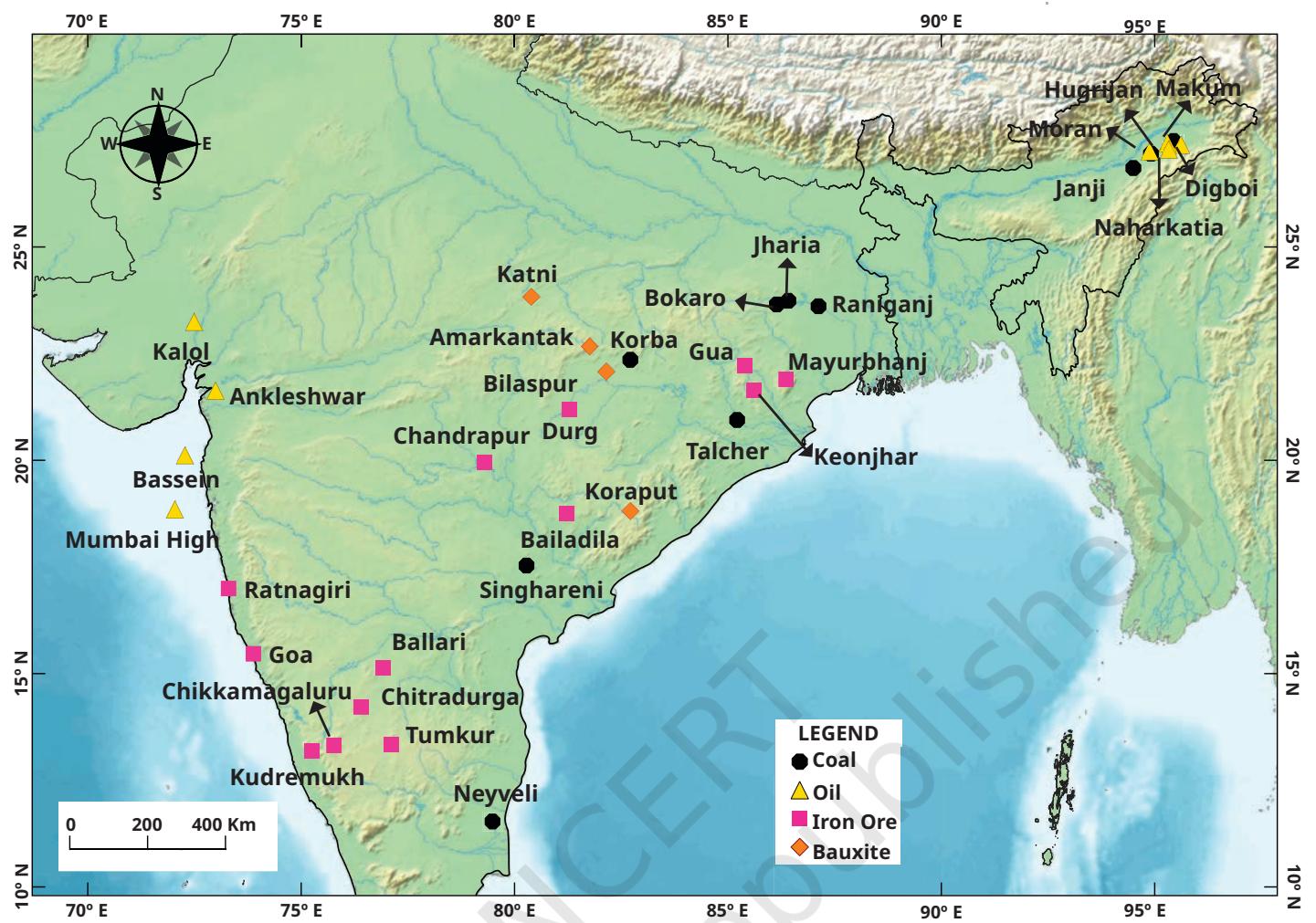 Fig. 1.11. Distribution of important minerals
LET'S EXPLORE
Observe the map in Fig.1.11. Notice the uneven distribution of important minerals. What types of resources are available in your region? How are they distributed?
Industries located near natural resources create employment opportunities for the local people. Townships grow around them and expand economic opportunities for others, too. More modern facilities that improve the quality of life become accessible. However, these benefits are often accompanied by costs, in the short term as well as in the long term. We have examples from across the world of people living in resource-rich areas who have been displaced from their homes to facilitate such
developments. In some cases their sacred places are under threat, leading to conflicts.

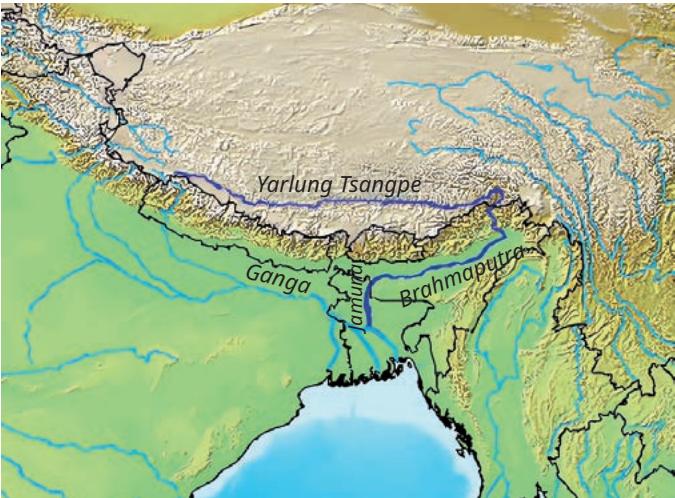 Fig. 1.12. Shared waters of the Brahmaputra river
National and international trade depend on the geographical location of natural resources. Combined with human knowledge and skills, these can create unique products like the Wootz steel. As we know, trade fuelled the development of large empires in India.
LET'S EXPLORE
Select any two natural resources. Gather information about their availability across different parts of India. Mark them on a map. What do you observe about their distribution? What are the types of economic activities connected with them?
Discuss the implications of extracting the natural resources in those parts for current and future generations. Suggest ways in which we can use Nature's gifts in responsible ways.
Nature does not pay attention to political boundaries. This leads to tensions regarding the sharing of natural resources across states as well as countries. One example is the sharing of Kaveri River water among Karnataka, Tamil Nadu, Kerala and Puducherry; negotiations and deft management were required to maintain peace and fair sharing. Of course, reaching such agreements between neighbouring countries is not easy.
LET'S EXPLORE
Find out about such a conflict in the international context. Discuss your findings in the class.
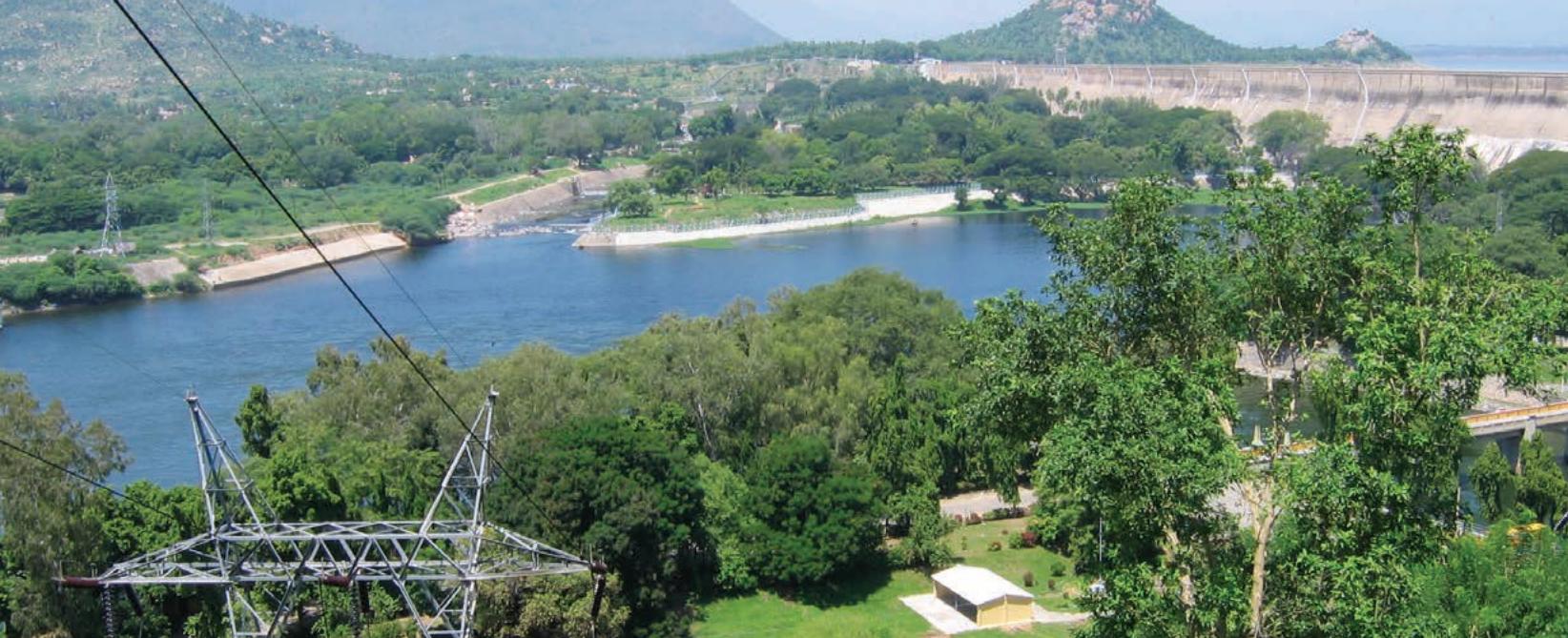 Fig. 1.13. Mettur dam in Tamil Nadu built on the Kaveri river
'THE NATURAL RESOURCE CURSE'
Having abundant natural resources does not guarantee economic prosperity. Some regions rich in natural resources can experience slower economic growth and development — a phenomenon economists call the 'natural resource curse' or the 'paradox of plenty'. Put very simply, this means that often having plenty of natural resources does not automatically mean that a country is rich. Frequently, economies are unable to develop industries that convert the resources into products of higher value; the chapter 'Factors of Production' in the latter part of this book will give you an understanding of this.
India has generally avoided this curse by investing in the development of such industries to meet our growing needs.
LET'S EXPLORE
What do you think are the different inputs required to enable the use of the natural resources available in different geographical areas?
However, the challenge of balancing resource extraction with sustainability remains. Understanding and managing natural resources is a valuable starting point, but human knowledge, good governance, and strategic planning determine whether they become lasting benefits or temporary windfalls.
RESPONSIBLE AND WISE USE OF NATURAL RESOURCES: STEWARDSHIP
Biodiversity loss: The decline in the variety of life on Earth
Sustaining life on Earth requires that we respect Nature and use natural resources in a way that enables the restoration and regeneration of renewable resources, and the responsible and judicious use of non-renewable ones.
Scientists studying these aspects have warned that the irresponsible treatment of natural resources has led to pollution, biodiversity loss and climate change, which has been taking place at an increased pace in recent years.
Restoration and regeneration of renewable resources
Here are two examples of how we are pushing the use of natural resources beyond their capacity to regenerate.
Many farmers in our country extract groundwater for irrigation purposes. In most states, the extraction rate is greater than the rate at which the water table is replenished. Over time, this deficit builds up, leading to higher cost of extraction of groundwater and eventually to its unavailability. It has been predicted that many of our growing cities will run out of groundwater soon. Initiatives to raise groundwater levels have been launched to remedy this. Traditional practices of water harvesting, rejuvenation of ponds and tanks, cutting down on wasteful consumption of water, processing and reusing water are some of the strategies attempted.
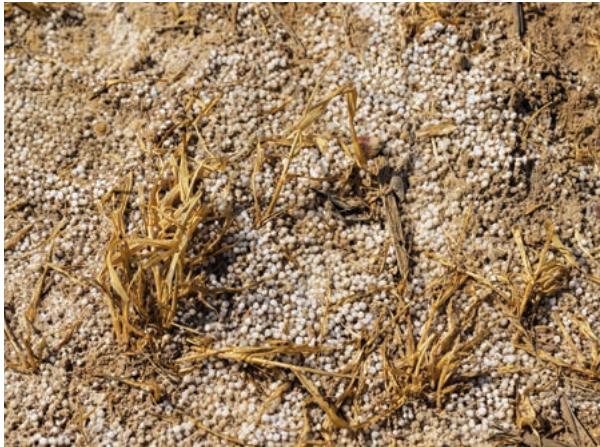 Fig. 1.14. Crop failure on account of injudicious use of chemical fertilisers
Similarly, the improper use of chemical fertilisers and pesticides has led to soil degradation. Traditional farming practices considered soil to be part of Mother Earth. Practices like the use of cow dung and other natural fertilisers, mulching, multi-cropping, and so on, enabled holistic soil management. We must learn from these practices and apply
them in our current situation to prevent further degradation. We need to replenish and rejuvenate our soil.
Overexploitation of groundwater: a caselet from Punjab
A crisis has unfolded in the fertile plains of Punjab where groundwater resources have been severely depleted. Punjab was home to the Green Revolution that fed a large proportion of our population, and contributed to India becoming self-sufficient in food. Today the same state faces issues of sustainability — Nature has been exploited beyond regeneration, at least in the short term. However, this concern is not particular to Punjab; it affects many other states.
In the 1960s, farmers shifted to high-yielding varieties of wheat and paddy. These required more water than the traditional seeds, and farmers began to extract groundwater to meet this need. In addition, the supply of free power led to the over-pumping of groundwater (a situation still prevalent in much of India today). Modern farming techniques also required the use of chemical pesticides and fertilisers.
The combined effect of these factors is that the groundwater level in a large part of Punjab (see fig. 1.17) has become inaccessible till depths of about 30 metres; and the chemicals from the pesticides and fertilisers have dissolved in the groundwater causing health hazards.
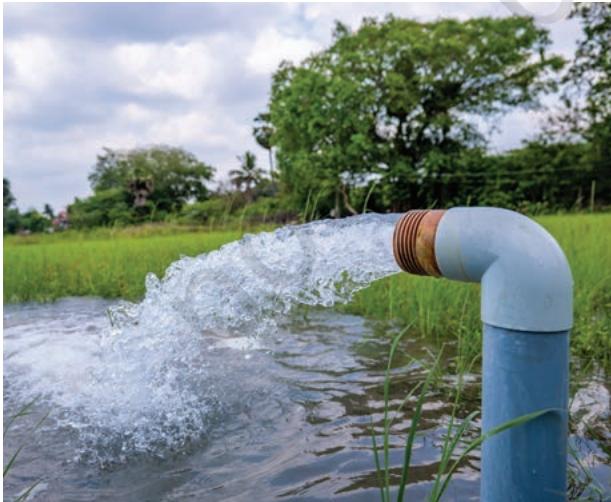 Fig. 1.15. Extraction of groundwater
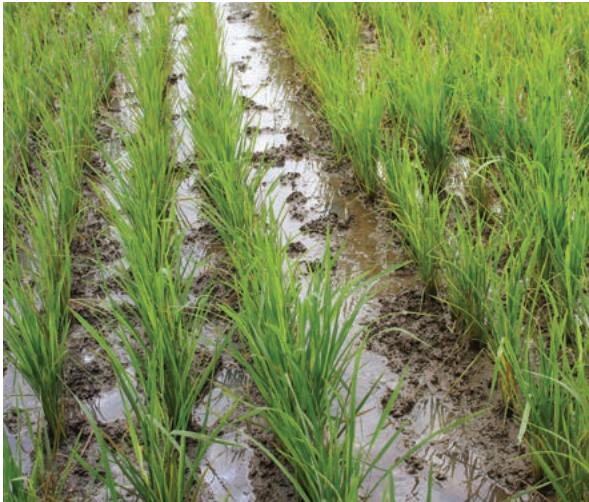 Fig. 1.16. Wet paddy fields
Almost 80% of the area of Punjab has been classified as 'overexploited'; in other words, we have drawn water at a rate much greater than at which restoration and rejuvenation of groundwater is possible.
We can see that food security was ensured for the short term, but the long-term consequences will take time and effort to heal.
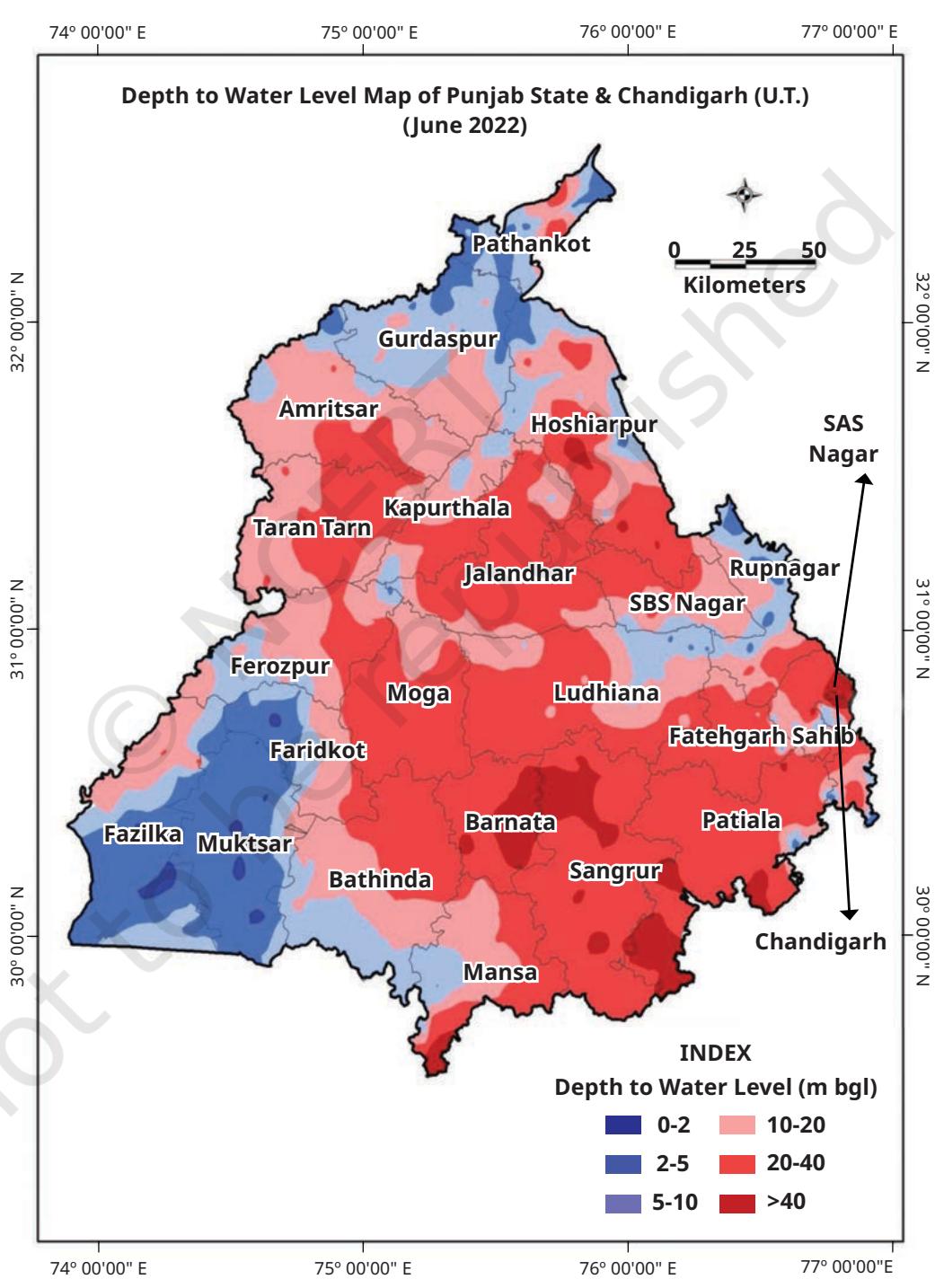 Fig 1.17. Depth to water level map of Punjab and Chandigarh, June 2022 $(mbgl =$ metres below ground level)
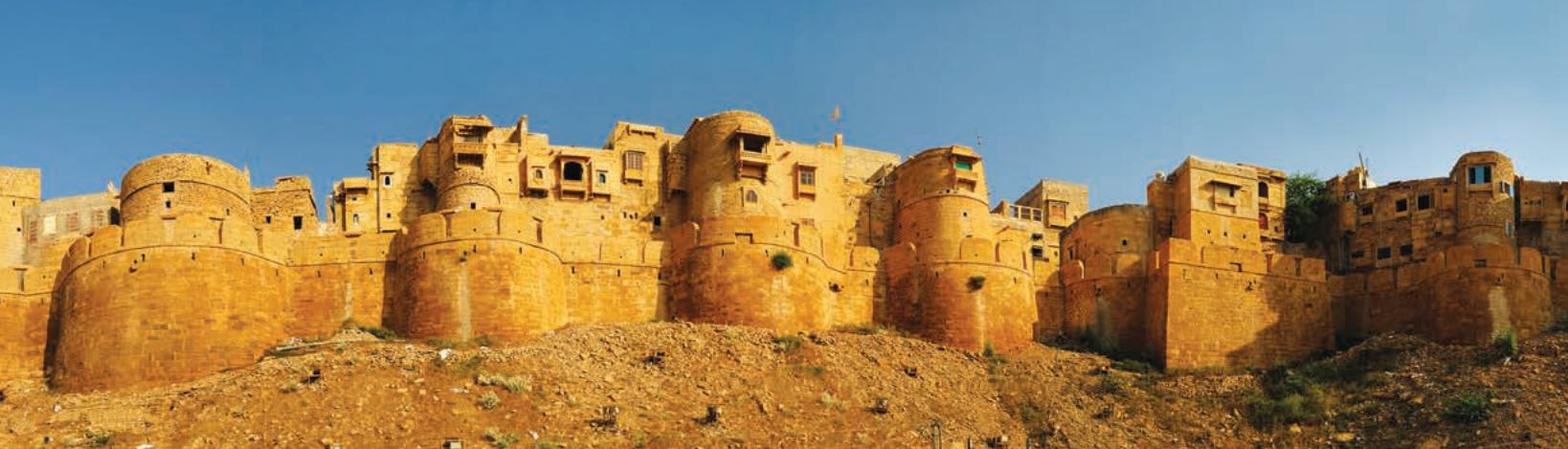 Fig. 1.18. Jaisalmer fort, Rajasthan. A mud structure built in the $12^{\text{th}}$ century and refurbished later using sandstone.
The case of cement
We cannot imagine life without cement. Our houses, schools and hospitals and other buildings, bridges, roads and airports, all require cement. The production of cement has been listed as one of the most polluting industries. The process of production releases fine dust that enters our lungs and those of animals damaging them, settles on leaves of plants decreasing their yields, and causes soil and water pollution too. The Central Pollution Control Board has created guidelines for cement factories to ensure that the pollution is minimised or eliminated.
In addition, there is a move towards creating alternative materials that reduce pollution. These include the use of traditional materials like stone and mud, new plant-based materials and recycled materials from waste plastic.
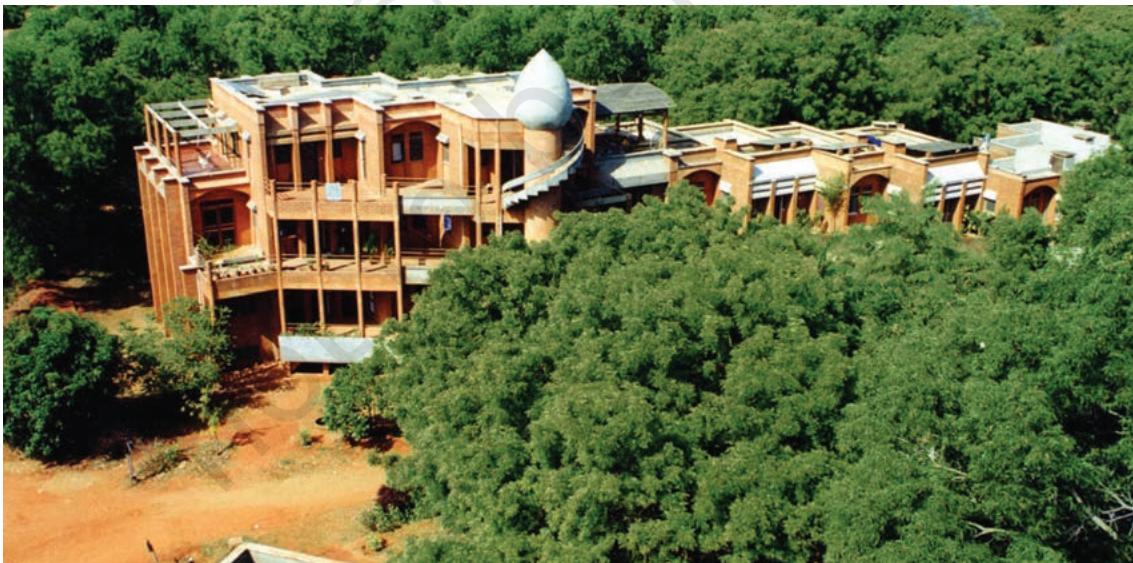 Fig. 1.19. A community building in Auroville constructed by Auroville Earth Institute (which holds the UNESCO Chair for Earthen Architecture). This modern building is made of mud using special techniques.
Traditional materials and methods are being combined with modern technological advances to create new materials that are sustainable — the process of production is less polluting, provides local employment, and is designed keeping in mind the climate of the place.
Vrikshyurveda is an ancient Indian botanical science that focuses on the study and care of plants and trees. The term comes from Sanskrit, with vriksha meaning tree and ayurveda meaning the science of life or health. This traditional knowledge system dates back several millennia and was formalised in texts such as Surapala's Vriksháyurveda around the $10^{\text{th}}$ century CE.
It has elaborate recommendations on the specific plants to be grown on different soil types, and provides intricate methods for seed collection, preservation, and pre-planting treatments. Irrigation techniques are elaborately described, with recommendations varying according to plant species, growth stage, and seasonal conditions. It specifies pest management strategies through natural repellents and plants that should be grown together. This form of sustainable agriculture promotes practices like crop rotation and mixed cropping to maintain soil health. Vrikshayurveda also offers advice on proper methods of ploughing soil so as to retain soil moisture as well as facilitate the growth of living organisms in the soil like fungi, bacteria and earthworms.
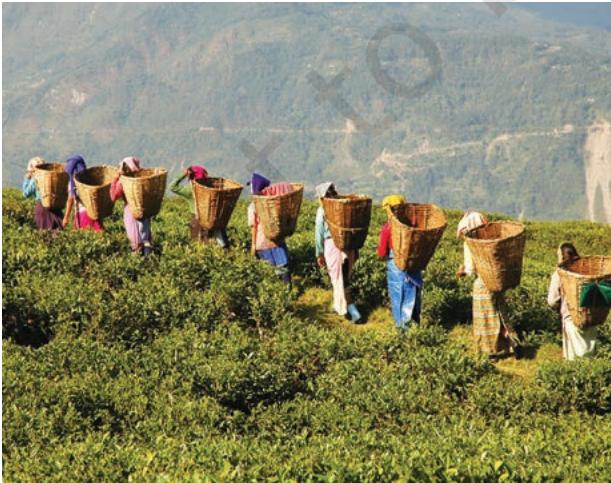 Fig. 1.20. Organic farming in Sikkim
A caselet from Sikkim
Pema's family farm in Sikkim faced declining yields and mounting debts from expensive chemical inputs. When the state government announced a policy to promote organic farming throughout the state, Pema's family decided to try. It was not an easy transition - initially the yields dropped as the soil was recovering from years of chemical use.
The family switched to compost, prepared natural pest repellents using neem and garlic, and started growing multiple crops across the year. After about five years, Pema's farm was thriving. She was able to sell her cardamom, ginger, and traditional vegetables at premium prices. In 2016, Sikkim became a 100 per cent organic state with all of its farmland certified organic. The effects were transformational — local biodiversity flourished, with beneficial insects and birds returning; tourism increased as visitors came to see the organic farming model, and farmers' incomes grew by 20 per cent on average. Today, Sikkim serves as a global model, demonstrating that an entire region can successfully transition to sustainable agricultural practices while improving both ecological and economic outcomes.
Responsible and judicious use of resources
In the case of non-renewables we need to ensure that we use the resources so that they can last long enough for humanity to find more sustainable alternatives. For example, we need to make the switch to renewable sources of energy for as many purposes as we can.
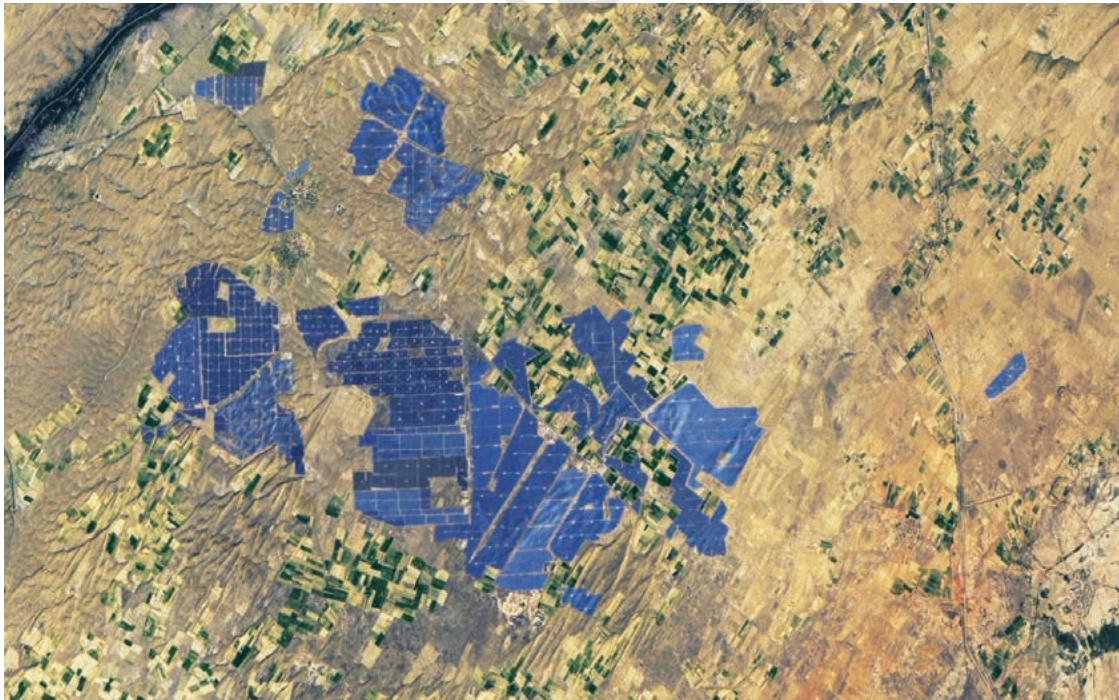 Fig. 1.21. Satellite image of one of the largest solar parks in the world located in Rajasthan. It can generate enough electricity to power about 15% of the current needs of Rajasthan.
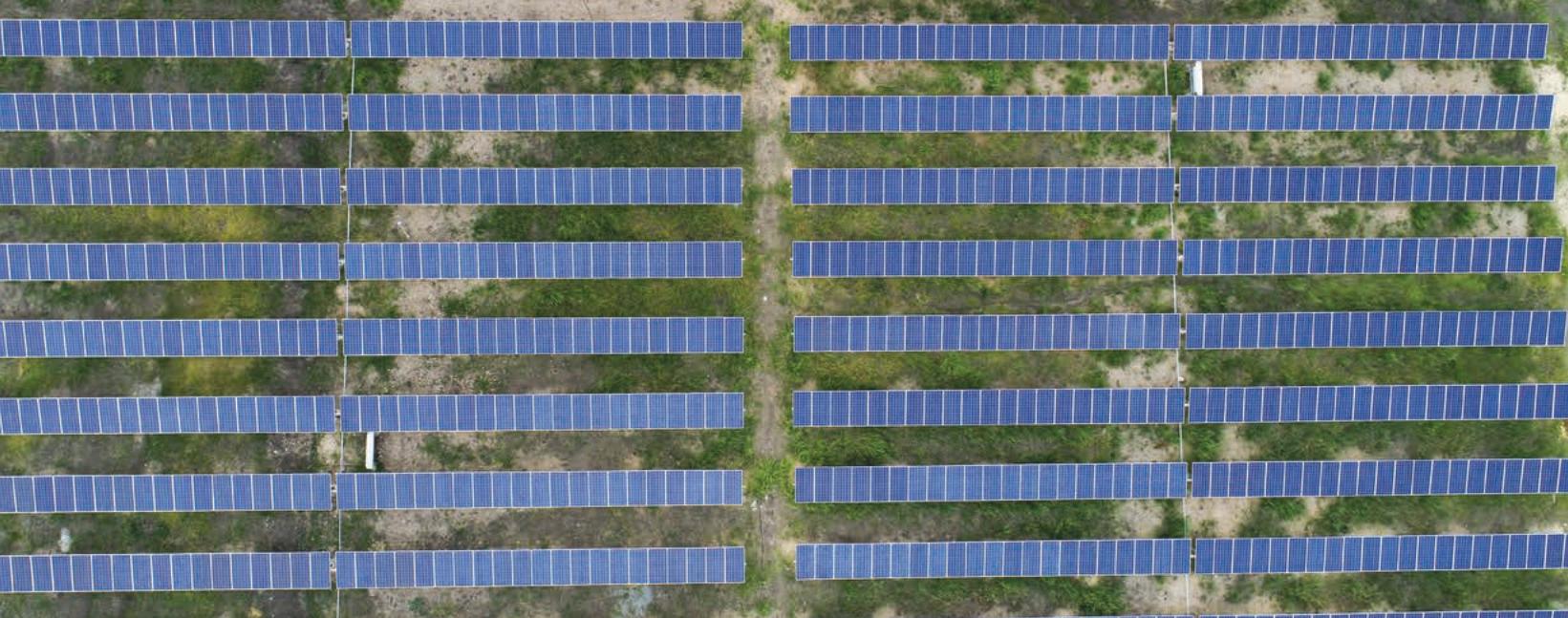 Fig. 1.22. Solar farm near Raichur, Karnataka
The International Solar Alliance — India's leadership in renewable energy
India and France launched the International Alliance for Solar Energy (IASE) in 2015 a coalition of sunshine-rich countries committed to harnessing solar power. The alliance focuses on countries blessed with abundant sunlight throughout the year. India has helped channel billions of dollars into solar projects across developing nations, sharing technical expertise and creating affordable financing options. The Bhadla Solar Park is a symbol of India's solar ambitions, demonstrating how a country can transition from traditional energy sources to renewable alternatives. For Indians, this alliance represents both environmental responsibility and economic opportunity.
Even as we deal with these issues we must be mindful that the distribution and access to resources, including basic ones like water and clean air, is often unfair to some sections of society. In cities, many areas do not receive adequate and regular supply of drinking water. Air pollution caused by industries and excessive use of fossil fuels, affects those who are unable to protect themselves from these hazards.
We must remember our relationship with Nature and act as stewards of natural resources toward restoration, regeneration, and sustainability. The Bhagavad Gitá refers to lokasangraha,
the idea that everyone must transcend personal desires and act for the wellbeing of all. Has the time come for us to consider this seriously?
Before we move on ...
'Natural resources' are materials and substances that occur in Nature and are valuable to humans.
There are different ways of categorising resources; renewable and non-renewable are useful categories.
The 'resource curse' can be overcome through investments in the development of technology and skills.
We need to become vigilant about the rate at which we use renewables so as not to overexploit them; judicious and wise use of non-renewables will enable stretching their use for a longer period of time.
Questions and activities
What can make what is today a renewable resource nonrenewable tomorrow? Describe some actions that can prevent this from happening.
Name five ecosystem functions that serve humans.
What are renewable resources? How are they different from non-renewable ones? What can people do to ensure that renewable resources continue to be available for our use and that of future generations? Give two examples.
Identify cultural practices in your home and neighbourhood that point to mindfulness in the use of natural resources.
What are some considerations to keep in mind in the production of goods for our current use?
A NOTE ON HISTORY'S DARKER PERIODS
History sometimes seems to be full of wars and destruction; it is true that it rarely focuses on periods when the society is, on the whole, harmonious and peaceful. But while every country may have had such peaceful eras and some benevolent rulers, history seems peopled by incompetent, corrupt or cruel rulers. We find them especially in what we may call the darker chapters or periods of history, when war, abuse, fanaticism, bloodshed, etc., suddenly dominate the landscape and inflict suffering and misery on the whole society or country.
The world over, historians have faced this dilemma: how much attention should we draw to such darker periods? Should we omit them entirely? Should we mention them in passing, with most atrocious details left out? Or should we face them and analyse them so as to understand what made such developments possible and, hopefully, help avoid their recurrence in future? The third option is, in our opinion, the best, if it can be done with enough detachment and sensitivity; it is important to know our past, pleasant or unpleasant, since the past continues to live with us and shapes the present.
What do we mean by 'detachment and sensitivity'? Simply that it is important to study those darker developments dispassionately, without blaming anyone living today for them. For instance, you will learn later that World War II (1939–1945) resulted in millions of deaths worldwide; Germany then followed a cruel ideology (known as 'Nazism') which believed in the extermination of 'inferior races' and resulted in the inhuman treatment of some ethnic groups and a brutal rule of occupied nations. Yet it would be clearly unacceptable to blame today's Germans for what happened over eight decades ago. Rather, what matters is to understand what made the Nazi ideology possible, so that similar ideologies today or tomorrow may be defeated.
The same principle applies to the 'Tapestry of the Past' chapters in this textbook, which include passages on warfare and instances of cruelty or brutality. While those happenings cannot be erased or denied, it would be wrong to hold anyone today responsible for them. Understanding the historical origin of cruel violence, abusive misrule or misplaced ambitions of power is the best way to heal the past and build a future where, hopefully, they will have no place.