0906CH09
Chapter
9
Atomic Foundations of Matter
Think It Over
Water can be obtained from various sources. Are all these samples of water chemically identical?
- Oxygen is sometimes represented as O and sometimes as (\mathrm{O}_2). What is the difference between these symbols?
- Why does dissolved salt in water conduct electricity, but sugar does not?
In Chapter 8, Journey Inside the Atom, you explored the structure of the atom. You also studied subatomic particles, viz., electrons, protons and neutrons, in terms of their discoveries, properties and locations in the atom. You also learnt that atoms with an octet of electrons in their valence shell are stable. Atoms can lose, gain or share electrons to achieve an octet of valence electrons.
You have also learnt that many properties of the elements are not retained when they form a compound. For example, hydrogen and oxygen are gases, whereas the substance formed when they combine is water, which is a liquid at ordinary temperatures.
Interestingly, water does not have the same properties as hydrogen or oxygen. Hydrogen gas is combustible and oxygen supports combustion, whereas water neither burns nor helps in burning; rather, it extinguishes fire. However, it was found that the mass of the water formed equals to the sum of the masses of the hydrogen and oxygen that combined to form it. Let us explore whether the mass remains unchanged during physical and chemical changes.
Atomic Foundations of Matter
163
Activity 9.1: Let us investigate a physical change
- Place a clean and dry (100~\mathrm{mL}) beaker on a digital weighing balance.
- Set the balance reading to zero by pressing the tare or reset button.
- Pour about (50~\mathrm{mL}) of water into the beaker.
- Add a spatula full of common salt to the water contained in the beaker.
- Record the reading on the weighing balance (Fig. 9.1a).
- Swirl until the added salt dissolves and record your observations (Fig. 9.1b).
What do you observe? You may notice that the mass of the solution is equal to the sum of the masses of water and salt taken. This shows that there is practically no change in the mass during the formation of a solution, which is a physical change. This is true for all physical changes. You can repeat the above activity by weighing a piece of paper before and after tearing it into pieces, and observe whether its mass changes or not.
Now, let us find out whether this is true for chemical changes as well.
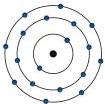
Fig. 9.1: (a) Weight of water and undissolved salt
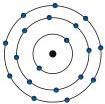
Fig. 9.1: (b) Weight of solution of salt and water
Activity 9.2: Let us investigate a chemical change
You have learnt about various chemical changes. Do you remember what happened when baking soda was added to vinegar? A gas, carbon dioxide, was formed during this chemical change and the reaction is represented as
Vinegar + Baking soda (Sodium hydrogencarbonate) $\rightarrow$ Carbon dioxide + Other substances
Let us explore whether the mass remains the same before and after the change.
Experimental set-up 1
- Place a clean, dry (100~\mathrm{mL}) conical flask and a medium-sized balloon on a weighing balance.
- Set the balance reading to zero by pressing the tare or reset button.
- Pour about (20~\mathrm{mL}) of vinegar or lemon juice into the conical flask.
- Take about (2\mathrm{g}) of baking soda (sodium hydrogencarbonate) and put it into the balloon.
- Keep the balloon filled with baking soda on the weighing balance next to the conical flask. Record the initial reading (Fig. 9.2a).
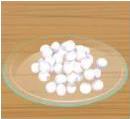
Fig. 9.2: (a) Weight of vinegar and baking soda
Note
Usually in any measurement, there is uncertainty of $\pm 1$ in the last digit. Therefore, the variation in readings of digital weighing balance is within experimental error and the weight can be taken as constant.

Fig. 9.2: (b) Pouring baking soda into the conical flask containing vinegar
Fig. 9.2: (c) Weight of the final reaction mixture
- Carefully transfer the baking soda (sodium hydrogencarbonate) from the balloon into the conical flask containing vinegar (Fig. 9.2b).
- Place the conical flask and balloon back on the weighing balance, and record the final reading (Fig. 9.2c).

Fig. 9.3: (a) Weight of vinegar and baking soda

Fig. 9.3: (b) Pouring baking soda into the conical flask containing vinegar
Note
Keep the conical flask and the balloon on the digital weighing balance. This prevents errors caused by small traces of baking soda that may remain stuck to the balloon.
- What do you observe?
- Are the initial and the final readings same?
A brisk effervescence is observed. The final reading does not match the initial reading. What can be the reason for this?
Repeat the above experiment in a slightly modified way as explained below.
Experimental set-up 2
- Place a clean, dry (100~\mathrm{mL}) conical flask and a medium-sized balloon on a weighing balance.
- Set the balance reading to zero by pressing the tare or reset button.
- Pour about (20~\mathrm{mL}) of vinegar or lemon juice into the conical flask.
- Place about (2\mathrm{g}) of baking soda (sodium hydrogencarbonate) in the balloon.
- Fix the balloon to the mouth of the conical flask using a thread, without allowing the baking soda to mix with the vinegar.
- Weigh the conical flask containing vinegar and the balloon containing baking soda, and record the reading (Fig. 9.3a).
- Lift the other end of the balloon upwards, allowing the baking soda (sodium hydrogencarbonate) to fall into the vinegar (Fig. 9.3b).
- What do you observe?
164
Exploration | Grade 9
Atomic Foundations of Matter
165
- As in experimental set-up 1, a brisk effervescence occurs, which inflates the balloon during the reaction.
- Record the final reading (Fig. 9.3c).
- Are the initial and the final readings same in this case?
In this experiment, the final reading matches the initial reading. You have noticed that the total mass of vinegar and baking soda (sodium hydrogencarbonate) before the chemical reaction is equal to the total mass of carbon dioxide and other substances formed after the reaction. In experimental set-up 1, the mass difference occurs because the gas produced by the chemical reaction escapes, resulting in a difference between the initial and the final readings.
9.1 Law of Conservation of Mass
The Activity 9.2 demonstrates that the total mass remains the same before and after a chemical reaction. So, matter can neither be created nor destroyed in a chemical reaction. This is known as the Law of Conservation of Mass, proposed by Antoine Lavoisier in 1789.
Meet a Scientist

Antoine Lavoisier is known as the Father of Modern Chemistry. He proposed the Law of Conservation of Mass. This law applies to every chemical reaction. Lavoisier continued to study this and proposed that "...in every operation an equal quantity of matter exists both before and after the operation".
Let us consider the reaction between sodium sulfate and barium chloride to further verify this law.
Activity 9.3: Let us verify the law — Group activity
- Place two clean and dry (100~\mathrm{mL}) conical flasks on a weighing balance, and mark them A and B.
- Set the balance reading to zero by pressing the tare or reset button.
- Pour about (10\mathrm{mL}) of (1% m / v) sodium sulfate solution into the Conical Flask marked A.
- In the Conical Flask B, pour about (10\mathrm{mL}) of (1% m / v) barium chloride solution.
- Leave both Conical Flasks A and B on the weighing balance undisturbed, and record the total mass of both the solutions (Fig. 9.4a).
- Transfer the solution from Conical Flask B to Conical Flask A and mix the two solutions carefully.
- What do you observe?
- Now, place both the Conical Flasks A and B on the weighing balance again as shown in Fig. 9.4b, and note the reading.
- Do you observe any change in the reading after mixing the solutions?

Fig. 9.3: (c) Weight of the final reaction mixture
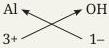
Fig. 9.4: (a) Weight of solutions (reactants) before mixing
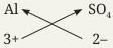
Fig. 9.4: (b) Weight of products after mixing
Note
- Keep both the conical flasks on the digital weighing balance. It prevents the error caused by a small amount of solution that may remain stuck to the walls of the conical flask during transfer.
- This reaction has been carried out in the open system, since no gas is formed.
When solutions of sodium sulfate and barium chloride are mixed, a white precipitate of barium sulfate is formed along with sodium chloride. It can be represented as —
Sodium sulfate + Barium chloride → Barium sulfate + Sodium chloride
Based on the Activity 9.2, it was established that weight and hence, mass is conserved during a chemical change (chemical reaction).
Think as a Scientist
You are given a chemical reaction in which zinc reacts with dilute hydrochloric acid to form zinc chloride and hydrogen gas.
Zinc + Hydrochloric acid (dilute) → Zinc chloride + Hydrogen
Design and perform an experiment to test the hypothesis that mass is conserved during the chemical reaction. You may use a set-up different from the one shown in Activity 9.2.
Example 9.1: In a group activity, students place 4.0 g of calcium carbonate with 2.92 g of hydrochloric acid in a closed container. After the reaction is over, they measured 1.76 g of carbon dioxide, 0.72 g of water, and 4.44 g of calcium chloride. Verify whether the Law of Conservation of Mass is obeyed or not.
Solution: Mass of calcium carbonate = 4.0 g
Mass of hydrochloric acid = 2.92 g
Total mass of reactants: 4.0 g + 2.92 g = 6.92 g
Mass of carbon dioxide = 1.76 g
Mass of water = 0.72 g
Mass of calcium chloride = 4.44 g
Total mass of products: 1.76 g + 0.72 g + 4.44 g = 6.92 g
Compare the total mass of reactants with the total mass of products.
Mass of reactants = Mass of products
Hence, the Law of Conservation of Mass is obeyed.
Example 9.2: 12 g of carbon combines with 32 g of oxygen to form 44 g of carbon dioxide as per the given equation.
Carbon + Oxygen → Carbon dioxide
If 2.4 g of carbon reacts completely with oxygen, how much carbon dioxide will be produced?
Solution: Given that 12 g of carbon reacts with 32 g of oxygen to give 44 g of carbon dioxide.
So, 1 g of carbon will give $$= \frac{44}{12}$$ g of carbon dioxide
Thus, 2.4 g of carbon will give $$= \frac{44}{12} \times 2.4 \text{ g}$$
= 8.8 g of carbon dioxide
Hence, 8.8 g of carbon dioxide will be produced.
Pause and Ponder
- A student burns 10 g of ethanol in an open beaker. After the reaction, no residue is left in the beaker. Does this mean the Law of Conservation of Mass is violated? Explain.
- When (20\mathrm{g}) of hydrogen reacts completely with (160\mathrm{g}) of oxygen, how much water is formed according to the Law of Conservation of Mass?
166
Exploration | Grade 9
Atomic Foundations of Matter
167
In the above activities, we have used many compounds. Let us learn how these are formed from the elements. Let us take an example of water, is there a fixed ratio in which hydrogen can combine with oxygen to form it, or can they combine in any ratio? This leads us to another important law.
9.2 Law of Constant Proportions
Soon after Lavoisier, Joseph Proust proposed that in any compound formed by two or more elements, the elements combine in a fixed ratio by mass. In other words, elements in a compound have definite proportions irrespective of its source. For example, if the water collected from various sources, such as rivers, borewells or the ocean, is purified and analysed. It is always found to contain hydrogen and oxygen in a mass ratio of 1:8. What does it convey? If 9 g of purified water from any source is decomposed, 1 g of hydrogen and 8 g of oxygen are always obtained. This proportion is written as 1:8.
This is known as the Law of Constant Proportions, or the Law of Definite Proportions, or sometimes as Proust's Law.
Meet a Scientist

Joseph Louis Proust was a prominent French chemist known for his careful experimental
work. He contributed to the Law of Definite Proportions by showing that chemical compounds always contain elements in fixed ratios by mass. For example, Proust studied the composition of copper carbonate. He showed that copper carbonate always contains copper, carbon and oxygen in the same proportion by mass, no matter how it was prepared or where it was found. His work laid an important foundation that helped shape modern chemistry.
Threads of Curiosity
In many ancient civilisations, red pigment derived from rocks was widely used in painting and as a colouring agent for various objects. In India, it was known as hingula, and in Latin and English, as cinnabar. Over the centuries, it was discovered in many civilisations that heating cinnabar could yield two elements—mercury and sulfur in mass percentage of around 86.22% and 13.78%, respectively. Interestingly, most civilisations also found that grinding mercury and sulfur together in this ratio could form cinnabar, although the toxic nature of both prevented this process from becoming widespread.

Fig. 9.5: Cinnabar
Example 9.3: Sodium chloride (NaCl) contains sodium and chlorine in the mass ratio of 23:35.5. If 46 g of sodium reacts completely, how much chlorine is needed to form NaCl?
Solution: Mass of chlorine required = $(35.5 \div 23) \times 46 = 71$ g
Pause and Ponder
- A compound consists of (40%) sulfur and (60%) oxygen by mass. In a sample of the same compound containing (20\mathrm{g}) of sulfur, what mass of oxygen must be present to satisfy the Law of Constant Proportions?
- Carbon monoxide (CO) contains carbon and oxygen in the mass ratio of 3:4. How much oxygen will combine with (9\mathrm{g}) of carbon to form carbon monoxide?
- The Law of Definite Proportions holds true for compounds but not for mixtures. Give reason.
- Students X and Y, both prepared an oxide of copper by combining copper and oxygen in the ratios of 4:1 and 8:2, respectively. Do their results justify the Law of Constant Proportions? Explain.
What if...
atoms could combine in any ratio and not in a fixed ratio? How would this affect the substances around us?
The two laws discussed here formed the basis of Dalton's Atomic Theory. This theory attempts to logically explain why substances combine in fixed proportions and why there is no loss or gain of mass during a chemical reaction. Dalton later explained these by proposing that during a chemical reaction, atoms are indivisible and merely rearrange, rather than being created or destroyed.
9.3 Dalton's Atomic Theory
John Dalton proposed his atomic theory in terms of certain postulates. These postulates combined earlier experimental observations and served as the basis for modern scientific theory. A postulate is a fundamental assumption accepted as truth without formal proof from which further ideas are formed or developed.
Meet a Scientist

John Dalton was born in England. In 1793, Dalton moved to Manchester to teach
mathematics, physics and chemistry at a college. He spent most of his life teaching and researching there. In 1808, he presented his atomic theory, which proved to be a turning point in the study of matter.
John Dalton postulated that:
- All matter is made up of very tiny particles called atoms, which participate in chemical reactions.
- Atoms are indivisible particles, which cannot be created or destroyed in a chemical reaction.
- Atoms of a given element are identical in mass and chemical properties.
- Atoms of different elements have different masses and chemical properties.
- Atoms combine in the ratio of simple whole numbers to form compounds.
- The relative number and kinds of atoms are constant in a given compound.
Dalton's postulates provide the basis for the modern understanding of atoms and their behaviour.
For example, hydrogen and oxygen atoms combine to form water, but the atoms themselves are not destroyed or changed into something else. Similarly, when magnesium burns in air, a white powder of magnesium oxide forms. This shows that the atoms of magnesium have combined with those of oxygen to form magnesium oxide.
Pause and Ponder
- Assertion (A): 2 g of hydrogen combines with 16 g of oxygen to form 18 g of water. Reason (R): According to Dalton's Atomic Theory, atoms combine in a simple whole number ratio by mass to form compounds. Choose the correct option: (i) Both A and R are true, and R is the correct explanation of A. (ii) Both A and R are true, but R is not the correct explanation of A. (iii) A is true, but R is false. (iv) A is false, but R is true.
Later, scientists discovered how atoms combine to form molecules. Let us explore further!
168
Exploration | Grade 9
Atomic Foundations of Matter
169
9.4 How Atoms Combine?
Atoms of an element can combine to form a molecule of that element. For example, a hydrogen molecule consists of two hydrogen atoms. Atoms of different elements combine to form a molecule of a compound. For example, one hydrogen atom and one chlorine atom combine to form a molecule of hydrogen chloride. A molecule can be defined as an electrically neutral entity consisting of more than one atom that is capable of independent existence and shows all the properties of that substance. It should also be remembered that some elements, such as helium, exist only as atoms because its atoms are stable.
In Chapter 8, Journey Inside the Atom, you learnt that atoms with 8 electrons in the outermost (valence) shell (2 electrons if the K-shell is the outermost shell) are stable. If the number of electrons in a valence shell is less than eight, then they may share, gain or lose electrons to complete their valence shell and become stable. In this process, atoms of elements combine to form compounds. This generally takes place in two ways. These are:
- Sharing of electrons—Share a few or all of their valence electrons with another atom.
- Transfer of electrons — Transfer one or more of the valence electrons to another atom, or accept one or more electrons from some other atom.
When atoms combine, the total energy of the system becomes lower than the sum of the energies of the individual atoms, making the resulting arrangement more stable. The force that holds atoms together is called a chemical bond. Let us explore it further.
9.4.1 Bonding by sharing of electrons — Covalent Bond
A. Molecules of elements
Let us understand the formation of molecules of elements by the sharing of electrons, as described below.
Consider the formation of a hydrogen molecule:
Write the electronic configuration of hydrogen (atomic number 1). It has only one electron in the K-shell.
Since, a K-shell can have a total of two electrons, it needs one more electron to become stable.
Thus, a hydrogen atom shares one electron with another hydrogen atom to form a hydrogen molecule ($\mathrm{H}_{2}$), as shown in Fig. 9.6. The shared pair of electrons attracts both the nuclei and makes the molecule stable. This type of interaction between atoms through a shared pair of electrons is called a covalent bond. If two atoms are joined by sharing one electron each, they are said to be joined by a single bond.
This is generally depicted by drawing a single line between the symbols of the two atoms as H—H.
Let us take the case of a chlorine molecule.

Fig. 9.6: Formation of a hydrogen molecule
Pause and Ponder
- Nitrogen has five valence electrons. Draw the structure of the nitrogen molecule ((\mathrm{N}_2)).
- The atomic number of fluorine is 9. Explain the formation of the fluorine molecule ((\mathrm{F}_2)).
The chlorine atom has seven electrons in its valence shell. Each chlorine atom requires one electron to attain a stable electronic configuration. A chlorine molecule is formed by the sharing of one electron each by two chlorine atoms, as shown in Fig. 9.7. This shared pair of electrons holds the two chlorine atoms together as a molecule.

Fig. 9.7: Formation of a chlorine molecule
Together we are strong ...
Just as atoms share electrons to form covalent bonds, we too, can share and care to build strong relationships with people around us. This sharing brings unity and stability, laying the foundation for a stronger community, and ultimately, a strong nation.
Since, the two atoms that share one electron pair are said to be bonded by a single covalent bond, the chlorine $(\mathrm{Cl}_2)$ molecule can be represented as Cl—Cl.
Let us explore the bonding in an oxygen molecule.
Write down the electronic configuration of the oxygen atom (atomic number 8). You can observe that the number of electrons present in its valence shell is six, and it requires two more electrons to complete its octet.
So, two oxygen atoms share two electrons each, forming an oxygen molecule $(\mathrm{O}_2)$, as shown in Fig. 9.8.

Fig. 9.8: Formation of an oxygen molecule
In this case, the two atoms are joined by two pairs of shared electrons, and are held together by a double bond. It can be depicted by drawing two lines between two oxygen atoms as $\mathrm{O=O}$.
B. Molecules of compounds
In the section 9.4.1A, you learnt about the formation of molecules of elements, where two atoms of the same element combine. What happens if atoms of two different elements combine? Let us understand by taking an example of the formation of hydrogen chloride molecule.
You can do it by using the following steps:
- Write the electronic configurations of hydrogen and chlorine atoms (atomic number of hydrogen is 1 and chlorine is 17).
- Calculate the number of electrons required by chlorine to complete its octet and by hydrogen to complete its duplet.
170
Exploration | Grade 9
Atomic Foundations of Matter
171
You must have noticed that atoms of both hydrogen and chlorine need one electron each to attain stable electronic configurations. Hence, both the atoms share one electron each to form a molecule of hydrogen chloride, as shown in Fig. 9.9.

Fig. 9.9: Formation of a hydrogen chloride molecule
Since the hydrogen and chlorine atoms in a hydrogen chloride (HCl) molecule bond by sharing electrons, it is a covalent compound. Also, since hydrogen and chlorine atoms share one pair of electrons, they are bonded by a single bond and it can be depicted as H—Cl.
You know that hydrogen and oxygen combine to form water. Hydrogen needs only one electron, while oxygen needs two electrons to acquire stable electronic configurations. How can oxygen share its two electrons with another atom that requires only one electron? This is achieved by two hydrogen atoms sharing an electron each with an oxygen atom, as shown in Fig. 9.10.

Fig. 9.10: Formation of a water molecule
Thus the water molecule formed is represented as $\mathrm{H}_2\mathrm{O}$, which indicates the presence of two hydrogen atoms and one oxygen atom.
Pause and Ponder
- Show the formation of the following molecules:
(i) Carbon dioxide $(\mathrm{CO}_{2})$
(ii) Hydrogen sulfide $(\mathrm{H}_2\mathrm{S})$
(iii) Ammonia $(\mathrm{NH}_3)$
- Neon (atomic number 10) neither transfers nor shares its valence electrons. Explain.

Bridging Science and Society
Atoms can release enormous energy when their nuclei split or combine to form new elements. This is called atomic or nuclear energy, and it plays a vital role in modern life. Beyond electricity generation, it is used in medicine, scientific research and space exploration. In nuclear power plants, the thermal energy from nuclear reactions produces steam that drives turbines and generates electricity, a cleaner alternative to fossil fuels. In India, scientists like Raja Ramanna (often called the Father of the Indian Nuclear Programme) made significant contributions in developing the nation’s Nuclear Energy Programme and promoting its peaceful use for development.

C. Naming covalent compounds
Covalent compounds are named by indicating the number of atoms of each element in the compound. To name these compounds, a prefix system is
used to indicate the number of atoms of each element in the molecule. The first element retains its regular name, while the second element ends in -ide. Prefixes, such as mono- (1), di- (2), tri- (3), tetra- (4), penta- (5), hexa- (6), etc., indicate the number of atoms. However, mono- is usually omitted for the first element but is used for the second element. If a prefix ends with 'o' or 'a' and the element starts with a vowel, drop the last vowel (for example, monoxide, pentoxide). If the prefix ends with 'i', keep it for pronunciation (for example, dioxide, trioxide).
Examples
- CO is named as carbon monoxide (not monooxide).
- (\mathrm{CO}_{2}) is named as carbon dioxide (not monocarbon dioxide).
- (\mathrm{CS}_{2}) is named as carbon disulfide, showing two sulfur atoms.
- (\mathrm{PCl}_3) is named as phosphorus trichloride, showing three chlorine atoms.
- (\mathrm{SF}_{6}) is named as sulfur hexafluoride, showing six fluorine atoms.
- (\mathrm{N}{2} \mathrm{O}{4}) is named as dinitrogen tetroxide (not tetraoxide).
- (\mathrm{N}{2} \mathrm{O}{5}) is named as dinitrogen pentoxide.
When hydrogen is the first element in the formula, no prefix is added before hydrogen, irrespective of the number of its atoms. For example, $\mathrm{H}_2\mathrm{S}$ is named hydrogen sulfide, not dihydrogen sulfide.
A few binary compounds are known only by their common names. For example, $\mathrm{H}_2\mathrm{O}$, which would usually be named hydrogen monoxide, is commonly known as water. Similarly, $\mathrm{NH}_3$, which is actually nitrogen trihydride, is known as ammonia.
9.4.2 Bonding by electron transfer — Ionic bond
If the valence shell of an atom has less than four electrons, it would generally donate its valence electrons to achieve a stable electronic configuration. Identify four such elements among the first 18 elements by using their electronic configurations given in Table 8.4 of the Chapter 8, Journey Inside the Atom. Atoms with more than 4 valence electrons usually gain or share electrons to complete an octet.
You are familiar with sodium chloride (common salt), whose chemical formula is NaCl. Let us take the bonding in NaCl as an example.
The atomic number of sodium is 11. Its valence shell contains only one electron, which can attain a stable electronic configuration after losing this valence electron. Will it still be neutral after losing one electron? If not, what charge would it carry and why?
When sodium atom (Fig. 9.11a) loses its valence electron, it becomes a positively charged species, called a sodium cation, represented as $\mathrm{Na}^+$ (Fig. 9.11b). It is so because it would have 11 protons and 10 electrons.

Fig. 9.11: Formation of a sodium cation
172
Exploration | Grade 9
Atomic Foundations of Matter
173
On the other hand, the electronic configuration of a chlorine atom shows that it has seven valence electrons (Fig. 9.12a). It can attain a stable electronic configuration by gaining one electron from another atom. After gaining one extra electron, it acquires a negative charge and is called a chloride anion, represented as $\mathrm{Cl}^{-}$ (Fig. 9.12b).

Fig. 9.12: Formation of a chloride anion
Cations and anions are collectively called ions. Once the sodium and chloride ions are formed, they are held together by the electrostatic force of attraction due to their opposite charges (Fig. 9.13). The electrostatic force of attraction between oppositely charged ions that holds them together is called an ionic bond.
$$ \mathrm{Na} \cdot + \cdot \mathrm{Cl}^{-} \longrightarrow \mathrm{Na}^{+} + \cdot \mathrm{Cl}^{-} \longrightarrow \mathrm{NaCl} $$
Fig. 9.13: Formation of sodium chloride by transfer of electron
Threads of Curiosity
Ionic compounds usually do not remain as single units. They form three-dimensional (3-D) crystals in which ions are arranged in a repeating pattern. For example, in sodium chloride ($\mathrm{NaCl}$), each sodium ion ($\mathrm{Na}^{+}$) is surrounded by six chloride ions ($\mathrm{Cl}^{-}$), and each chloride ion is surrounded by six sodium ions (Fig. 9.14a). These oppositely charged ions are arranged in a regular, repeating 3-D pattern known as a crystal structure (Fig. 9.14b).

(a)

(b)

(c)
Fig. 9.14: Sodium chloride: (a) crystals, (b) crystal structure, and (c) crystal lattice
The crystal structure is represented as a crystal lattice, with ions depicted as points or dots (Fig. 9.14c). It helps to visualise the arrangement of ions in the crystal. You will learn more about the crystal structure in higher grades.
Some elements like sulfur have six electrons in their outer shell and need to gain two electrons to complete their octet. When a sulfur atom gains two electrons, it acquires two units of negative charge and is represented as $\mathrm{S}^{2-}$.
What if...
we could see atoms directly? How would it help scientists and what challenges would it cause?
Pause and Ponder
- What kind of ion will oxygen (O) form?
- Fill in the blanks.
Among magnesium and chlorine, magnesium atom can give two electrons to become $\mathrm{Mg}^{2+}$. However, chlorine can take only one electron to become ________. Now, ________ ion of magnesium and ________ ions of chlorine combine to give magnesium chloride.
- Show the formation of cations of potassium (K) and calcium (Ca) atoms, and the formation of their corresponding chlorides using diagrams.
- Illustrate how sodium sulfide ((\mathrm{Na}_2\mathrm{S})) is formed.
A. Naming ionic compounds
In naming ionic compounds, the name of the cation is written first, followed by the name of the anion. Names of simple anions end with -ide. Generally, metals form cations and non-metals form anions. Ionic compounds are typically formed when metals combine with non-metals, for example, sodium chloride, calcium oxide, magnesium sulfide, etc. Some ions are formed by the combination of atoms of two or more elements, and are called polyatomic ions. Names of polyatomic ions generally do not end with -ide. Names, formulae and valencies of some common ions are given in Table 9.1.
Table 9.1: (a) Some common monoatomic ions
| Name of ion | Formula | Valency |
|---|---|---|
| Sodium | Na^{+} | 1 |
| Lithium | Li^{+} | 1 |
| Potassium | K^{+} | 1 |
| Silver | Ag^{+} | 1 |
| Calcium | Ca^{2+} | 2 |
| Barium | Ba^{2+} | 2 |
| Iron (Ferrous) | Fe^{2+} | 2 |
| Iron (Ferric) | Fe^{3+} | 3 |
| Copper (Cuprous) | Cu^{+} | 1 |
| Copper (Cupric) | Cu^{2+} | 2 |
| Magnesium | Mg^{2+} | 2 |
| Zinc | Zn^{2+} | 2 |
| Aluminium | Al^{3+} | 3 |
| Fluoride | F^{-} | 1 |
| Chloride | Cl^{-} | 1 |
| Bromide | Br^{-} | 1 |
| Iodide | I^{-} | 1 |
| Oxide | O^{2-} | 2 |
| Sulfide | S^{2-} | 2 |
174
Exploration | Grade 9
Atomic Foundations of Matter
175
Table 9.1: (b) Some common polyatomic ions
| Name of ion | Formula | Valency |
|---|---|---|
| Hydroxide | OH^{-} | 1 |
| Nitrate | NO_{3}^{-} | 1 |
| Hydrogencarbonate | HCO_{3}^{-} | 1 |
| Carbonate | CO_{3}^{2-} | 2 |
| Sulfate | SO_{4}^{2-} | 2 |
| Ammonium | NH_{4}^{+} | 1 |
9.5 Writing Chemical Formulae
You have learnt earlier how to write the formulae of compounds by finding the number of electrons which can be shared or transferred. There is yet another way to write the formulae quickly.
9.5.1 Writing chemical formulae of covalent compounds
Follow these steps to write the chemical formula of a covalent compound:
(i) Write the symbols of the constituent elements of the compound. (ii) Write the valencies of these elements (refer to Table 9.1). (iii) Crossover the valencies of the combining atoms and write them as subscripts after the symbols of elements, as shown below.
Examples
The formula of hydrogen chloride—
Symbol of element

Valency
The formula of the compound would be HCl.
If the valency is one after criss-crossing, it is not written.
The formula of hydrogen sulfide—
Symbol of element

Valency
The formula of the compound would be H$_{2}$S.
The formula of carbon tetrachloride—
Symbol of element

Valency
The formula of the compound would be CCl$_{4}$.
9.5.2 Writing chemical formulae of ionic compounds
Follow the steps given below to write the chemical formula of an ionic compound:
(i) Write the symbol of the cation first, followed by the symbol of the anion.
Note
The charges on the ions are not indicated in the formula of the compound.
(ii) Write the charges under the symbols rather than as superscripts. (iii) Crossover the charges (only the numbers) as shown below to obtain the formula. (iv) The chemical formula gives the simplest ratio of the elements in a compound. Therefore, after criss-crossing, the subscripts are divided by a common factor, if any. For example, if we get the subscripts 2 and 4, they are divided by 2 to get 1 and 2, which are then used as subscripts in the formula.
Examples
The formula of calcium chloride
Symbol

Charge
Formula
$\mathrm{CaCl}_2$
Thus, in calcium chloride, there are two chloride ions $(\mathrm{Cl}^{-})$ for each calcium ion $(\mathrm{Ca}^{2+})$. The positive and negative charges must balance each other, and the overall structure must be neutral.
The formula of aluminium oxide
Symbol

Charge
Formula
$\mathrm{Al}{2}\mathrm{O}{3}$
The formula for magnesium oxide
Symbol

Charge
Here, the valencies of the two elements are the same. We arrive at the formula $\mathrm{Mg}_2\mathrm{O}_2$ but it is simply written as $\mathrm{MgO}$.
This method can also be used to write formulae of compounds of metals with other polyatomic ions, such as calcium carbonate.
For magnesium hydroxide, we write the symbol of the cation $(\mathrm{Mg}^{2+})$ first, followed by the symbol of the anion $(\mathrm{OH}^{-})$. Then, their charges (only the numbers) are criss-crossed to get the formula.
Examples
The formula for calcium carbonate
Symbol

Charge
Formula
$\mathrm{CaCO}_3$
Here, the valencies of the two ions are the same. The formula $\mathrm{Ca}_2(\mathrm{CO}_3)_2$ is simply written as $\mathrm{CaCO}_3$, as explained above.
The formula of magnesium hydroxide
Symbol

Charge
Formula
$\mathrm{Mg(OH)}_2$
176
Exploration | Grade 9
Atomic Foundations of Matter
177
Thus, in magnesium hydroxide, there are two hydroxide ions $(\mathrm{OH}^{-})$ for each magnesium ion $(\mathrm{Mg}^{2+})$. We use brackets ( ) when we have two or more polyatomic ions of the same type in a formula. In the example of aluminium hydroxide given below, the bracket around OH with a subscript 3 indicates that there are three hydroxide $(\mathrm{OH}^{-})$ ions bound to one aluminium ion. Brackets are not required when only one polyatomic anion is present.
Examples
The formula of aluminium hydroxide—
Symbol
Charge
Formula

$\mathrm{Al(OH)_3}$
Note: Formula of aluminium hydroxide is $\mathrm{Al(OH)_3}$, not $\mathrm{AlOH_3}$.
The formula of aluminium sulfate—
Symbol
Charge
Formula

$\mathrm{Al}{2}(\mathrm{SO}{4})_{3}$
Pause and Ponder
- Name the following:
(i) (\mathrm{CO}_{2}) (ii) (\mathrm{NO}_2) (iii) (\mathrm{SF}_6) (iv) (\mathrm{PCl}_3)
- Write the formula for the following:
(i) Sodium hydrogencarbonate (ii) Sulfur dioxide (iii) Ferric chloride (iv) Cuprous oxide
- Write the formulae for the compounds formed from the following pairs of ions:
(i) $\mathrm{Fe}^{3+}$ and $\mathrm{OH}^{-}$
(ii) $\mathrm{K}^{+}$ and $\mathrm{CO}_{3}^{2-}$
9.6 Properties of the Ionic and the Covalent Compounds
Activity 9.4: Let us experiment
- Collect the samples of some compounds, such as camphor, sodium chloride, copper sulfate, sugar and naphthalene.
(A) Solubility in (i) water, (ii) kerosene, and (iii) petrol
Try dissolving each sample separately in the water, kerosene and petrol.
Record your observations in Table 9.2.
(B) Electrical conductivity in the water
Safety first: Do not touch the electrodes when they are connected to the battery but use a low-voltage battery to avoid the risk of shock. Petrol and kerosene are flammable liquids, so be careful while working with them.

Fig. 9.15: Experimental set-up for electrical conductivity of a solution
- Take two carbon or metal electrodes and insert them into a piece of cardboard by drilling two holes.
- Connect one end of each electrode to the terminals of the 9 V battery and to the light bulb.
- Test the electrical conductivity of each solid sample and observe whether the bulb glows. Record your observations.
- Test the electrical conductivity of each sample dissolved in water by transferring the solution to the beaker one at a time and observing whether the bulb glows (Fig. 9.15).
- Record your observations with other samples given in Table 9.2.
Table 9.2: Solubility and electrical conductivity observations
| Compound | Experiments | ||||
|---|---|---|---|---|---|
| Solubility in | Electrical conductivity of compounds in | ||||
| water | kerosene | petrol | solid state | water | |
| Camphor | |||||
| Sodium chloride | |||||
| Copper sulfate | |||||
| Sugar | |||||
| Naphthalene | |||||
| Any other |

(a) Sodium chloride

(b) Copper sulfate
Fig. 9.16: Ionic compounds
- Group the compounds showing similar properties listed in Table 9.2.
Ionic compounds like sodium chloride (Fig. 9.16a) and copper sulfate (Fig. 9.16b) are generally soluble in water but insoluble in solvents, such as kerosene and petrol. In contrast, most covalent compounds, such as camphor (Fig. 9.17a) and naphthalene (Fig. 9.17b) are insoluble in water but dissolve in kerosene and petrol.
Ionic compounds do not conduct electricity in the solid state because their ions are held in fixed positions by strong forces. To conduct electricity, ions must be free to move, which occurs only when the ionic compounds, such as sodium chloride and copper sulfate, are dissolved in water. On the other hand, some covalent compounds, such as sugar, are soluble in water but do not provide ions in solution; therefore, they do not conduct electricity. Other covalent compounds, such as camphor and naphthalene, also do not conduct electricity. Can you give a reason?
Predict whether ionic and covalent compounds would conduct electricity in the molten state (the melted state of a substance).
178
Exploration | Grade 9
Atomic Foundations of Matter
179
Ionic compounds generally have high melting and boiling points due to strong inter-ionic attractions, whereas covalent compounds usually have low melting and boiling points.
Pause and Ponder
- What type of chemical bond is present in a solid compound that does not conduct electricity in the solid state but conducts electricity when dissolved in water?
- Metal M, with two electrons in its valence shell (M shell), reacts with oxygen to form a compound that is slightly soluble in water. Predict its:
(i) formula (ii) type of bond (iii) electrical conductivity of its aqueous solution.
9.7 Molecular Mass of Covalent Compounds
Since you know the formulae of the covalent compounds, you can find the masses of their molecules by simply adding up the masses of the atoms present in them.
Example 9.4
Molecular mass of water ($\mathrm{H}_2\mathrm{O}$)
Atomic mass — H = 1 u; O = 16 u
Molecular mass of $\mathrm{H}_2\mathrm{O} = (1\ \mathrm{u} \times 2) + (16\ \mathrm{u} \times 1) = 18\ \mathrm{u}$
Example 9.5
Molecular mass of carbon dioxide ($\mathrm{CO}_2$)
Atomic mass — C = 12 u; O = 16 u
Molecular Mass of $\mathrm{CO}_2 = (12\ \mathrm{u} \times 1) + (16\ \mathrm{u} \times 2) = 44\ \mathrm{u}$
You have learnt in section 9.4.2 that in ionic compounds, the ions form 3-D crystals, i.e., ionic compounds do not form molecules.
Pause and Ponder
- Find the molecular mass of nitric acid ($\mathrm{HNO}_3$).
Atomic mass — H = 1 u; N = 14 u; O = 16 u.
- Find the molecular mass of methane ($\mathrm{CH}_4$).
Atomic mass — C = 12 u; H = 1 u.
9.8 Formula Unit Mass of Ionic Compounds
In ionic compounds, the collection of the simplest whole number ratio of ions is termed as a formula unit. The mass of a formula unit is called the formula unit mass.
Example 9.6
Formula unit mass of sodium oxide ($\mathrm{Na}_2\mathrm{O}$)
Atomic mass — Na = 23 u; O = 16 u
Formula unit mass of $\mathrm{Na}_2\mathrm{O} = (23\ \mathrm{u} \times 2) + (16\ \mathrm{u} \times 1) = 62\ \mathrm{u}$

(a) Camphor

(b) Naphthalene
Fig. 9.17: Covalent compounds
Example 9.7
Formula unit mass of calcium nitrate, $\mathrm{Ca(NO_3)_2}$
Atomic mass — Ca = 40 u; N = 14 u; O = 16 u
Formula unit mass of $\mathrm{Ca(NO_3)_2} = (40\ \mathrm{u} \times 1) + {(14\ \mathrm{u} \times 1) + (16\ \mathrm{u} \times 3)} \times 2$
$$ = 164\ \mathrm{u} $$
Pause and Ponder
- Find the formula unit mass of potassium chloride (KCl).
Atomic mass — K = 39 u; Cl = 35.5 u.
- Find the formula unit mass of magnesium hydroxide, $\mathrm{Mg(OH)_2}$.
Atomic mass — Mg = 24 u; O = 16 u; H = 1 u.
Understanding atoms, molecules and chemical bonding reveals the hidden science behind everything we use and consume each day. It shows how tiny atoms combine to build the universe we live in!
At a Glance
- Mass can neither be created nor destroyed in a chemical reaction. This is known as the Law of Conservation of Mass.
- A compound always contains the same elements combined in a fixed ratio by mass, no matter how it is formed or from where it is obtained. This is called the Law of Definite Proportions.
- A molecule is defined as an electrically neutral entity consisting of more than one atom that can exist independently and shows all its chemical properties.
- Atoms combine to form molecules of elements or compounds to become stable. Atoms are held together by a force called a chemical bond.
- A covalent bond is formed by the sharing of electrons between atoms.
- An ionic bond is formed by the transfer of electrons between atoms, where one atom loses electrons and the other gains electrons to form cations and anions, respectively.
- The chemical formula of a covalent compound represents the elements and number of atoms of each element present in it.
- The chemical formula of an ionic compound represents the simplest whole number ratio of atoms of different elements present in it.
- Molecular mass is the total mass of a molecule, calculated by adding the atomic masses of all the atoms constituting it.
- Formula unit mass of an ionic compound is the sum of the atomic masses of all the atoms present in a formula unit (simplest whole number ratio of ions in an ionic compound).

180
Exploration | Grade 9
Atomic Foundations of Matter
181

Revise, Reflect, Refine
- A particular element (A) has one electron in its third shell. There is another element (B) with six electrons in its second shell.
(i) How many electrons does A tend to give or take to become stable? (ii) What kind of ion would it form? (iii) How many electrons does B tend to give or take to become stable? (iv) What kind of ion would it form? (v) If A and B were to combine, what kind of bond would be formed? (vi) What would be the formula for the compound thus formed?
- An element X has six electrons in its outer shell and forms a diatomic molecule.
(i) Why would that be so? (ii) What kind of bond would it form? (iii) Draw the structure of the molecule it would form. (iv) A certain other element Y has two electrons in its second shell. Draw the structure of the molecule that X would form with Y.
- You want to design a new ionic compound, where the total positive charge is $6+$ and the total negative charge is $6-$. Which of the following combinations gives the correct number of ions?
(i) (2\mathrm{Al}^{3+}) and (3\mathrm{Cl}^{-}) (ii) (3\mathrm{Mg}^{2+}) and (1\mathrm{PO}_4^{3-}) (iii) (2\mathrm{Fe}^{3+}) and (3\mathrm{O}^{2-}) (iv) (3\mathrm{Ca}^{2+}) and (2\mathrm{SO}_4^{2-})
- Choose the correct statement(s) and correct the false statement(s).
(i) Elements are made up of molecules and compounds are made up of atoms. (ii) The molecule of a compound is always made up of two or more atoms of the same kind. (iii) One molecule of nitrogen gas contains three nitrogen atoms. (iv) Water is made of two hydrogen atoms, covalently bonded with one oxygen atom.
- Write the chemical formulae for the following compounds.
(i) Aluminium nitrate (ii) Calcium oxide (iii) Ferric oxide
- Write the formulae of the compounds formed from the following pairs of ions.
(i) (\mathrm{Ca^{2 + }}) and (\mathrm{Br^{-}}) (ii) (\mathrm{Al}^{3+}) and (\mathrm{CO}_{3}^{2-}) (iii) (\mathrm{K}^+) and (\mathrm{SO}_4^{2-}) (iv) (\mathrm{NH}_4^+) and (\mathrm{Cl}^-)
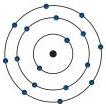
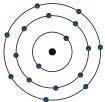
- Which of the following, in Fig. 9.18, correctly represents $\mathrm{Cl^-}$ ion (Atomic number of chlorine = 17).

(i)

(ii)

(iii)

(iv)
Fig. 9.18
- Determine the formula unit mass of the following substances.
(i) Ammonium nitrate (\mathrm{(NH_4NO_3)}), used as a nitrogen fertiliser, which is essential for plant growth. (ii) Phosphoric acid (\mathrm{(H_3PO_4)}), used to make phosphate fertiliser and detergents. (iii) Sodium hydrogencarbonate (\mathrm{(NaHCO_3)}), used to relieve acidity and helps in digestion.
- Write the formulae for the compounds formed by the reaction of:
(i) Magnesium and nitrogen (ii) Lithium and nitrogen (iii) Sodium and sulfur (iv) Aluminium and oxygen
- Complete the Table 9.3 by writing the formulae of the compounds formed by the cations on the left and the anions at the top. $\mathrm{LiNO}_3$ is given as an example.
Table 9.3
| NO₃⁻ | SO₄²⁻ | PO₄³⁻ | |
|---|---|---|---|
| NH₄⁺ | |||
| Li⁺ | LiNO₃ | ||
| Al³⁺ | |||
| Cu²⁺ |
- (5.3\mathrm{g}) of sodium carbonate and (6.0\mathrm{g}) of acetic acid react to produce (2.2\mathrm{g}) of carbon dioxide, (0.9\mathrm{g}) of water, and (8.2\mathrm{g}) of sodium acetate. Verify whether the law of conservation of mass is valid.
- If a species has 11 protons, 12 neutrons and 10 electrons then
(i) what is its atomic number and mass number? (ii) is it neutral, a cation or an anion? Explain. (iii) write its electronic configuration. (iv) name the species.
182
Exploration | Grade 9
Atomic Foundations of Matter
183
- Two elements, A and B, have the following configurations—
A: 2, 8, 5 B: 2, 8, 7
(i) Which element is more reactive? (ii) Will A and B form ionic or covalent bonds when they combine? Explain using electron transfer or sharing. (iii) Predict the formula of the compound they would form.
- Assertion (A): Copper sulfate conducts electricity in the molten state but not in the solid state.
Reason (R): Copper and sulfate ions are fixed in the lattice in molten state, while in solid state they can move freely.
Choose the correct option:
(i) Both A and R are true, and R is the correct explanation of A. (ii) Both A and R are true, but R is not the correct explanation of A. (iii) A is true, but R is false. (iv) A is false, but R is true.
- The species $^{27}\mathrm{Al}$, $^{80}\mathrm{Br}^{-}$ and $^{201}\mathrm{Hg}^{2+}$ have 13, 35 and 80 protons, respectively. How many electrons and neutrons do they have?
The Journey Beyond
Design and perform an experiment to show and compare that water always contains hydrogen and oxygen in the same ratio, regardless of its source.
Compare atoms and ions of any three elements. Show the number of electrons before and after ion formation using bar graphs.
Make a card game with cations and anions. Possible ideas may include
Pick cards from the pile or from open cards and match them with cards in your hand to form compounds. You may discard any unwanted cards.
Ask other players for cards and form compounds using the cards they already have.
To learn more about molecules you can explore the link given below —
https://phet.colorado.edu/sims/html/build-a-molecule/latest/build-a-molecule_all.html
The Quest Continues ...
Are there any chemical changes that do not obey the Law of Conservation of Mass?