Design Your Ideal Study Space: Science of Light, Noise & Posture
Design Your Ideal Study Space: Science of Light, Noise & Posture

Many students find themselves distracted, fatigued, or aching after just an hour of studying, often blaming their concentration or study habits.

Overview

Many students find themselves distracted, fatigued, or aching after just an hour of studying, often blaming their concentration or study habits. The real culprit might be something as fundamental as the physical environment itself. Trying to decipher complex Physics problems like those covered in Light Reflection And Refraction Science Notes under a dim, flickering bulb, or attempting to memorize Biology concepts amidst constant background chatter, significantly hinders information processing and retention.

Research into cognitive ergonomics consistently shows that optimal lighting, controlled noise levels, and proper postural support directly impact learning outcomes and sustained focus. Ignoring these elements means students are fighting their environment before even tackling their textbooks or challenging competitive exam prep. YoLearn AI, while providing a 24x7 AI tutor, works best when a student can fully engage with its interactive features, and that engagement starts with a conducive study space.

History & Background

For centuries, the idea of a "study" was often a quiet room with a sturdy desk and good natural light, intuitively understood to be effective. However, the scientific approach gained traction in the early 20th century with industrial psychology, analyzing how physical conditions like factory lighting affected worker productivity. These early findings laid the groundwork for understanding how environmental factors impact cognitive tasks, a principle also relevant to studying.

The mid-to-late 20th century saw more specific research tailored to learning environments, moving beyond general productivity. Studies began to quantify the effects of different light temperatures on alertness, the impact of specific decibel levels on reading comprehension, and the physiological benefits of ergonomic furniture. This evolution has led to today's understanding that an "ideal study space" isn't just about personal preference, but about creating conditions that scientifically support the brain's learning processes.

Benefits

  • Reduced Mental Fatigue: Appropriate lighting minimizes eye strain, allowing for longer periods of focused reading and problem-solving without cognitive burnout.
  • Improved Information Retention: A quiet environment prevents cognitive overload from auditory distractions, enabling the brain to encode new information more efficiently.
  • Enhanced Physical Comfort: Correct posture support reduces physical discomfort and pain, which can otherwise divert mental resources away from learning tasks.
  • Increased Productivity: A dedicated, optimized space signals to the brain that it's time to focus, creating a routine that boosts study efficiency and output.
  • Deeper Engagement with AI Tools: A well-designed space allows students to fully immerse themselves in YoLearn AI's instant quizzes and flashcards, leading to more effective recall and spaced repetition practice.
  • Seamless Learning Flow: With fewer environmental distractions, students can move smoothly between using YoLearn AI for photo doubt solving, generating notes, and working through personalized learning paths, maintaining their study rhythm.
  • Optimal Use of AI Mentorship: An ergonomic setup ensures physical comfort during longer sessions with the AI mentor for study plans or exam stress support, allowing students to genuinely connect with the guidance offered.
  • Integrated Study Experience: By combining a scientifically optimized environment with tools like Build Your Perfect Study Rhythm with YoLearn.ai’s CBSE Study Rhythm Builder, students create a holistic learning ecosystem that supports both their physical well-being and academic progress.
  • Applications

  • Controlling Light for Focus: A student struggling with eye strain after reviewing detailed diagrams for Light Shadows And Reflections Science Notes can optimize their desk lamp to provide 500-700 lux of even, glare-free illumination, reducing visual fatigue and improving clarity.
  • Managing Noise for Concentration: When preparing for competitive exams like JEE, where a few seconds of distraction can break a problem-solving chain, using noise-cancelling headphones or choosing a quiet corner away from household activity can dramatically improve sustained attention.
  • Ergonomics for Sustained Work: A student spending hours on complex derivations from Light Mirrors And Lenses Science Notes can adjust their chair height, monitor distance, and keyboard position to maintain a neutral spine, preventing back pain and allowing longer, more comfortable study sessions.
  • Enhanced Voice Tutoring: With optimal lighting, a student can clearly see textbook problems they're discussing via YoLearn AI's real-time voice conversations, making the AI's explanations on complex topics easier to follow without visual discomfort.
  • Focused Photo Doubt Solving: A distraction-free, well-lit space ensures that when snapping a photo of a question for YoLearn AI's photo doubt solving feature, the image is clear, and the student can immediately focus on the step-by-step solution without external interruptions.
  • Maximizing AI NCERT Assistant: Using the AI NCERT assistant for section-wise explanations or mind maps becomes more effective in a quiet environment, allowing for deeper engagement with the summarized content and better retention, especially when delving into The Wonderful World Of Science Science Notes.
  • Future

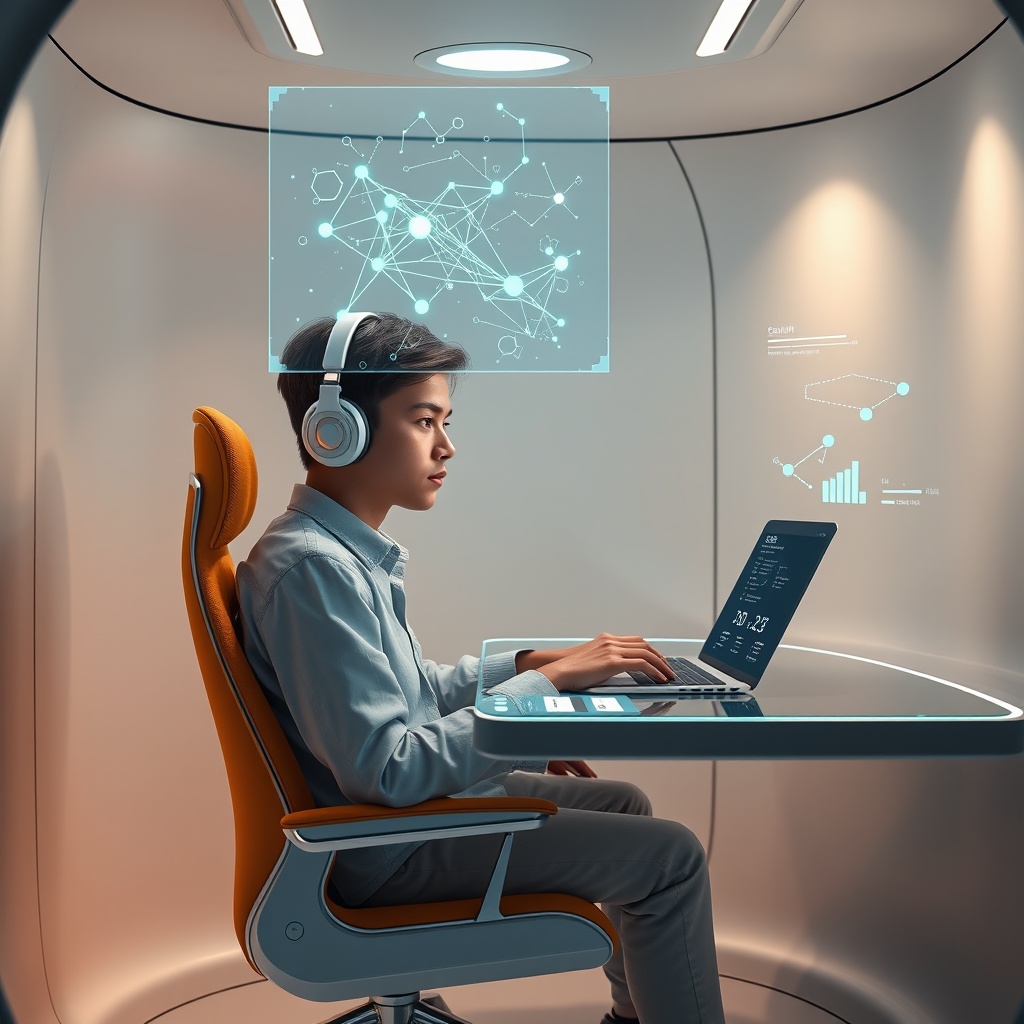
    The future of study space design is moving towards "smart" environments that adapt to individual cognitive states. Imagine lighting that dynamically adjusts its color temperature and intensity based on the time of day and the student's task (e.g., warmer light for reading, cooler for active problem-solving), or soundscaping technology that generates specific background frequencies to enhance focus or block distractions.

    As study spaces become more adaptive, YoLearn AI will integrate even more seamlessly. Picture a scenario where your smart study desk senses you're struggling with a concept and, via YoLearn AI, offers a voice explanation or generates a quick quiz, while simultaneously adjusting ambient light to reduce eye strain. This creates a fully responsive learning ecosystem. Start optimizing your study space and explore science easily with the YoLearn.ai CBSE Science Explainer App today: https://play.google.com/store/apps/details?id=com.yolearn.student&hl=en_IN

    Follow YoLearn.ai