How Your Brain Learns: Neurons, Synapses, and Memory Explained
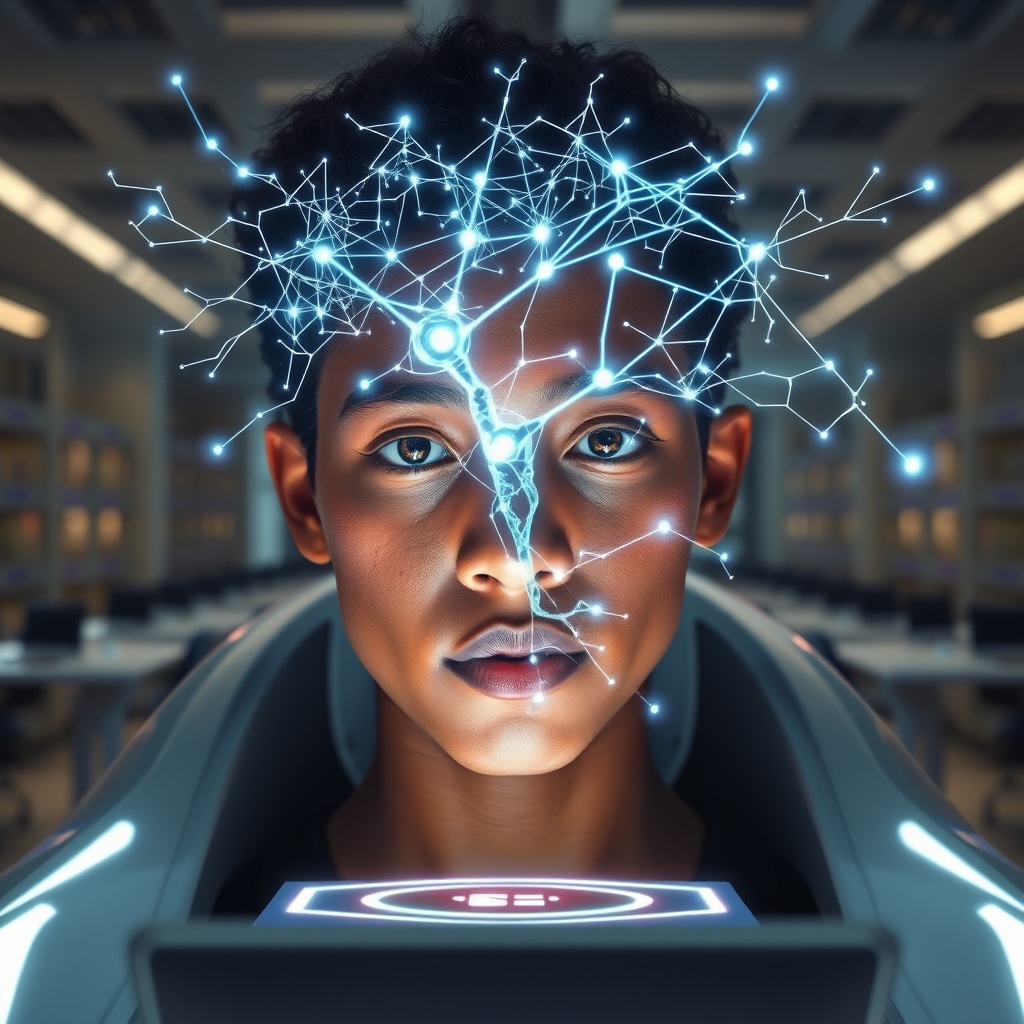
Ever wonder why recalling a forgotten formula for a Physics problem feels so difficult, while remembering a childhood memory is instantaneous?
Overview
Ever wonder why recalling a forgotten formula for a Physics problem feels so difficult, while remembering a childhood memory is instantaneous? The answer lies deep within our brain's intricate biological machinery. Understanding how does your brain learn isn't just for neuroscientists; it's crucial for students aiming to optimize their study methods and for anyone curious about the astonishing capacity of the human mind to acquire new knowledge and skills.
At its core, learning involves physical changes in the brain's structure. When you grapple with a new concept like molecular orbital theory or the nuances of the Indian Constitution, your brain is actively rewiring itself. This constant adaptation is what allows us to grow, problem-solve, and retain information. YoLearn AI is designed with an understanding of these neural principles, aiming to align its tutoring methods with how our brains naturally process and store information.
History & Background
For centuries, the mechanisms of learning were largely philosophical, focusing on concepts like associationism or behaviorism. Early educational theories emphasized rote memorization, treating the brain as a passive recipient of information, much like filling an empty vessel. The actual biological basis – the interplay of neurons and electrical signals – remained largely a mystery until the 20th century.
The mid-20th century brought pivotal discoveries: the identification of neurons as individual units and the concept of synapses as the junctions where these neurons communicate. Landmark findings like Donald Hebb's "neurons that fire together wire together" hypothesis in 1949 provided a fundamental biological framework for learning and memory, showing that repeated activation strengthens neural connections. This shifted the focus from abstract psychological theories to tangible neurobiological processes.
Benefits
Knowing how the brain processes information offers distinct advantages:
YoLearn AI capitalizes on these neurological insights to provide targeted support:
Applications
Understanding brain learning has direct implications for effective study:
YoLearn AI integrates these neuroscientific principles to enhance learning:
Future
The future of learning science will likely see increasingly precise interventions, moving beyond general principles to truly individualized brain-based learning. This might involve real-time assessment of cognitive states through non-invasive techniques to adjust learning content difficulty or modality dynamically, ensuring optimal engagement and memory encoding for each specific student.
YoLearn AI is evolving to further refine its adaptive learning engine, aiming to create tutoring experiences that mimic the brain's own adaptive plasticity even more closely. Imagine an AI that not only knows what you know, but how you learn best, dynamically adjusting its teaching style, pace, and content delivery based on nuanced real-time interactions, leading to truly individualized mastery. Start exploring how your brain can learn more efficiently with YoLearn AI today: https://play.google.com/store/apps/details?id=com.yolearn.student&hl=en_IN