Why Biology Diagrams Challenge Physics-Minded Students
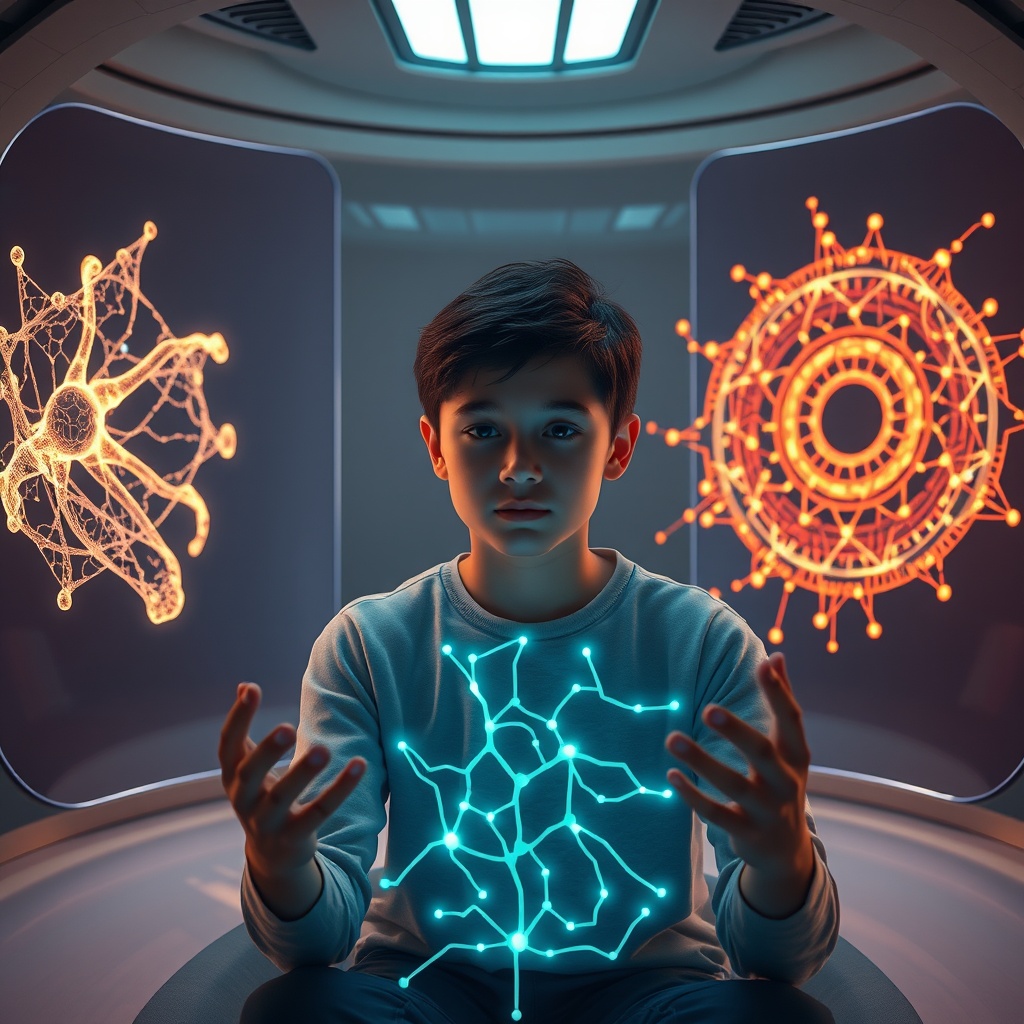
A student who instinctively grasps vector diagrams in Physics—understanding forces and motion from a few arrows—can often stare blankly at a detailed diagram of a neuron or a plant cell. The fundamental issue isn't a lack of intelligence, but a clash in how information is visually encoded and processed. Physics diagrams often simplify complex phenomena into abstract, quantitative relationships, while Biology diagrams demand meticulous observation of intricate, often organic, structures and their specific labels.
Overview
A student who instinctively grasps vector diagrams in Physics—understanding forces and motion from a few arrows—can often stare blankly at a detailed diagram of a neuron or a plant cell. The fundamental issue isn't a lack of intelligence, but a clash in how information is visually encoded and processed. Physics diagrams often simplify complex phenomena into abstract, quantitative relationships, while Biology diagrams demand meticulous observation of intricate, often organic, structures and their specific labels.
This difference in visual literacy can lead to frustration, especially when a student excels at solving complex Physics problems yet consistently loses marks on Biology questions requiring diagram interpretation or labelling. It highlights a common academic blind spot. YoLearn AI directly addresses this, offering a bridge for students who need a more structured, explained approach to deciphering the dense visual information presented in biological illustrations.
History & Background
For decades, learning Biology diagrams meant poring over textbooks, matching labels to lines, and attempting to replicate them from memory. Early digital tools primarily offered static image libraries or basic labelling exercises, essentially digitizing the same manual process without enhancing understanding. There was little to help a student who struggled to understand *why* a particular structure looked a certain way or its functional significance.
The shift began with interactive simulations and 3D models that allowed some manipulation, but still lacked conversational explanation. The current generation of AI-powered tutors, like YoLearn AI, represents a leap by not just displaying diagrams, but actively explaining every component, its function, and its relation to the overall system. This provides a dynamic, explanatory layer that static images or even basic digital labels could never offer, akin to a teacher annotating a diagram in real-time.
Benefits
Applications
Future
The next evolution in diagram-based learning will involve generative AI that can produce custom, interactive diagrams. Instead of just explaining existing visuals, these systems will create bespoke diagrams to illustrate specific aspects of a concept, allowing students to "build" and manipulate visuals based on their queries, highlighting particular pathways or structures on demand.
YoLearn AI is moving towards integrating such interactive visualization capabilities, offering students not just explanations of existing diagrams, but the ability to dynamically explore biological structures and processes. This means a student could ask to see a specific part of a cell in isolation or view a dynamic representation of nutrient absorption, making visual learning truly adaptive. If you struggle with deciphering Biology diagrams, experience the difference with YoLearn AI: https://play.google.com/store/apps/details?id=com.yolearn.student&hl=en_IN