CHAPTER 6
The Age of Reorganisation
By continuous living tradition and a vital power of rejuvenescence, this land has readjusted itself through unnumbered transformations.
— Jagdish Chandra Bose (1917)
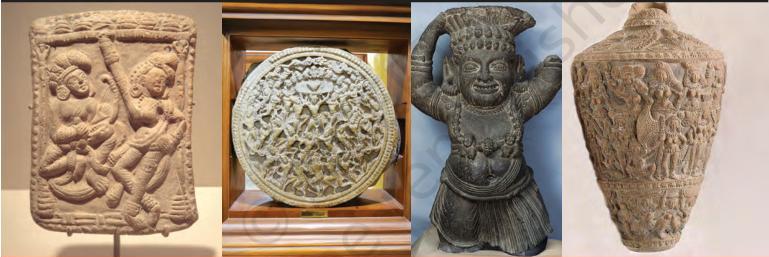 Fig. 6.1.1. A glimpse of the art from the age of reorganisation
The Big Questions?
- Why is the period that followed the Maurya empire sometimes called the ‘Age of Reorganisation’?
- What were the values or principles that guided emperors of that period?
- How did foreign invaders assimilate into Indian society and contribute to cultural confluence?

Exploring Society: India and Beyond | Grade 7 Part 1 118

Bhavisha and Dhruv had recovered from their journey to the Maurya empire and were itching for another adventure. They decide to use Itihasa again and landed in a new historical period. They came across a collection of art pieces, each one quite different from the other. (See Fig. 6.1.1) They wondered—could these artefacts belong to multiple kingdoms rather than just one? They guessed right. In this chapter we will travel over a fairly long period. Here we go...
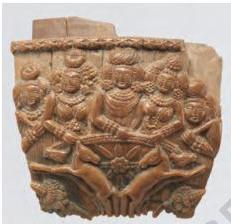 Fig. 6.1.2.
Very little is known about Ashoka's successors to the throne. It is generally accepted, however, that the last Maurya emperor was assassinated around 185 BCE by his commander-in-chief Pushyamitra Shunga. This led to a breakup of the empire—hardly half a century after Ashoka, as we mentioned in the last chapter. Many new kingdoms emerged across the subcontinent, which, often, were earlier tributary kingdoms under the
overlordship of the Maurya empire. The northwest region became weak, exposing it to invasions from outside the subcontinent.
This period is also known as the 'age of reorganisation' by some scholars as the existing regions were being reorganised into new kingdoms that were constantly competing to become powerful. The map of India changed significantly in that age, as did people's lives.
LET'S EXPLORE

Create a timeline on a sheet of paper marking the period from the first year of the 2nd century BCE and ending in the last year of the 3rd century CE. How many years does this period cover? As we progress through the chapter, mark the key individuals, kingdoms and events on the timeline.
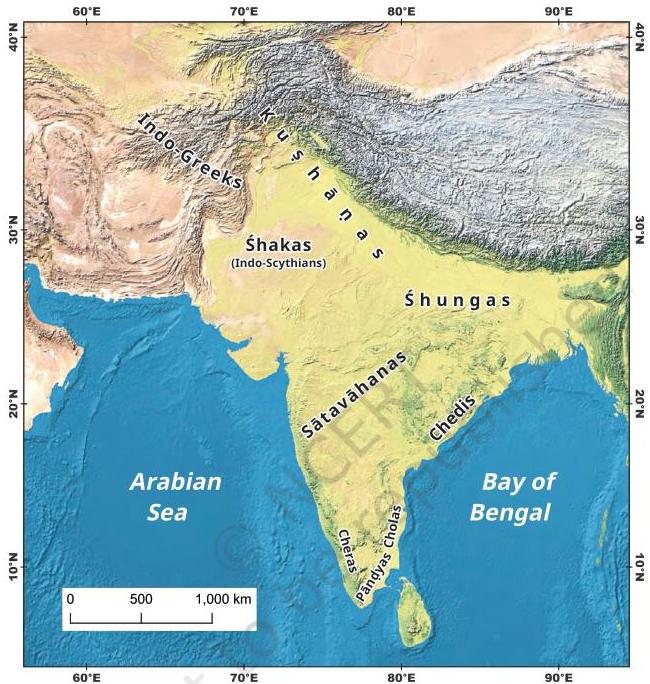 Fig. 6.2. Prominent dynasties of India during the age of reorganisation
LET'S REMEMBER
While working on the timeline, did you notice the transition from BCE to CE? Remember what you learned in the Grade 6 chapter 'Timeline and Sources of History' about how time is measured in history.
Exploring Society: India and Beyond | Grade 7 Part 1
Matrimonial alliance: An alliance arranged through a marriage, generally between two members of royal families. In practice, this would often mean a king offering his daughter for marriage into the royal family of a neighbouring kingdom, with the intention of cementing an alliance between the two kingdoms.
LET'S EXPLORE
In the previous chapter, you studied the map of the Maurya empire (see page 100). Above is a map of the post-Maurya period. How many kingdoms can you count in the area that were previously under the control of the Maurya empire?

The 'new' kingdoms now competed for territorial control. Peaceful methods like matrimonial alliances between neighbouring kingdoms, or the use of force in warfare, were means of gaining control. Remember that there was constant wrestling for control over areas along the borders, as gaining control over them was important to keep the kingdom safe from attacks.
Together with those political events, there was a burst in the development of art, architecture and literature, and enriching cultural exchanges. We will get a peek into this in the following sections.
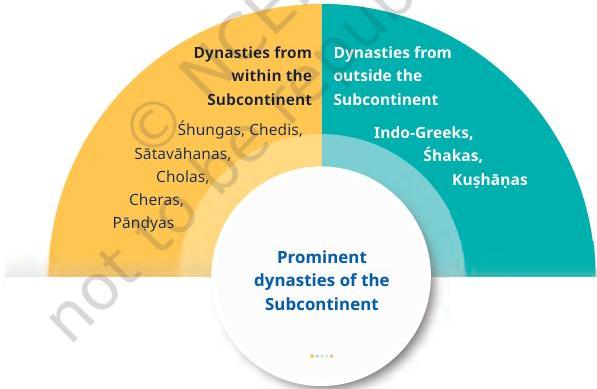 Fig. 6.3
Surge of the Śhungas
Puṣhyamitra Śhunga founded the Śhunga dynasty, which ruled over parts of north and central India. He performed the aśhvamedha yajña, a Vedic ritual, to establish himself as a most powerful ruler. Although his empire was smaller than the previous Maurya Empire (compare their two maps), he kept it safe from potential invaders and maintained friendly relations with the Greeks, after some initial military campaign against them. But, again, the empire did not last long after him—a century later, it was gone.
The period witnessed the revival of Vedic rituals and practices, but other schools of thought nevertheless continued to flourish.
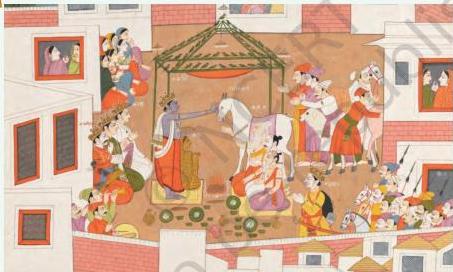 Fig. 6.4. Scene from the Rāmāyana in which King Rāma is seen performing the aśhvamedha yajña (19th century painting, National Museum)
The aśhvamedha yajña was a Vedic ritual conducted by many rulers to declare their position as the king. In this ritual, a horse accompanied by soldiers was left to wander freely. Any territory that the horse crossed unchallenged was considered to become a part of the king’s empire. If any ruler stopped the horse, it led to a battle to determine supremacy.
Sanskrit emerged as one of the preferred languages for philosophical and literary works. Do you recall some aspects of the Yoga Sūtras in your Physical Education and Well-being classes in Grade 6? These Yoga Sūtras were compiled by Patañjali during this period.
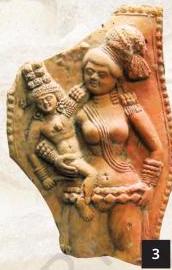
The Śhungas patronised literature, art and architecture. The Bharhut Stūpa (in present-day Madhya Pradesh) presents us with beautiful examples of Śhunga art. It was probably built during the time of Ashoka, but the Śhungas added beautifully carved railings and reliefs depicting stories from the Buddha's life. These are considered some of the earliest examples of Buddhist art.
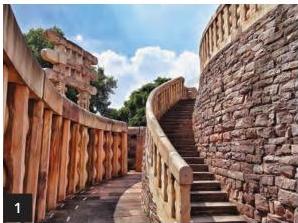
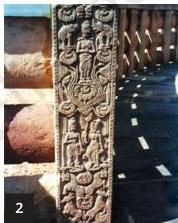
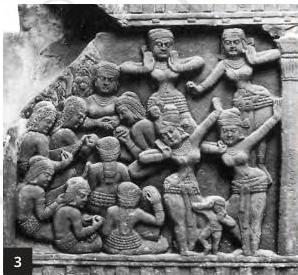
Fig.6.5.1. Railings at the Bharhut Stūpa. Fig. 6.5.2. Carving of Lakshmi on a railing. Fig. 6.5.3. A group of singers and dancers. 6.5.4. Elephants holding up the wheel of dharma
 Some Shunga Contribution to Art
 6
6
 7
7
 8
8
 9
9
 10
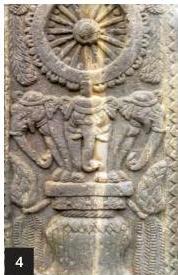
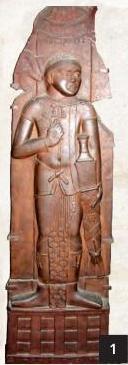
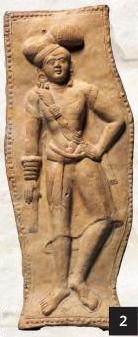
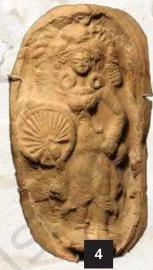
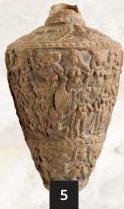
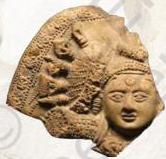
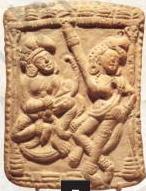
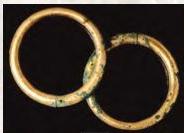
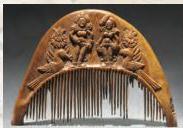
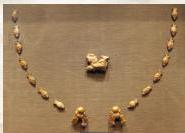
Fig. 6.6.1. Pillar with a Greek warrior. Fig. 6.6.2. Male figure. Fig. 6.6.3. Woman with a child. Fig. 6.6.4. Woman with a fan. Fig. 6.6.5. A vase. Fig. 6.6.6. Female figure with hair ornaments, terracotta. Fig. 6.6.7. Royal family. Fig. 6.6.8. Bronze bangles covered with a thin layer of gold. Fig. 6.6.9. Comb of ivory. Fig. 6.6.10. Beads of a necklace.
10
Fig. 6.6.1. Pillar with a Greek warrior. Fig. 6.6.2. Male figure. Fig. 6.6.3. Woman with a child. Fig. 6.6.4. Woman with a fan. Fig. 6.6.5. A vase. Fig. 6.6.6. Female figure with hair ornaments, terracotta. Fig. 6.6.7. Royal family. Fig. 6.6.8. Bronze bangles covered with a thin layer of gold. Fig. 6.6.9. Comb of ivory. Fig. 6.6.10. Beads of a necklace.
Tapestry of the Past 6 - The Age of Reorganisation
Exploring Society: India and Beyond | Grade 7 Part 1

LET'S EXPLORE
Below is a panel from the Bharhut Stūpa. Look at the two figures on the right. What are they doing? Can you guess their profession? Notice their attire. What does this tell us about them? List other details that you notice in the panel and discuss your findings in class.
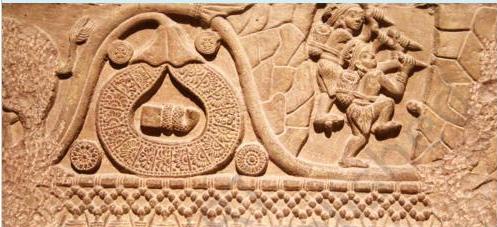 Fig. 6.7. A panel from the Bharhut Stūpa
LET'S EXPLORE
Look closely at the pictures in the collage in Fig 6.6 (on the previous page). In a note, write down your observations on the clothes, the jewellery, and other objects of daily use.
The Sātavāhanas
From the limited evidence available, the Śhungas seem to have waged wars with many of their neighbouring regions. This may have included the Sātavāhanas, who ruled large parts of the Deccan from the 2nd century BCE onward, to the south of the Śhunga Empire. Sometimes referred to as ‘Andhras’, the Sātavāhanas were a powerful dynasty and their empire largely comprised of present-day Andhra Pradesh, Telangana and Maharashtra, with different capital cities at different times—the most famous were Amrāvati and Pratiṣṭhāna (Paithan). Trade and commerce appear to have flourished in the Sātavāhana kingdom.
Coins issued by the Sātavāhana rulers have been found in various regions of India, from Gujarat to Andhra Pradesh — India's western and eastern coasts. Indeed, many coins depicted ships, suggesting that maritime trade was an important part of economic life. The type of ship depicted on the coin above suggests advanced shipbuilding and navigation technologies.
Agriculture flourished in the Krishna-Godavari river system, which provided economic stability to the kingdom. The Sātavāhanas had active trade networks that reached as far as the Roman Empire and included an exchange of goods like spices, textiles, sandalwood, and luxury items like gold-plated pearls, ivory, etc. Imports included glass and perfumed ointments. Tolls and taxes on trade added revenue to the kingdom.
Economic prosperity and a relatively peaceful political period facilitated the development of literature, art and culture, to which the Sātavāhanas made significant contributions.
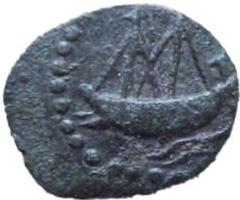 Fig. 6.8. A Sātavāhana coin bearing the image of a seafaring ship with two masts. Notice how the masts of the ship are prominently depicted with intersecting lines, possibly representing sails; the wavy lines below represent oceanic waters.
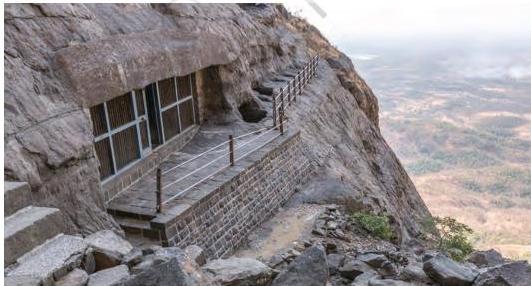 Fig. 6.9. The Naneghat Caves near Pune, located close to a major trade route, were used for collection of tolls and taxes, and as resting places for traders.
Exploring Society: India and Beyond | Grade 7 Part 1 126
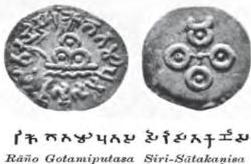 Fig. 6.10. Coin of the Sātavāhanas with an inscription in Brahmi script, 'King Lord Sātakarni, son of Gautami'.
Life under the Sātavāhanas
In the Sātavāhana tradition, princes were often named after their mothers. Thus Gautamīputra Sātakarni was named after his mother, Gautamī Balāśhri. She was a powerful queen who donated land to Buddhist monks and had an important inscription carved in Nāśhik, showing her influence in the kingdom.
THINK ABOUT IT
What, according to you, could the tradition of using the mother's name at the beginning of a king's name signify?
Another set of inscriptions found in the Naneghat caves near Pune (Fig. 6.9) focuses on a Sātavāhana widow queen who, remarkably, performed several Vedic rituals, including the aśhvamedha yajña. The inscriptions mention Vedic gods like Indra, Chandra, and Sūrya. We also get a glimpse of the queen's donations (dāna): land, cows, horses, elephants, silver coins, and other items to priests, guests, workers, scholars, and monks.
These inscriptions are in the Brahmi script and include a few numerals (that is, symbols for numbers) which, at times, resemble today's shapes, as shown below. This is one of the many evidences showing that modern numerals ultimately originated in India.

THINK ABOUT IT
In the above series of numerals, which ones look somewhat like our modern numerals? Which ones don't?
The Sātavāhanas were devout followers of Vāsudeva (another name for Kṛṣṇṇa), although they also patronised other schools of thought, which flourished during their rule. For instance, Sātavāhana kings often granted tax-free agricultural land to Vedic scholars, Jaina and Buddhist monks, helping them to pursue their studies and practices.
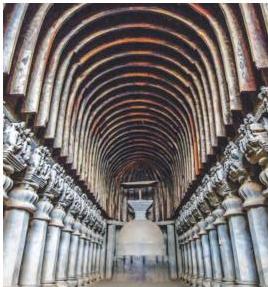 Fig. 6.11. The Karla caves (near Lonavala in present-day Maharashtra) to which the Sātavāhanas contributed during their reign. These caves were made for Buddhist monks. Notice the magnificent pillars and the stone replica of a stūpa in the centre—all of it carved out of a rocky hillside!
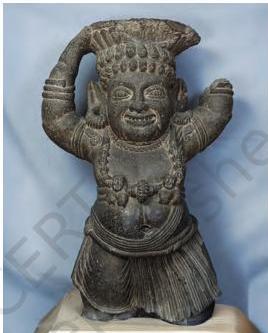 Fig. 6.12. A yakṣṇa (a minor deity associated with nature) from the Pitalkhora caves, Maharashtra, carved in the Sātavāhana period.
THINK ABOUT IT
This sculpture of a yakṣṇa from Pitalkhora carries an inscription on its hand, kanhadāsena hiramakarena kāṭa meaning ‘made by Kanahadasa, a goldsmith’. Is it not interesting to see that a goldsmith could also craft a sculpture made of stone? What do you think this tells us about people’s professions at the time?
In the 3rd century CE, the Sātavāhana Empire fragmented into smaller independent kingdoms. Several factors contributed to its disintegration, the most significant one being weak central
control and a gradual economic decline. Once again, this will pave the way for regional powers to assert or reassert their dominance and establish new kingdoms.
Coming of the Chedis
Let us go back a little. Do you remember the Kalinga war mentioned in the previous chapter? After the decline of the Maurya Empire, Kalinga rose as a prominent power under the kings of the Chedi dynasty.
Khāravela, one of their main rulers, was a devoted follower of Jain teachings; he was sometimes called bhikṣhu-rāja or monk-king, although he respected all schools of thoughts. Near Bhubaneswar, the famous Udayagiri-Khandagiri caves, likely developed for Jain monks, feature intricate panels and statues, and spacious rooms carved into the rock, showcasing the skill of the craftsmen. The design and craftsmanship of these caves make them notable examples of 'rock-cut architecture', a style of architecture that we will turn to in higher classes.
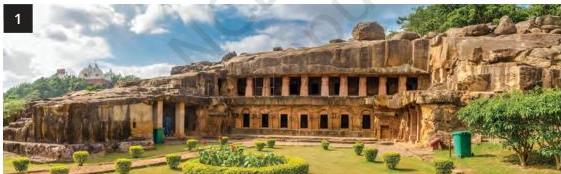
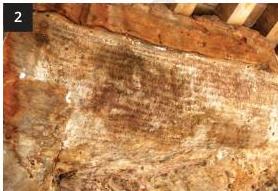
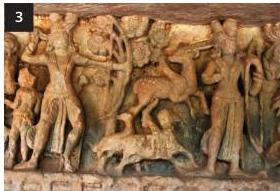
Fig. 6.13.1. Udayagiri caves near Bhubaneswar. Fig. 6.13.2. The Hāthigumphā inscription. Fig. 6.13.3. Carved panel showing a scene from the Rāmāyana
One of the caves prominently displays the Hâthīgumphā inscription, written in Brahmi script, which records King Khāravela’s accomplishments year after year, including his victorious military campaigns and his benevolent works for the welfare of his people. Khāravela also proudly declares that he created a ‘council of ascetics and sages’ from a hundred regions and is ‘accomplished in extraordinary virtues, inspector of every sect and repairer of every temple’. Once again, a ruler takes pride in extending his protection to all schools of thought. This is a fundamental part of what we may call the ‘Indian ethos’.
THINK ABOUT IT
Notice the regularity of the rock-cut chambers sculpted nearly two millennia ago. How did artisans achieve such precision with just a chisel and a hammer? Picture yourself as a sculptor in that era, shaping stone into art with your own hands. What tools would you use?
Kingdoms and Life in the South
In India’s southern region, this period, between the 2nd or 3rd century BCE and the 3rd century CE, saw the rise to prominence of three powerful kingdoms—the Cheras, the Cholas and the Pāṇḍyas—which often competed with each other for control over the South, while also contributing to the region’s growth in trade and culture. Let’s remember how Aśhoka’s empire stopped at those south Indian kingdoms (which he mentions in his edicts), which suggests that they remained independent even at the height of Mauryan power. And although Khāravela claims that he defeated an alliance of south Indian kings that threatened his own territory, the location of that battle is unknown and he does not seem to have invaded the southern region.
THINK ABOUT IT
In the map given on next page, you may notice different symbols alongside the names of the kingdoms. What do these symbols represent? Think about how they highlight the unique identities of the kingdoms.
Tapestry of the Past 6 – The Age of Reorganisation 129
Exploring Society: India and Beyond | Grade 7 Part 1 130
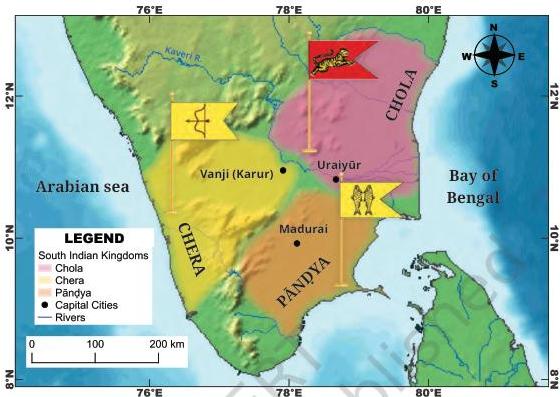 Fig. 6.14. Kingdoms in the South (note that borders are approximate and fluctuated in time).
That period saw the advent of many poets whose works, collectively known as ‘Sangam literature’, defined the entire era: it came to be known as the ‘Sangam Age’. The word sangam is derived from the Sanskrit sangha, which translates to ‘association’ and ‘coming together’—in this context, referring to an assembly of the poets. The Sangam literature, the oldest in south India, consists of several collections or anthologies of poems and is much consulted by historians who investigate the society and culture of the times. Primarily, Sangam poetry expresses with great skill and delicacy personal emotions such as love or societal values like heroism and generosity.
The Cholas
The Sangams refer to three ‘crowned kings’ — the Cholas, Cheras and Pāṇḍyas. The Cholas were a powerful dynasty that ruled parts of south India from the 3rd century BCE to the 13th century CE. The Chola king Karikāla is said to have defeated a combined force of the Cheras and Pāṇḍyas and established his supremacy.
Tapestry of the Past 6 - The Age of Reorganisation 131
Silappadikāram: The Tale of the Anklet
This famous epic, composed soon after the Sangam collections, tells the story of Kannagi, who lived happily with her husband Kovalan in the prosperous Chola capital city of Puhār (identified with Kāveripattinam seen earlier). However, Kovalan fell in love with a dancer and eventually lost all his wealth over her. Realising his mistake, he returned to Kannagi, who forgave him. They then travelled to Madurai, the capital of the Pāṇḍya kingdom, hoping to rebuild their lives.
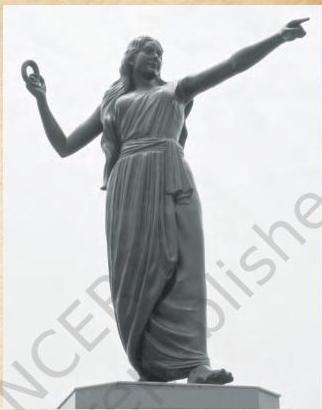 Fig. 6.15. Statue of Kannagi, Chennai
To start anew, Kannagi gave Kovalan one of her anklets to sell; however, he was falsely accused of theft and executed by the Pāṇḍya king. Devastated, Kannagi proved his innocence by revealing her second anklet. The king, realising his mistake, died of shock. Kannagi then cursed Madurai, invoking the god of fire who destroyed the city. She then walked further west to the Chera kingdom, where she was honoured as a goddess. Even today, Kannagi is worshipped in Tamil Nadu and Kerala.
Silappadikāram's exquisite poetry thus centres on the principles of justice and the ruler's dharma to protect it. It also takes us through cities rich in traded goods, through three kingdoms, and also through several schools of thought.
THINK ABOUT IT
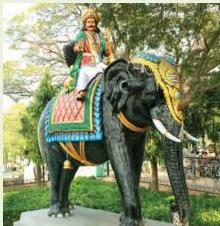 Fig. 6.16. Statue of King Karikāla at the Grand Anicut Memorial Park in Tamil Nadu
Observe the statue of the king. How is he depicted? What do his posture, clothing, and expression say about his power and status?
Karikāla undertook many projects for the benefit of the people. Among them is the Kallaṇai or Grand Anicut, a complex water diversion system located at a geographically strategic point just downstream of the Srirangam island. It helped to divert waters from the Kāveri to the central and southern parts of the Kāveri delta. This enabled more land to be brought under cultivation, earning this area the name 'rice bowl of the South'. Restored several times in the course of time, it is still in use and helps millions of people in Tamil Nadu by providing water for irrigation and thus supporting agriculture in the region.
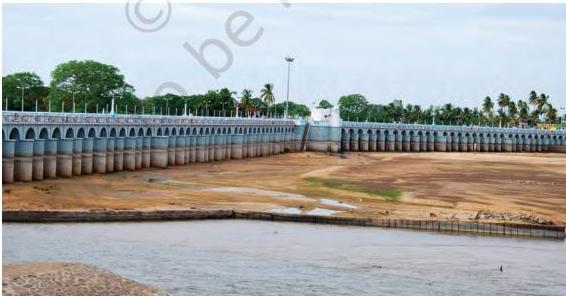 Fig. 6.17. A view of the Kallaṇai or Grand Anicut
Tapestry of the Past 6 – The Age of Reorganisation 133
The Cheras
Also known as the Keralaputra (sons of Kerala), the Cheras ruled over the western parts of Tamil Nadu and Kerala, with their capital at Vanji, present-day Karur in Tamil Nadu. They played an essential role in shaping the region's cultural and economic history, encouraging the growth of Tamil literature and patronising Sangam poets.
The Cheras were known for their extensive trade connections with the Roman Empire and West Asia, exporting many goods from India to the outside world. The kingdom became a hub for the export of spices, timber, ivory and pearls.
THINK ABOUT IT
Have you ever wondered how historians uncover the trade relations between two distant kingdoms many centuries ago? Let's take a moment to brainstorm and discuss how this information comes to light.
The Chera kings issued a number of coins under their reign. Do you notice the royal emblem of Cheras on one such coin given below?
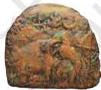

Fig. 6.18. Coins under Chera Kings
The Pāṇḍyas
The Pāṇḍyas' rule over parts of Tamil Nadu and the surrounding regions, with their capital at present-day Madurai, goes back several centuries BCE. Successive kings expanded the Pāṇḍyan kingdom. In his work Indika, Megasthenes mentions this kingdom as a prosperous one, with a strong administration and involved in active trade with distant powers like the Greeks and Romans, apart from much internal trade (Khāravela, for instance, states that he gets hundreds of pearls brought from the Pāṇḍya kingdom). The Pāṇḍyas were also an important naval power of the subcontinent. The later Pāṇḍyas also contributed greatly to the art, architecture, and overall prosperity of the region.
THINK ABOUT IT
The Pāndyas were known for their pearls. Why do you think pearls were an important article of trade during these times?
The Pāndyas left many inscriptions in which their kings asserted their great concern for their subjects' welfare and their encouragements to all schools of thought and belief.
Invasions of the Indo-Greeks
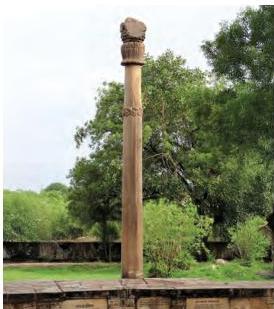 Fig. 6.19. The Heliodorus pillar near Vidisha
Having completed our brief journey into south India, it is time to return to the north, where a very different kind of development is about to occur. So far, we have only visited a few native dynasties; yet the same period also witnessed the arrival of invaders who entered through the northwest frontier and took control of the northwestern, northern, and central regions of the Subcontinent.
Let us first examine the legacy of Alexander's brief campaign in the Indus plains. While retreating from the areas he had conquered, he left satraps behind. Over time, these
regional rulers established their independent domains and came to be known as 'Indo-Greeks'.
After the decline of the Mauryas, the areas in the northwestern regions (roughly present-day Pakistan and Afghanistan) were an easy target for the Indo-Greeks. However, while they arrived as conquerors, they were much influenced by the rich local culture. This cultural interaction led to a blend of Greek and Indian elements in governance, art, language, and daily life, shaping the cultural landscape of the region.
The Heliodorus pillar, near Vidisha (Madhya Pradesh), is a notable example of such connections. It is named after an Indo-
Greek ambassador, who in his inscription praises Vāsudeva as the ‘god of gods’. The inscription also states, “Three immortal precepts (footsteps) [...] when practised lead to heaven: self-restraint, charity, consciousness.”
During excavations in north India, archaeologists have found many Indo-Greeks coins, which have provided most of the information we have about these rulers. Those coins were made of gold, silver, copper and nickel often portraying a king on one side and Greek deities on the other. However, some coins, instead, depicted Indian deities like Vāsudeva-Kṛṣṇṇa and Lakṣhmī.
The rule of the Indo-Greeks ended with the invasions of the Indo-Scythians or Śhakas (see a little below).
LET’S EXPLORE
What do you think might have been the meaning of having deities like Vāsudeva-Kṛṣṇṇa or Lakṣhmī on some Indo-Greek coins?
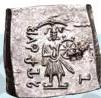 Fig. 6.20. An Indo-Greek silver coin with Vāsudeva-Kṛṣṇṇa on one side
DON’T MISS OUT
The Śhakas (sometimes called Indo-Scythians) also invaded the northwest of the Subcontinent and ruled from the latter part of the 2nd century BCE to the 5th century CE. Their kingdoms rose to power after the Indo-Greeks, and they were in power until the arrival of the Kuṣṇāṇas (see below). It was during this period that the Śhaka Samvat calendar was developed. It is 78 years behind the Gregorian calendar (except from January–March, when it is behind by 79 years). It was adopted as the Indian National Calendar in 1957.
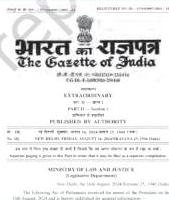 Fig. 6.21. Notice how dates are provided in both the Gregorian and Śhaka Samvat eras on this official publication of the Government of India.
Exploring Society: India and Beyond | Grade 7 Part 1
The Emergence of the Kuṣhāṇas
The Kuṣhāṇas, originally from central Asia, entered India probably in the 2nd century CE. At its peak, their empire extended from central Asia to large parts of northern India. Their rule marked a period of extensive cultural intermixing and had a profound impact on the history of the Indian subcontinent.
When he was not busy with his military campaigns, Kaṇiṣhka encouraged art and culture, leading to the development of new artistic styles.
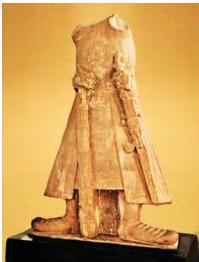 Fig. 6.22. Headless statue of King Kaniṣhka
LET'S EXPLORE
Carefully observe this massive statue (1,85 m high) and notice the clothing, weapon, and footwear. What does it tell us about this figure?
This famous ‘headless’ statue is of King Kaniṣhka, probably the most powerful ruler of the Kuṣhāṇa dynasty. The Brahmi inscription on the statue reads, ‘mahārāja rājadhirāja devaputra kaṇiṣhka’, that is, ‘The great king, king of kings, son of God, Kaniṣhka’.
LET'S EXPLORE
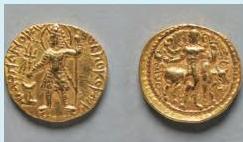
Observe the coins carefully. Who, besides the emperor, appears on the coin?
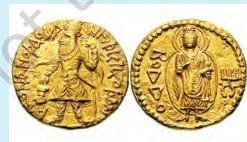 Fig. 6.23. Coins of Kaniṣhka
136
On the first coin, Kāṇiṣhka is shown holding a spear, titled ‘King of Kings’, while the other side features Buddha with the inscription ΒΟΔΔΟ (Buddha) in Greek script. On the second coin, an emperor appears on one side, and Shiva with the bull Nandi on the other. Let’s reflect on the following:
- Why would a powerful ruler feature Buddha and Shiva on his coins? What does it say about his values and priorities?
- Can you find modern examples of such symbolic currency?
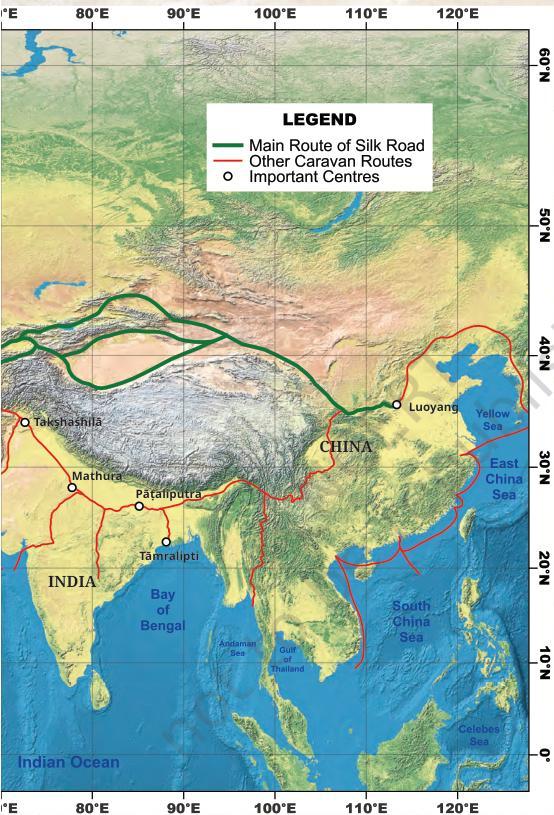
The Kuṣhāṇas held control over significant sections of the Silk Route (on the next page), and during their reign, trade grew, connecting India with other parts of Asia and the West.
Continuing the trend set under the Indo-Greek rulers, Kuṣhāṇa art and architecture, exemplified by the Gāndhāra and Mathurā schools of art, are celebrated for their fusion of Indian and Greek styles. The sculptures feature a variety of deities reflecting the peaceful co-existence of various schools of thought. This era saw the rise of representations of deities—like Sūrya or the sun god—which looked more similar to humans and the increase in the development of religious art, laying the groundwork for later temple architecture in the subcontinent.
The Gāndhāra style, which emerged in the western regions of Punjab, blended Greco-Roman elements with Indian features. Most sculptures and artefacts from this tradition were crafted in intricate detail from grey-black schist stone. In particular, sculptors produced many fine Buddha images with realistic anatomy and flowing robes.
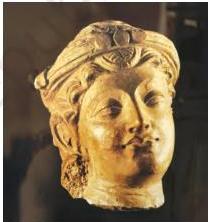 Fig. 6.24. Head of a bodhisattva (or future Buddha) from the Gāndhāra School of Art. Note the fusion of Indian and Greek features.
THINK ABOUT IT
Do you know where Gāndhāra is? Does it remind you of a character from the epic Mahābhārata?
Exploring Society: India and Beyond | Grade 7 Part 1
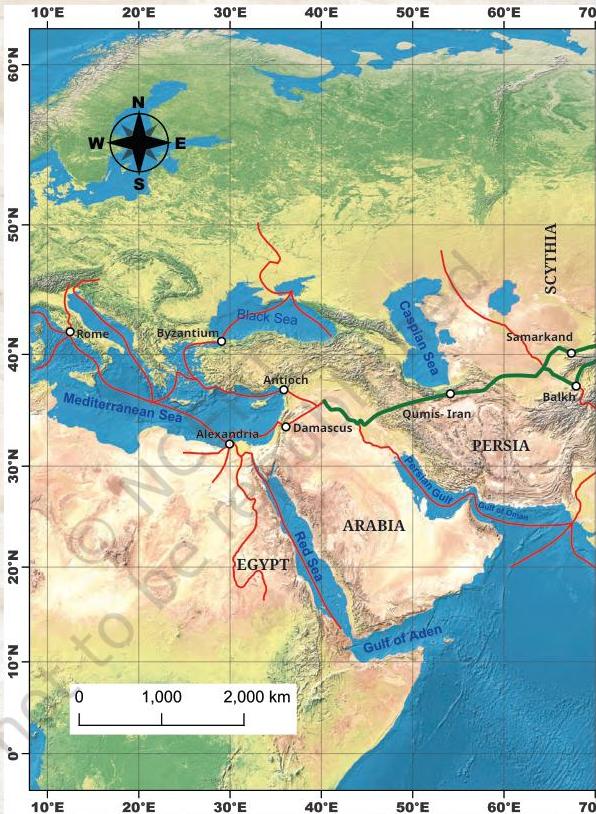
Fig. 6.25. Some of the trade routes of the ancient world. The network marked in green shows the Silk Route connecting China with the Mediterranean world and passing through central Asia, Persia, etc.
Tapestry of the Past 6 – The Age of Reorganisation 139
The Mathură style developed in the Mathura region of present-day Uttar Pradesh and is known for its distinct Indian style. Unlike the Gāndhāra style, it primarily used red sandstone for its sculptures and reflects less influence from Greco-Roman aesthetics. This art form is known for its depictions of Indian deities, including Kubera, Lakṣhmī, Shiva, Buddha, yakṣhas and yakṣhiṇīs and generally produced fuller figures with smooth modelling.
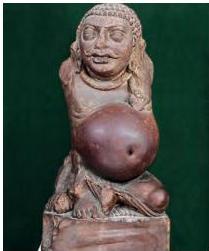 Fig. 6.26. Kubera, God of 'wealth' from the Mathura School of Art. Did you miss the prominent moustache? The moustache is a distinguishing feature of some Indian sculptures.
LET'S EXPLORE
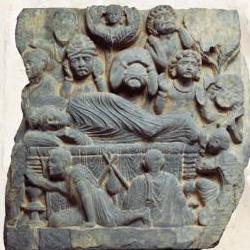
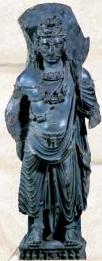
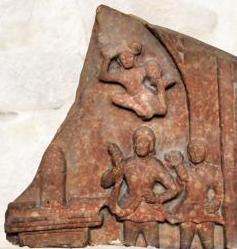
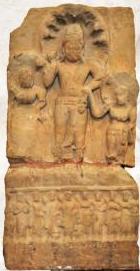
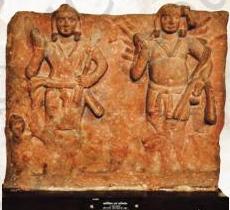
Now that you are familiar with the basic characteristics of the Mathură and Gāndhāra styles of art, study the pictures of artefacts given in Fig. 6.27 on the right page and try to identify which school of art each artefact belongs to. Write your observations with justifications and discuss your answers with your classmates.
Despite the political conflicts and power struggles, the period saw remarkable cultural exchange and assimilation. This shared heritage is evident in art and architecture, where styles interacted, but with a dominance of Indian themes (especially Hindu and Buddhist ones). It was also the age when Sanskrit literature flourished, with, in particular, the composition of major Indian texts such as the Mahābhārata and the Rāmāyana (refer to the chapter "Unity in Diversity, or 'Many in the One'" in your Grade 6 textbook).
Recognising these connections encourages us to view this 'Tapestry of the Past' not as confined to any one kingdom or ruler, but as a dynamic process that works through interaction and assimilation over time.
 1
1
 2
2
 3
3
 4
4
 5
5
 6
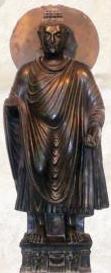
Fig. 6.27.1. A scene of the death of Buddha. Fig. 6.27.2. Bodhisattva Maitreya. Fig. 6.27.3. Shiva linga being worshipped by Kuṣṇāna devotees. Fig. 6.27.4. A Nāga between two Nāgis, with an inscription referring to the eighth year of Kaniṣṭhka's reign. Fig. 6.27.5. Kartikeya, the god of war, and Agni, the god of fire. Fig. 6.27.6. Standing Buddha.
6
Fig. 6.27.1. A scene of the death of Buddha. Fig. 6.27.2. Bodhisattva Maitreya. Fig. 6.27.3. Shiva linga being worshipped by Kuṣṇāna devotees. Fig. 6.27.4. A Nāga between two Nāgis, with an inscription referring to the eighth year of Kaniṣṭhka's reign. Fig. 6.27.5. Kartikeya, the god of war, and Agni, the god of fire. Fig. 6.27.6. Standing Buddha.
Tapestry of the Past 6 - The Age of Reorganisation
Exploring Society: India and Beyond | Grade 7 Part 1 142
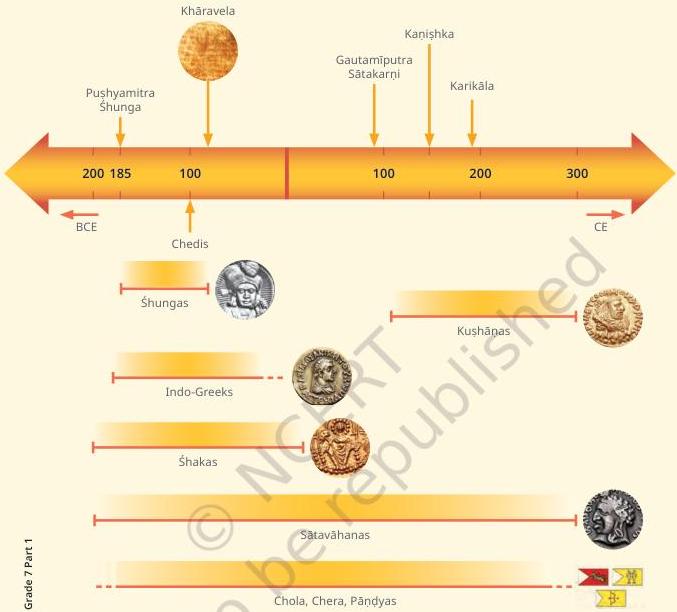 Fig. 6.28

Before we move on …
→ The period after the disintegration of the Maurya empire was characterised by the emergence of many big and small kingdoms across the Subcontinent.
→ The internal conflicts were coupled with foreign invasions, which together led to a period of reorganisation of political powers.
Tapestry of the Past 6 - The Age of Reorganisation 143
→ This period witnessed a dialogue of various cultures that absorbed each other's influence to create new styles of art, architecture, coinage, etc., with ultimately a dominance of Indian themes and flourishing Sanskrit literature.
→ This time was also marked by remarkable developments in trade activities, both internal and external.
Questions and activities
- Why was the post-Maurya era also known as the era of reorganisation?
- Write a note on the Sangam literature in 150 words.
- Which rulers mentioned in this chapter included their mother's name in their title, and why did they do so?
- Write a note of 250 words about one kingdom from this chapter that you find interesting. Explain why you chose it. After presenting your note in class, find out what kingdoms have been the most selected by your classmates.
- Imagine you have the chance to create your own kingdom. What royal emblem would you choose, and why? What title would you take as the ruler? Write a note about your kingdom, including its values, rules and regulations, and some unique features.
- You have read about the architectural developments of the post-Maurya era. Take an outline of the Indian subcontinent and mark the approximate locations of some of the ancient structures mentioned in this chapter.
Exploring Society: India and Beyond | Grade 7 Part 1
Noodles
*‘Noodles’ is our abbreviation for ‘Notes and Doodles’!