The Rise of Empires
There cannot be a country without people and there is no kingdom without a country.
Kautilya in Arthashástra

5
- What is an empire?
- How did empires rise and shape Indian civilisation?
- What factors facilitated the transition from kingdoms to empires?
- What was life like from the 6th to the 2nd century BCE?

Bhavisha and Dhruv were thrilled; they had just activated their new device, 'Itihasa' a time machine to travel to the past! Taking a clue from their history lesson, they decided to visit Pataliputra for their first journey—they knew it was about the same location as modern-day Patna.
Landing on the outskirts of the great city, a little dizzy, they saw a girl talking to a person on horseback dressed in strange clothes. As he left, she turned to them, and they asked her for her name.
"My name is Ira, daughter of Kanhadas, the ironsmith. Welcome to Pátaliputra!"
"Glad to meet you, Ira. Our names are Bhavisha and Dhruv."
"Sshh! Keep your voices down! Do you see those soldiers marching past? They're heading to battle against a neighbouring kingdom that has been troubling us. Our king avoids war when he can, but he also protects his people when needed. My father helped forge many of the swords they carry, and my uncle is one of the soldiers in the group. I just came to see him off.. I don't know when he'll return."
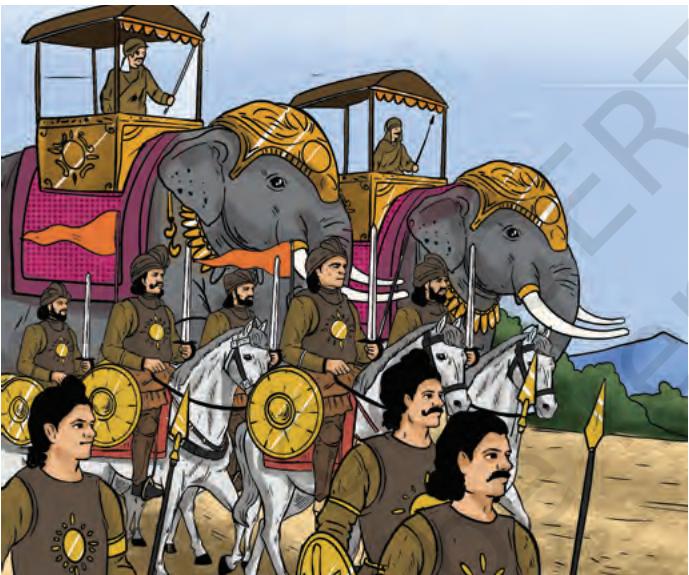 Fig. 5.3
(The group watches as an impressive procession of soldiers crosses a sturdy drawbridge leading out of the city, some on horseback and the army chiefs on elephant back. Then, the three children cross the same drawbridge to enter the city.)
"What kind of bridge is this?" asked Bhavisha. "And is it a river below?"
"This bridge keeps us safe," explained Ira. "It's lifted
whenever there is a danger of attack on the city. And no, it's not a river it's a moat; once the drawbridge is lifted, it makes it more difficult to approach the fortifications. Can you see those hills and forests in the distance? They provide us with timber herbs, and many other valuable resources. Elephants for the army are also captured from the forest and trained for the army."
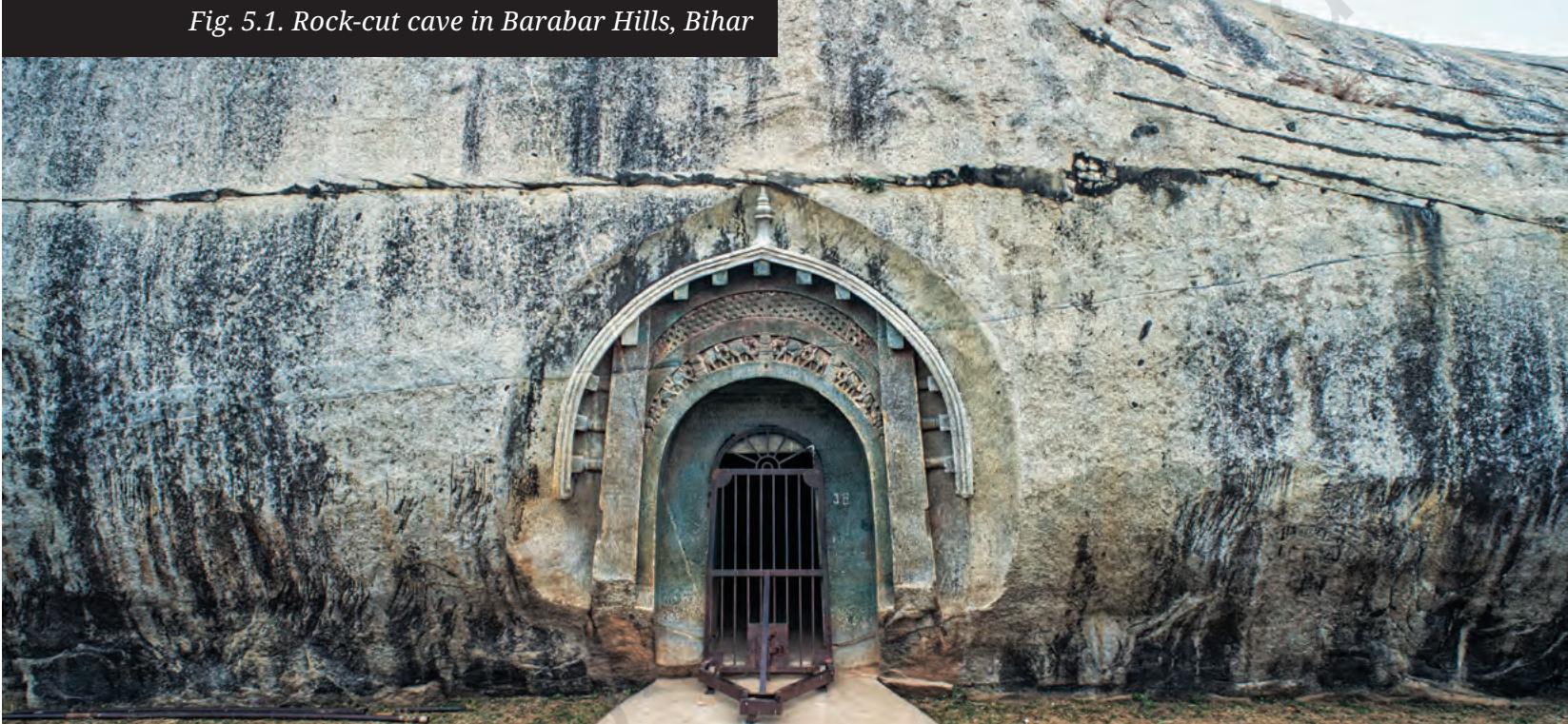
"What is the opening in that hill?" asked Dhruv.
"It's a cave. Our king is getting it carved out for a community of monks. I hope we can visit it when it's finished!"
(As they move through Pataliputra, they take in its splendour—towering wooden ramparts with watch towers, majestic palaces and buildings, lively streets. Ira gestures towards a bustling market filled with traders from distant lands.)
"You must visit our main market before you leave! Our king welcomes travellers from all over, so you'll get silk from China, spices and gems from the south, fine clothes from different regions—there's nothing you won't find in Pataliputra!"
"What are those people over there doing?" asked Dhruv.
"Oh, these are street acrobats; they build human pyramids, sing and dance, or act in short plays to entertain people. Sometimes, they perform in front of the king!"
"Your king sounds very powerful," remarked Bhavisha. "Does he rule the region around Pataliputra?" "Much more than that!" answered Ira. "He rules over a vast land, far, far beyond this city. His authority extends over many villages, towns and kingdoms. My uncle told me that it takes close to two months on horseback to reach the borders of the territory!"
"That sounds bigger than just a kingdom.. What do you call it?"
"It is called an Empire," Ira stated with evident pride.
What is an Empire?
The word 'empire' comes from the Latin 'imperium', which means 'supreme power'. Simply put, an empire is a collection of smaller kingdoms or territories over which a powerful ruler or group of rulers exert power often after waging war against the smaller kingdoms. The smaller territories still had their own rulers, but they were all tributaries to the emperor, who ruled the whole territory from a capital, usually a major centre of economic and administrative power.
In ancient Sanskrit texts, words commonly used for 'emperor' made this clear; they included samraj, meaning 'the lord of all' or 'supreme ruler'; adhiraja or 'overlord'; and rajdhiraja or king of kings'.
Tributary: A tributary, in our case, is a ruler or a state that has submitted to an emperor and pays tribute— that is, money, gold (or other precious metals), grain, livestock, elephants or other valuable goods produced in their kingdom and is given to the emperor as a sign of submission, loyalty or respect. A synonym for 'tributary' is 'vassal', and another way to express this is to say that the tributary or vassal kingdoms accepted the emperor's overlordship.
Indian history is full of empires. They rose, expanded, lasted for a while, declined, and disappeared. In fact, the last empire that ruled the Subcontinent existed less than a century ago! But now is not the time to tell that story; we start at the other end of time, so we may understand how empires functioned in the distant past and how they deeply impacted India's evolution at all levels—political, economic, social, and cultural.
Features of an empire 01 Maintains an army to keep the tributary states under control, 06 expand the empire or protect it from 02 Maintains outside aggression Designs and maintains communication an administration, with networks (roads, river officials to manage and sea navigation) and the territories, collect other infrastructure taxes, maintain law for administration, Emperor and order, etc. trade and people's exerts central welfare authority over the empire's 05 tributary 03 territories and kings Makes laws, issues licences, arms, currencies, weights, schools of thought. 04 regulates trade Controls and regulates access to resources (mines, forest and agricultural produce, manpower)
LET'S EXPLORE
Empires extended over vast areas and had diverse people with differing languages, customs and cultures. How do you think the emperors made sure that they lived in harmony? Discuss in groups and share your thoughts with the class.
Looking at the many challenges involved in managing an empire, why should a king be so keen to expand his kingdom into an empire and become an emperor? Here are a few possible answers; see if you can think of a few more:
An ambition to rule the entire world', a metaphor for controlling large territories and ensuring that they would be remembered for posterity; A wish to bring large areas under control and gain access to their resources to build economic and military strength; A desire for great wealth for himself and for the empire.
Posterity: The generations to come.
In return for tribute and loyalty, emperors generally allowed regional kings or chiefs to continue to govern their areas.
 Fig. 5.4.1. Trained armies were deployed to conquer neighbouring kingdoms, maintain control over them and defend the empire's borders.
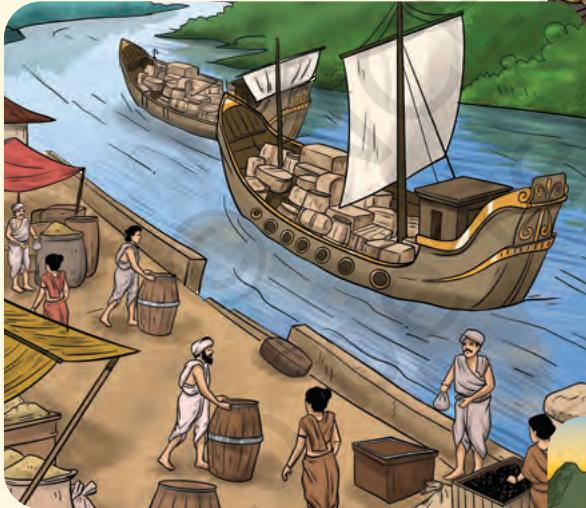 Fig. 5.4.3. To expand into an empire, a kingdom might first wage war against neighbouring territories so as to conquer them.
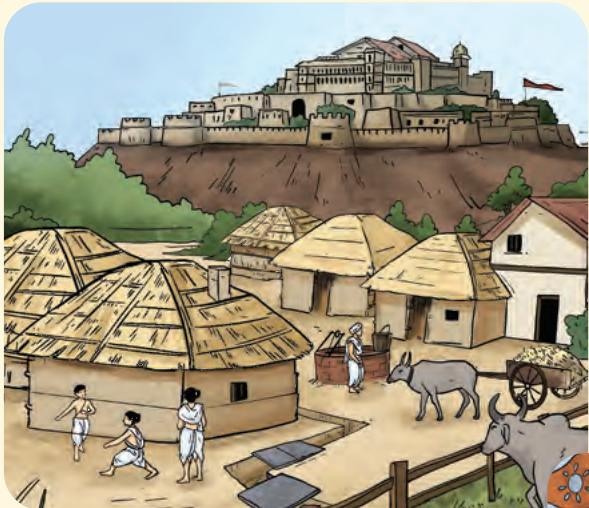 Fig. 5.4.2. Fortified settlements would be built in strategic places, such as the empire's borders.
 Fig. 5.4.5. With many smaller kingdoms warring for control, the one with access to stronger military power and surplus resources would eventually become the overlord.
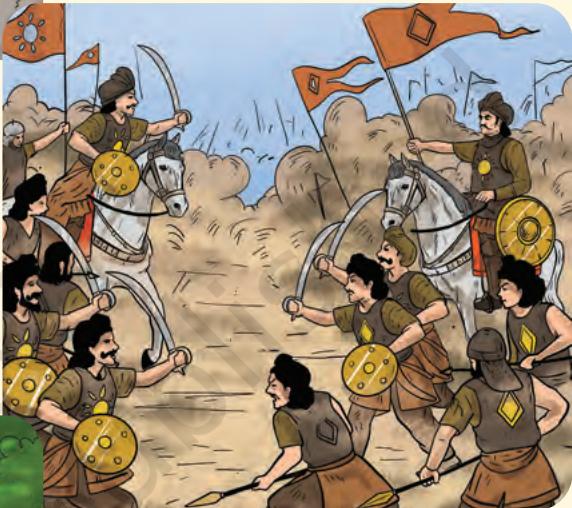 Fig. 5.4.4. Rulers endeavoured to control rivers and trade networks as that would give them control over precious resources, apart from tax revenue from the trade.
LET'S EXPLORE
Warfare apart, what other methods do you think the rulers might have used to expand their empires? Pen your ideas and share them with your class.
Trade, trade routes and guilds
Conducting military campaigns, especially in distant lands, is not as simple as it might seem. Maintaining an army is a costly affair: soldiers need to be fed, clothed, equipped with weapons, and paid; elephants and horses need to be cared for; roads or ships have to be built, and so on. All this requires considerable economic power, control over the workforce, and access to resources.
We can now understand that economic activity—especially production and trade—is one of the keys to maintaining an empire and ensuring people's welfare and quality of life, which a good ruler should be concerned with. Therefore, establishing and controlling trade routes all over the empire's territory and beyond is of great importance. That way, the goods traded will grow in quantity and variety, and more trade means more income for the producers and increased tax collections for the ruler.
Returning to the case of ancient India, what would have been the traded goods? There is plenty of evidence on this, at least, both from the literature and archaeological excavations—textiles, spices, agricultural produce, luxury items such as gems and handicraft products, and various animals were among the main items of trade. All this brisk trade was not limited to India; many Indian goods travelled towards distant countries by land or sea.
More often than not, traders were not just isolated individuals carrying out their own business. They soon understood the benefits of joining forces and creating guilds (shrenis). Guilds were powerful associations of traders, craftsmen, moneylenders or agriculturists. As far as evidence shows, a guild had a head (who was usually elected) and executive
officers who were supposed to have all kinds of ethical qualities. Two things made traders' guilds a remarkable institution. First, they brought together people who ended up being collaborators
rather than competitors, as they realised that sharing resources and information on markets, supply and demand, workforce, etc., was to everyone's benefit. Second, as an ancient text put it, "Cultivators, traders, herdsmen, moneylenders, and artisans have authority to lay down rules for their respective classes"; in other words, guilds had the autonomy to create their own internal rules, and the king was not to interfere with them (and why should he, if trade flourished?).
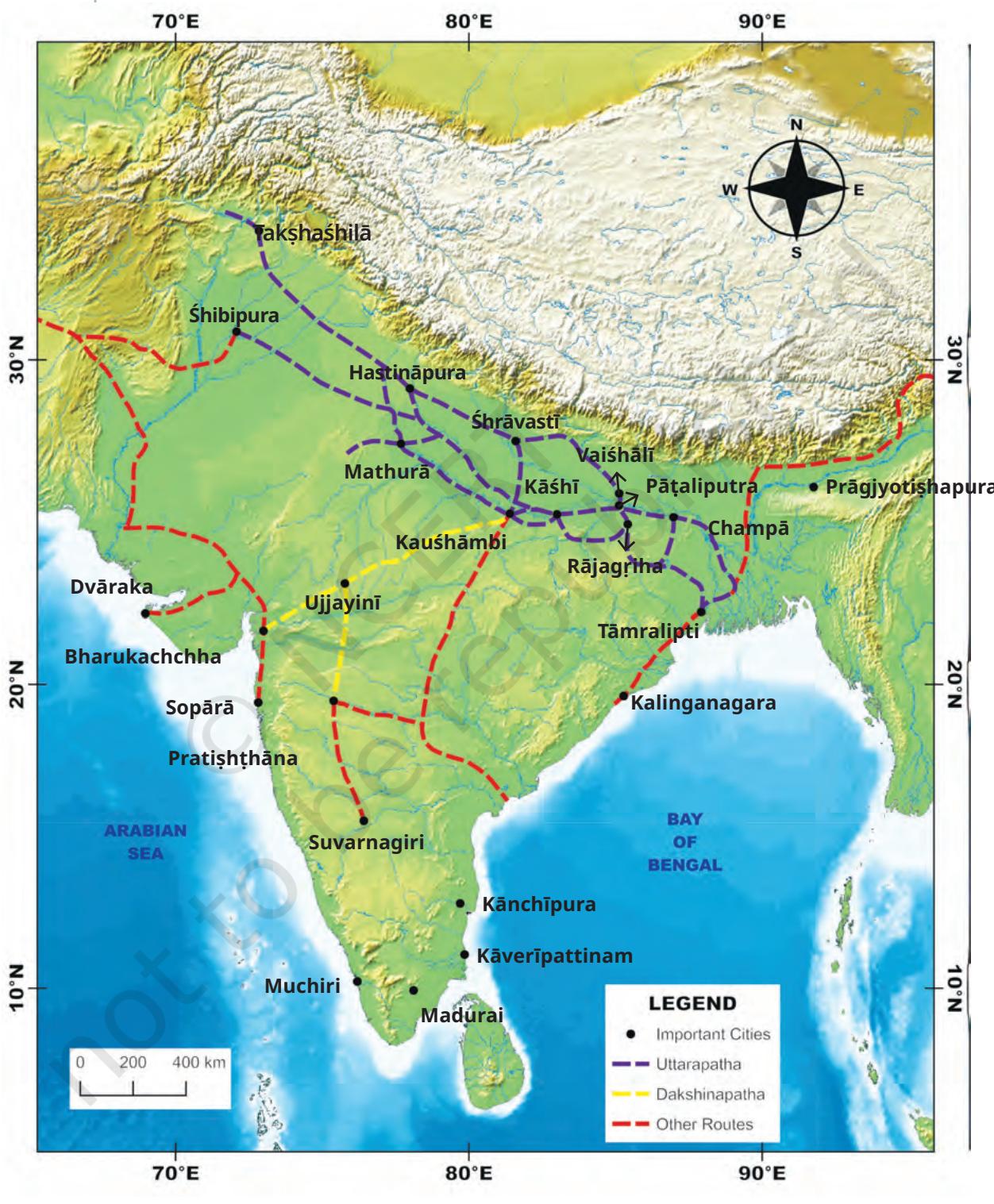 Fig. 5.5. Some important trade routes from about 500 BCE onward and major cities marked on them. Notice the Uttarapatha and the Dakshinapatha routes.
Guilds spread over large parts of India and endured for centuries. Even after they ceased to exist formally, their spirit continued to influence India's trade and business activities, sometimes even to this day. The institution of guilds provides an excellent example of the self-organising abilities of Indian society. The ancient village unit, with its various committees and councils, provides another. Indeed, an enlightened ruler would let people organise themselves and refrain from interfering if the local institutions worked satisfactorily.
LET'S EXPLORE
Observe the map of the trade routes. Identify geographical features that helped the traders travel across the Subcontinent. What modes of transport on those roads do you think were available at the time?
The Rise of Magadha
The period between the 6th and the 4th century BCE was one of profound change in north India. We briefly visited the sixteen mahajanapadas earlier —those large kingdoms of north and central India with their assembly system. One of them, Magadha (modern-day south Bihar and some adjoining areas), rose in importance and set the stage for the fusion of many kingdoms into India's first empire. Powerful early kings, such as Ajatashatru, played a crucial role in establishing Magadha as a dominant centre of power.
DON'T MISS OUT
Two of the most famed religious figures of the world—Siddhartha Gautama, who became known as the Buddha, and Vardhamana, better known as Mahvra—lived in the time of King Ajtashatru. Revisit their teachings in the Grade 6 textbook's India's Cultural Roots' chapter.
Magadha was located in the resource-rich Ganga plains, with fertile land, abundant forests for timber, and elephants. Also, remember how the use of iron transformed other technologies, such as agriculture and warfare. Iron ore and other minerals from the nearby hilly regions proved crucial for the expansion of the kingdom. The use of iron ploughs to till the land increased agricultural produce, and lighter and sharper iron weapons strengthened the capabilities of the army.
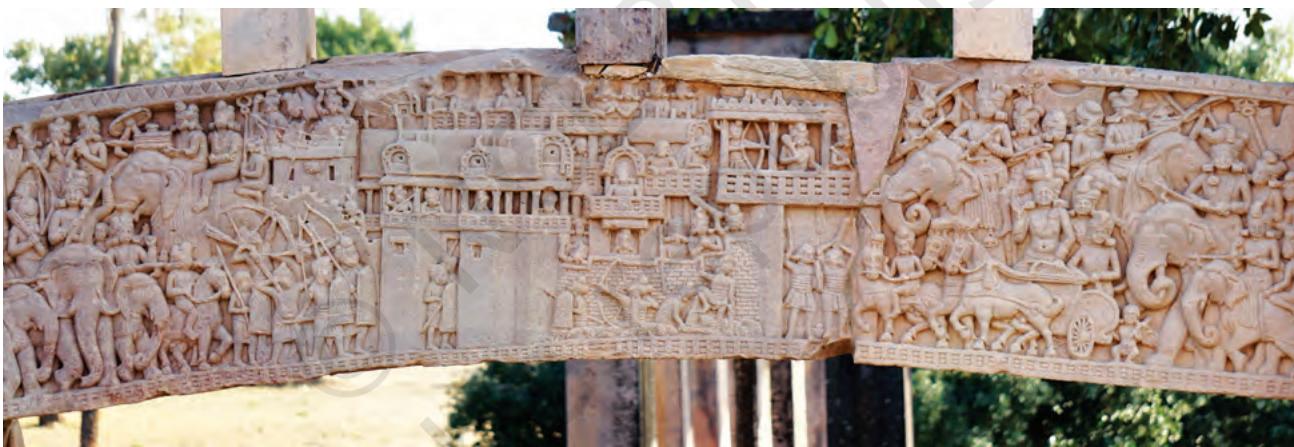 Fig. 5.6. An elaborate panel from the Sanchi Stupa depicting soldiers riding elephants, horses, or on foot, waging battle and laying siege to Kusinr (today Kushinagar), a city of north India, to recover relics of the Buddha (seen carried away on an elephant in the left part of the panel).
LET'S EXPLORE
Take a close look at the panel given above. How many types of weapons can you identify? What different uses of iron can you make out? In the left part of the panel, a parasol (chhattra) is kept over the casket containing the Buddha's relics. Why do you think this was done?
The production of surplus food grains allowed more people to focus on the arts and crafts, which were in demand inside and outside the empire's borders. The Ganga and Son rivers provided a geographical advantage for trade, as they could be used for transportation. The flourishing trade boosted the empire's income and contributed to Magadha's rise.
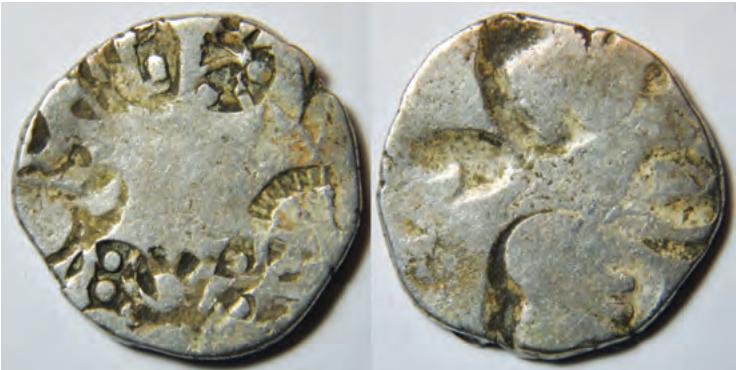 Fig. 5.7. A punch-marked silver coin of Mahápadma Nanda
Around the 5th century BCE, Mahápadma Nanda rose to prominence in Magadha and founded the Nanda dynasty. He successfully unified many smaller kingdoms and extended his empire across parts of eastern and northern India. As the economy thrived, he began issuing coins, demonstrating his economic power. We also learn from Greek accounts that the Nanda dynasty maintained a large army.
From various accounts of the Nanda dynasty, it appears that its last emperor, Dhana Nanda, though very rich, became highly unpopular as he oppressed and exploited his people. This paved the way for the Nanda empire to be conquered and absorbed into what would become one of the largest empires India ever knew —the Maurya empire.
DON'T MISS OUT
The famed Sanskrit grammarian Panini lived around the 5th century BCE, during the time of the Nandas. He is known for composing the Ashtadhyäyi, an ancient text that lists the rules of Sanskrit grammar in 3,996 short sutras.
Sutras: Sutras are concise, carefully crafted phrases that capture knowledge and important ideas (from ancient Indian text) in a way that's easy to remember and pass on.
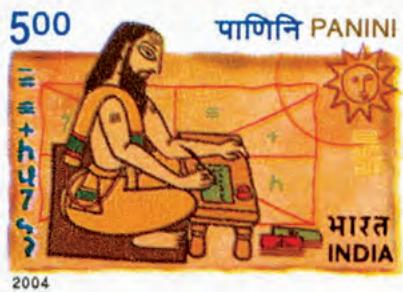 Fig. 5.8. An India post stamp commemorating Pánini
The Arrival of the Greeks
While events unfolded in Magadha, located in the eastern part of the subcontinent, what was happening in the northwestern region? This area was home to smaller kingdoms along an ancient route connecting to the Mediterranean. Among them, according to Greek accounts, were the Pauravas, led by their king, Porus.
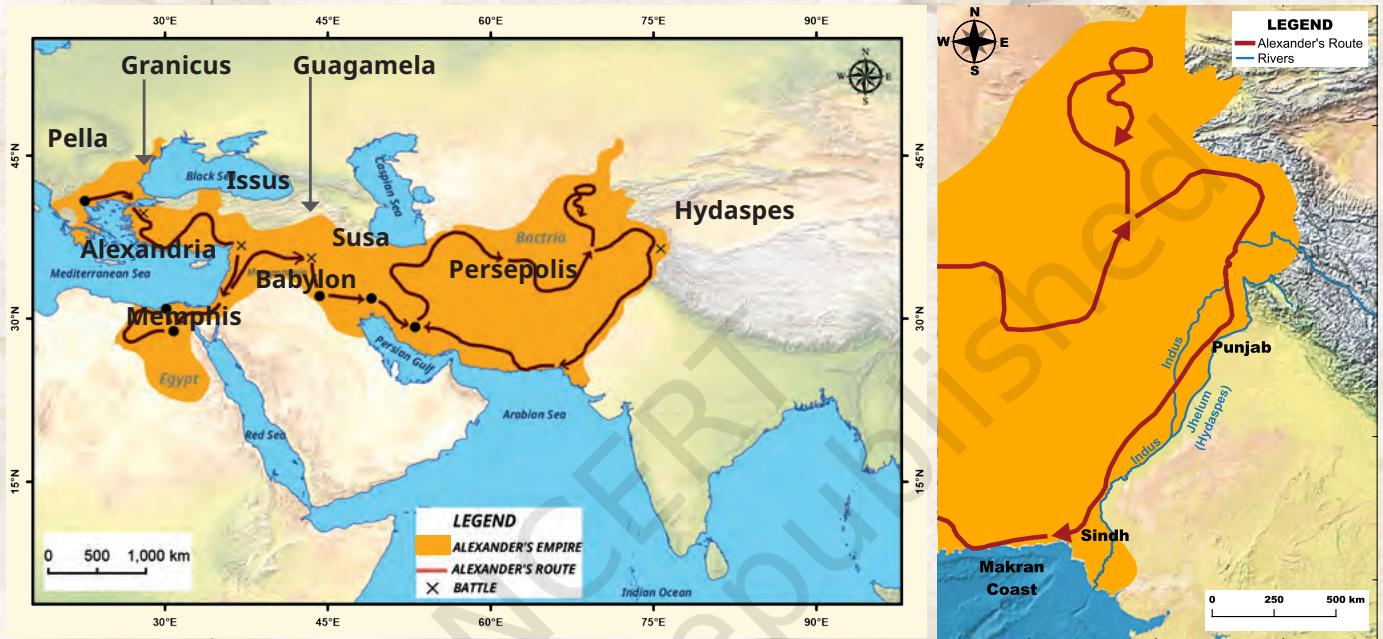 Fig. 5.9
334-331 BCE: Alexander, a young and powerful Greek king from Macedonia, campaigned against the Persian Empire to avenge earlier Persian invasions of Greece (during which some Indian soldiers from the Persian-ruled northwest of India fought against Greeks!). Alexander conquered the Persian Empire; the influence of Greek culture spread. His empire now spread over three continents, Fig. 5.10 one of the largest in world history.
DON'T MISS OUT
The satraps were governors of provinces of Persian and Greek empires who were left behind by the overlord (like Alexander) to manage the far-off territories. These satraps had significant power and freedom despite being mere officials of the rulers. Can you guess how it was possible for them to exercise such power?
THINK ABOUT IT
Why do you think Alexander wanted to rule over the entire world? What would he have gained from it?
LET'S EXPLORE
When, after the battle, Alexander asked Porus how he wished to be treated, Porus answered, "Like a King." Alexander then left Porus at the head of his kingdom, as satrap. With the help of your teachers, find more details on the battle between Porus and Alexander. Enact a play of this battle scene using your imagination in addition to what you have discovered.
Back in Persia, Alexander faced rebellions and political turmoil. After he fell ill and died in Babylon at the age of 32, his immense empire was soon divided between his generals and the satraps, who created their own kingdoms. 327-325 324-323 BCE BCE Eager to reach the "end of the world", Alexander pushed on further east and brought his campaign to India, defeated Porus in Punjab and, encountering fierce resistance from local tribes and rulers, massacred the population of several cities. Greek records mention that in a few battles, "women fought side by side with their men." Alexander himself was seriously wounded in a battle. Tired and homesick, his soldiers lost the will to fight and refused to move deeper into India, towards the Ganga River. Alexander and part of his army retreated to Persia, but through the coastal route in the south and Iran's harsh desert regions, resulting in heavy losses to his troops out of thirst, hunger and disease.
Alexander's dialogue with the Gymnosophists
Alexander heard of a group of Indian sages whom the Greeks called 'Gymnosophists' or 'naked philosophers' (probably because they wore very little clothing), who were renowned for their wisdom. Alexander challenged them with tricky questions in the form of riddles, warning that he would put those who gave wrong answers to death. However, the Gymnosophists responded to his questions calmly and intelligently. Alexander was impressed and, in the end, spared them all. Over the centuries, different versions of this story have been told, making it one of the most fascinating encounters in history!
According to one account, Alexander asked, "Which is stronger, life or death?" One of the sages replied, "Life, because it endures while death does not." Alexander then asked, "How can a man be most loved?" "If he is most powerful and yet does not inspire fear," came the reply, perhaps as a hint to the mighty ruler!"
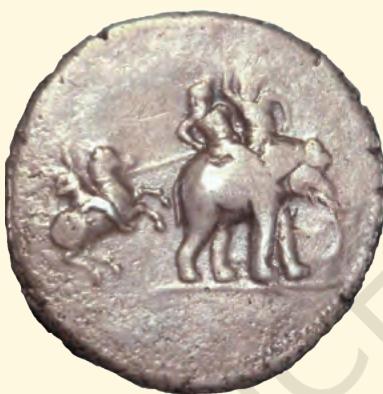 Fig. 5.11. A Greek coin probably showing Alexander on horseback attacking Porus on his elephant.
Historians view such exchanges as a meeting of two great traditions-Greek and Indian philosophies.
The Mighty Mauryas
After that brief sojourn to the northwest, let us return to Magadha, where we witnessed the decline of the Nanda empire. Around 321 BCE, just a few years after Alexander left India with his army, a new dynasty and new empire emerged: the Maurya Empire founded by Chandragupta Maurya. It quickly absorbed the Nanda empire's territories and went on expanding beyond.
As per many accounts, Chandragupta managed this feat with the help of an able mentor named Kautilya, who used his knowledge of politics, governance and economics to create an empire that remains one of the greatest in Indian history.
The story of Kautilya
According to Buddhist texts, Kautilya—sometimes referred to as Chanakya or Vishnugupta—was a teacher at the world-renowned Takshashila (modern-day Taxila) university. His legendary tale begins in the court of Dhana Nanda, who as we saw, had become highly unpopular.
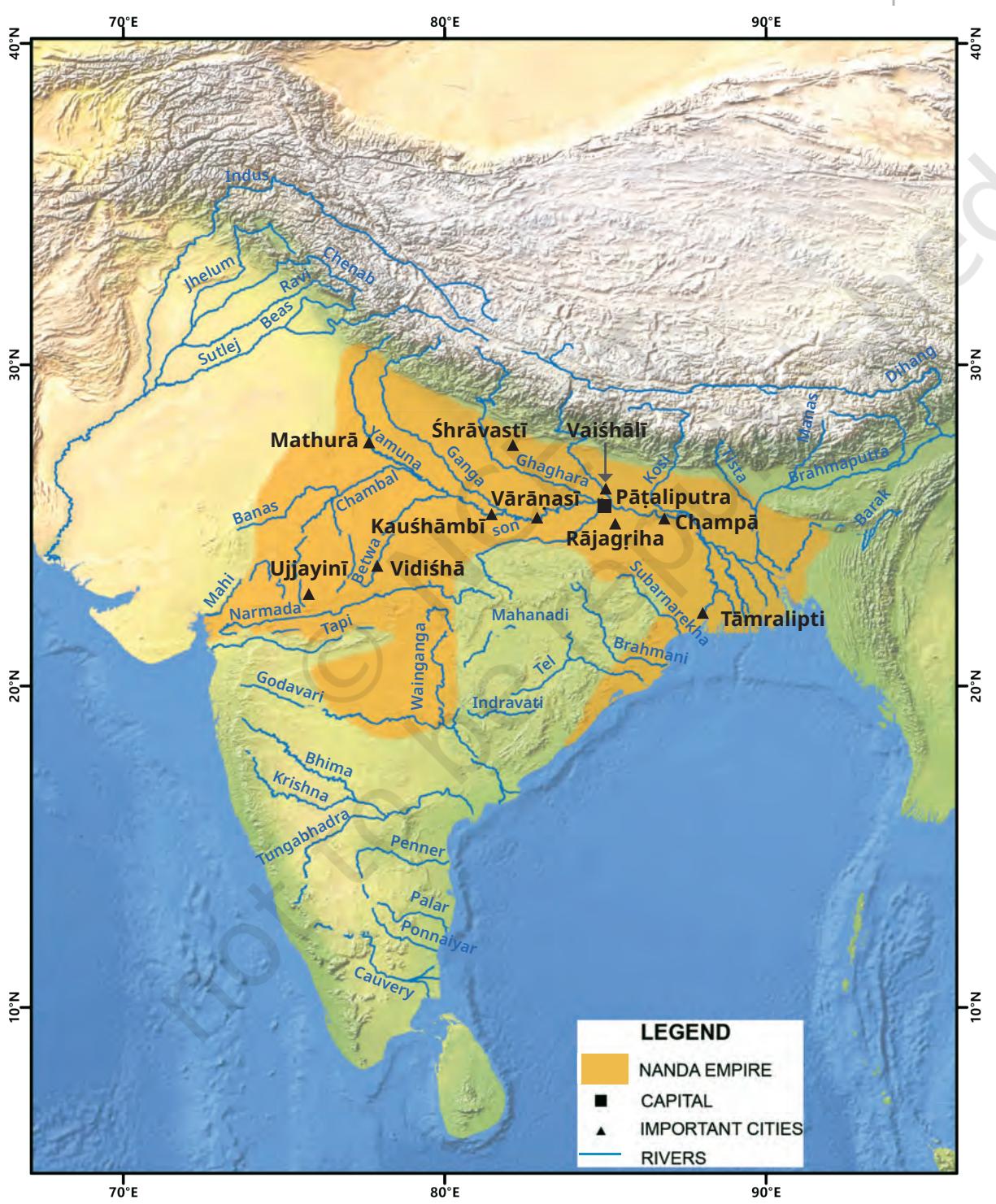 Fig. 5.12. Nanda Empire
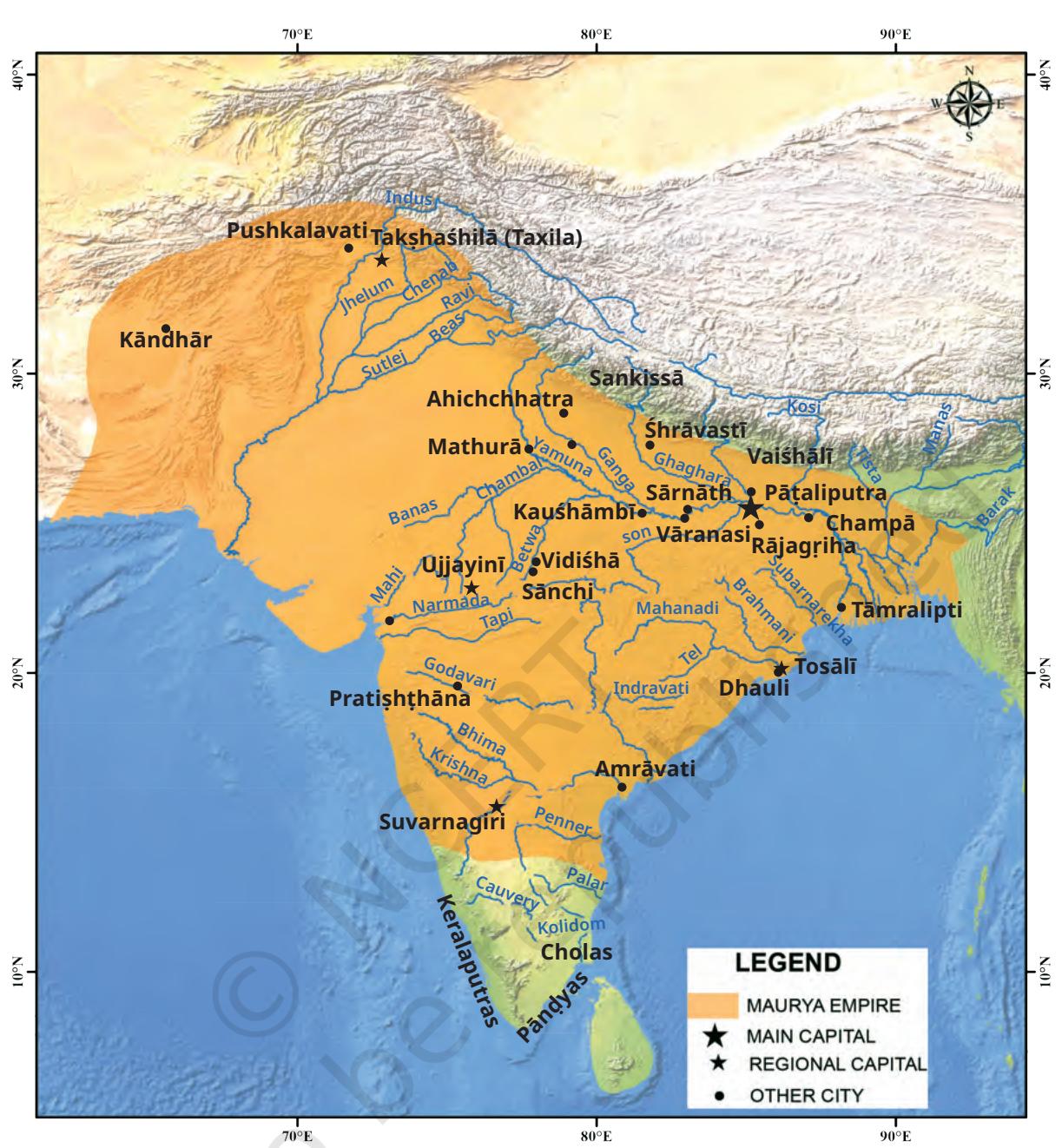 Fig. 5.13. Maurya Empire
Observing this, Kautilya advised Dhana Nanda to change his ways or witness the collapse of his empire. Angered, Dhana Nanda insulted Kautilya and threw him out of his court. This led to Kautilya's vow to end the 'evil Nanda' rule.
The rise of Chandragupta Maurya
There are many stories about the origin and adventures of Chandragupta Maurya, but their common theme is that he
overthrew the Nandas and took control of Magadha to establish his rule, with Pataliputra as his capital. Do you remember that Magadha had many advantages because of its geography, an established economic system and a flourishing trade? These, combined with the advice of the master strategist, Kautilya, helped Chandragupta Maurya gradually expand his empire. He defeated the Greek satraps left behind by Alexander in the northwest and integrated the region into an empire that stretched from the northern plains to the Deccan plateau.
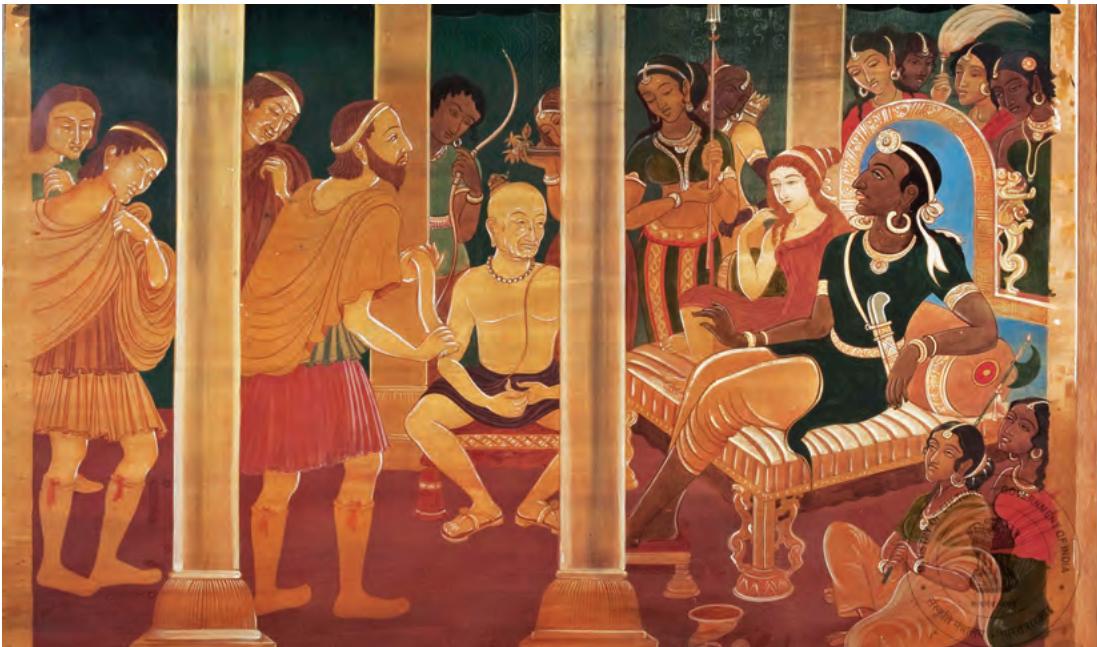 Fig. 5.14. Megasthenes in the court of Chandragupta Maurya (A 20th-century painting by Asit Kumar Haldar) D
After Chandragupta Maurya defeated the Greeks, he maintained a diplomatic relationship with them and hosted in his court a Greek historian and diplomat, Megasthenes, who wrote about his travels in India in his book Indika—the first such written account—unfortunately lost except for some excerpts quoted by later Greek scholars.
Kautilya's concept of a kingdom
Kautilya had a clear vision of how a kingdom (rajya) should be established, managed and consolidated. In his famous work Arthashästra (literally, 'the science of governance and economics', he listed directives in many areas like defence,
Kautilya's Saptanga
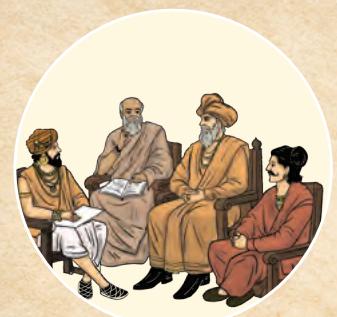 the king (svami)
[the group of] councillors, ministers and other high officials (amatya)
the territory of the state along with the population inhabiting it (janapada)
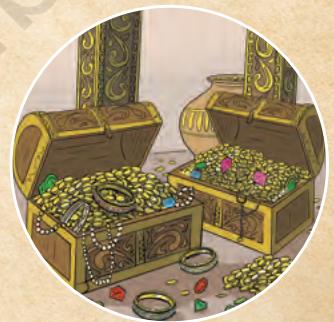
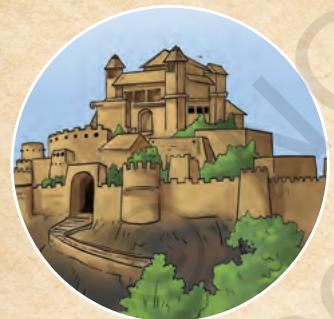 the fortified towns and cities (durga)
the treasury or the wealth of the kingdom (kosha)
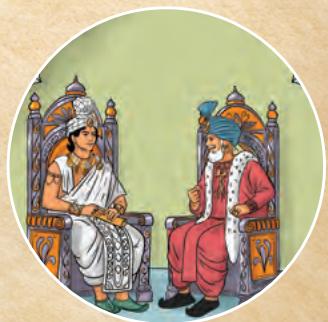 the allies (mitra)
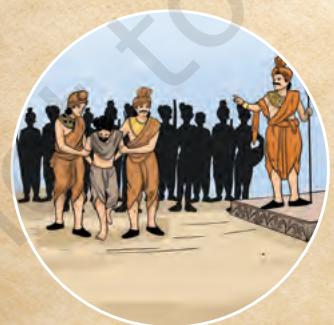 the forces of defence and law and order (danda), and
Fig. 5.15
the forces of defence and law and order (danda), and
Fig. 5.15
economics, administration, justice, urban planning, agriculture and people's welfare. One of his most important political concepts is the saptánga (see fig 5.15) or the seven parts that constitute a kingdom.
According to Kautilya, the saptánga together must create a settled, well-protected, and prosperous kingdom to be maintained both through warfare and through alliances for peace, as the case may be. He emphasised the importance of law and order in society, which necessitated a strong administration. He also detailed many laws to deal with corruption and specified punishments for any activities that went against the wellbeing of the people.
THINK ABOUT IT
Kautilya says, "A king shall increase his power by promoting the welfare of his people, for power comes from the countryside which is the source of all economic activity. [The king] shall show special favours to those in the countryside who do things which benefit the people, such as building embankments or road bridges, beautifying villages, or helping to protect them."
Why do you think it was important to take special care of the countryside? (Hint: Think back to what you have learnt at the beginning of this chapter)
Kautilya's central philosophy of governance is in tune with Indian values: "In the happiness of his subjects lies the king's happiness; in their welfare his welfare. He shall not consider as good only that which pleases him but treat as beneficial to him whatever pleases his subjects." In other words, however powerful a king may be, he must give first place to the people's interests.
LET'S EXPLORE
Organise a group discussion in your class and compare the features of Kautilya's idea of an empire with a modern nation.
The King Who Chose Peace
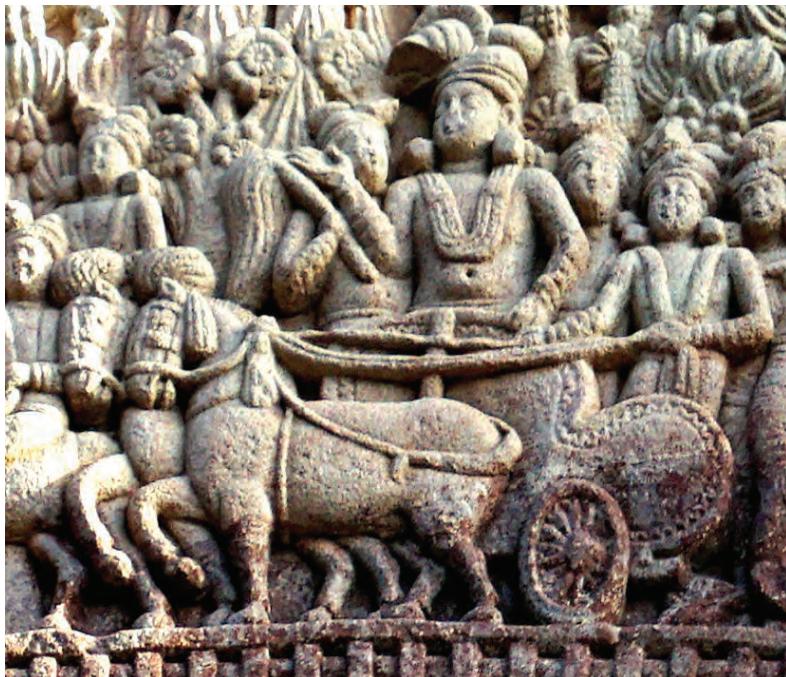 Fig. 5.16. Ashoka visiting the Ramagrama stupa in Nepal (from a panel at the Sánchi stüpa)
Another king of the Maurya dynasty was Ashoka (268– 232 BCE), Chandragupta's grandson, who came to be credited with major administrative and religious achievements.
At the beginning of his reign, Ashoka was quite ambitious. He had inherited a vast empire but further expanded it to cover almost the entirety of the Indian subcontinent, except for the southernmost region, but including present-day Bangladesh and Pakistan
Edict: An official declaration issued by authorities or, in our case, a king.
and parts of present-day Afghanistan. One encounter, however, is said to have changed the path of his life. According to one of his edicts he once marched on Kalinga (modern-day Odisha), where he waged a ferocious war. Seeing the enormous amount of death and destruction on the battlefield, Ashoka chose to give up violence and, to the greatest extent possible, adopt the path of peace and non-violence that the Buddha taught.
THINK ABOUT IT
Emissary: Someone sent on a special mission, often of a diplomatic nature.
Ashoka, in his edicts, tells the story of the Kalinga war. He could have chosen not to mention it and maintain his image as a peaceful, benevolent king for future generations. Why do you think he admitted to this destructive war?
Embracing Buddhist teachings, Ashoka sent emissaries to Sri Lanka, Thailand, Central Asia and beyond to spread the message of the Buddha far and wide.
Historians have sometimes called Ashoka a 'great communicator' since he issued in many parts of his empire edicts engraved on rocks or pillars that contained his messages for the people and encouraged them to follow dharma. Most of these edicts were inscribed in Prakrit, which was the popular language in many parts of India and written in the Brahmi script (Brahmi is the mother of all regional scripts of India).
We have referred to the Prakrit language written in Brahmi script. What does this mean? Very simply, a language is what we speak, while script is what we write a language in. Can you think of examples of this in our everyday life?
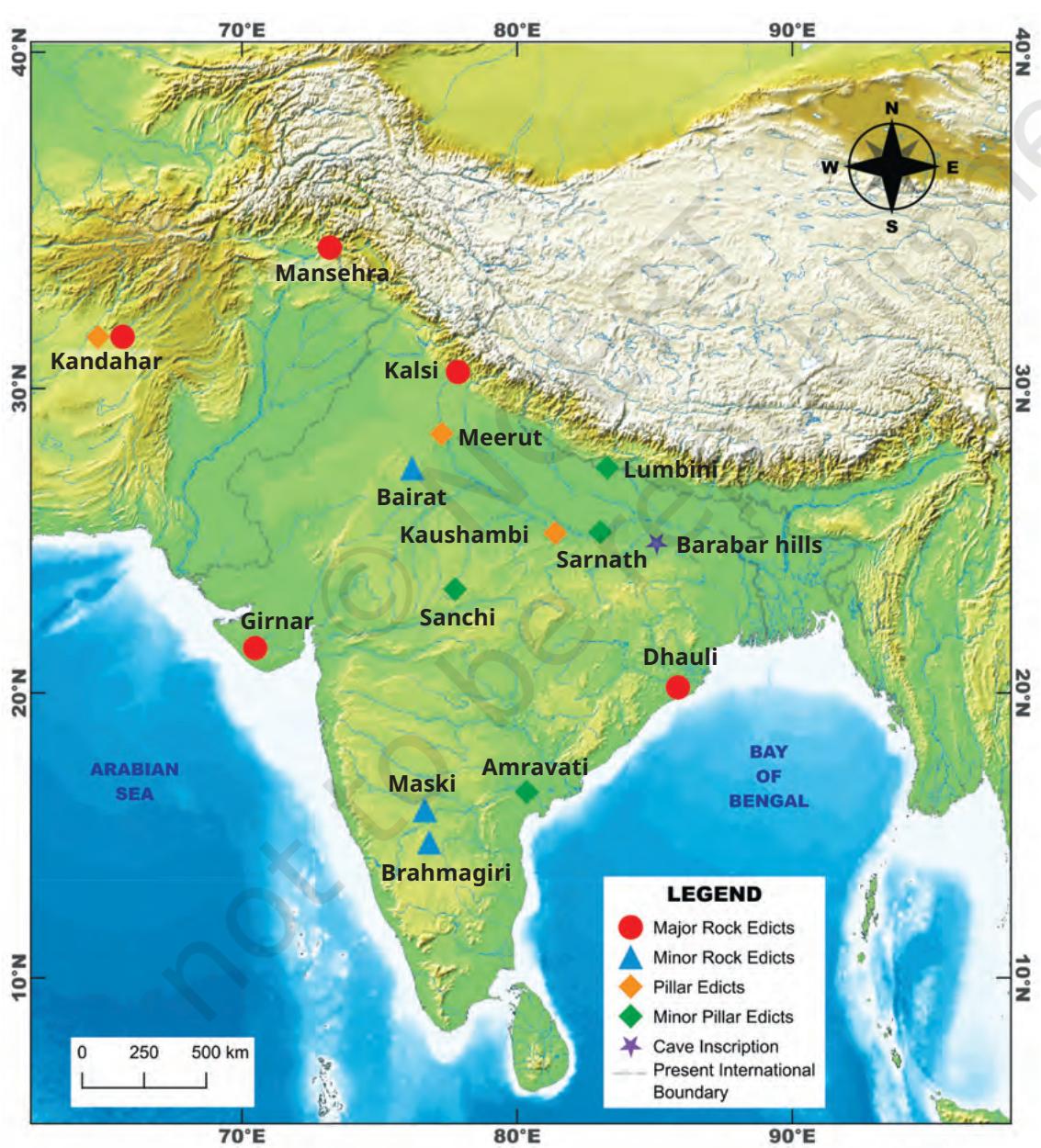 Fig. 5.17. A few of the many Ashokan edicts across the Subcontinent
In his edicts, Ashoka called himself 'Devanampiya Piyadasi'; the first word means 'Beloved of the Gods'; the second, 'one who regards others with kindness'. And indeed, the language of the edicts makes it clear that he was interested in depicting himself as a benevolent and compassionate ruler. Let us see a few examples of this.
Although some southern kingdoms were not part of the Mauryan kingdom, Ashoka supported their overall wellbeing. He claimed to provide medical care for people and animals even beyond his empire, prohibited hunting and cruelty to animals, and ordered medical treatment for them when necessary. If so, Ashoka was an early contributor to nature conservation and wildlife preservation. He said he had established rest houses and wells at regular intervals along the main roads of his empire and got fruit and shade trees planted. He also claimed to encourage all sects (the different schools of thought present in his time) to accept each other's best teachings and study them.
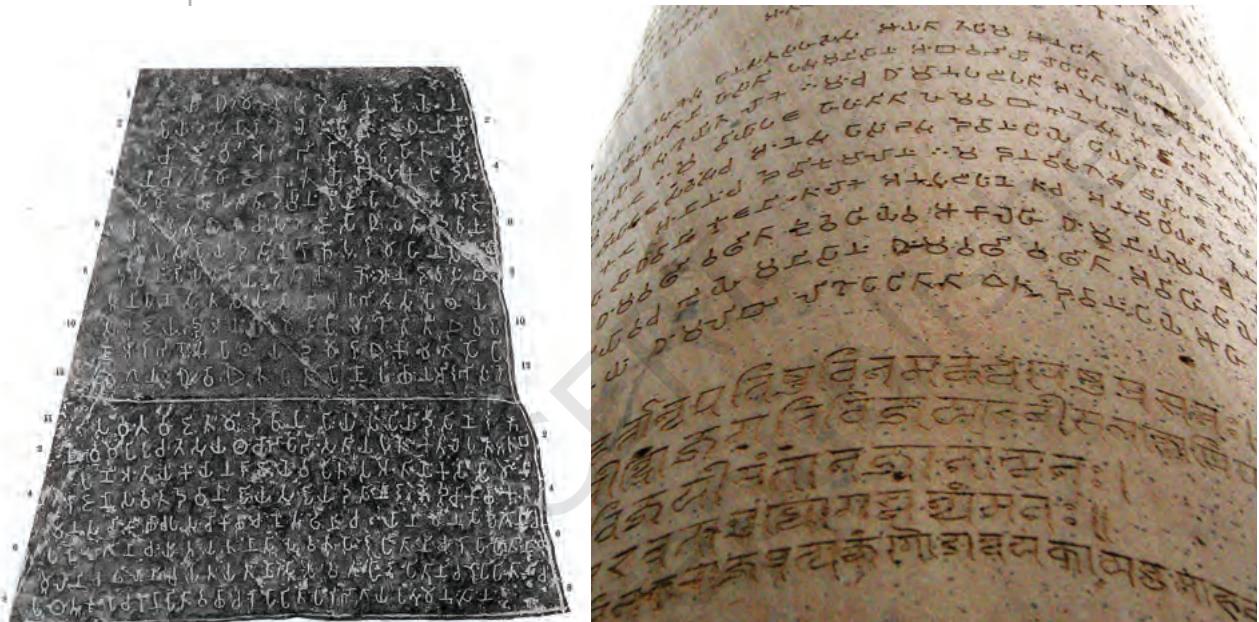 Fig. 5.18. (Left) A reproduction of a part of Ashoka's rock edict at Girnar, Gujarat. (Right) Detail of the Topra Ashokan pillar at Feroz Shah Kotla, Delhi
Although we need not take all of Ashoka's claims literally, it is clear that in line with Kautilya's philosophy of governance, he paid attention to the welfare of his subjects and made efforts to reach out to them.
DON'T MISS OUT
You read about the word 'dharma' (dhamma in Prakrit) in Grade 6. Its essence cannot be easily captured. In simple terms, dharma means moral law or someone's religious or ethical duties towards family, community or country. At a deeper level, however, dharma extends to living according to the order of the universe or ritam. This includes doing one's duty truthfully, following rules of righteous conduct and leading a life in harmony with the cosmic order. Dharma is, therefore, duty, law, truth, order and ethics—all of it together!
LET'S EXPLORE
Ashoka details instructions on the conduct of his officials and mentions ways to ensure that they practised fairness in one of his edicts. Read the translation below and share your thoughts on whether those ways would have been successful in helping manage his empire and how.
"By order of the Beloved of the Gods—the officers and city magistrates [.. are to be instructed thus:
[..] You are in charge of many thousands of living beings. You should gain the affection of men. All men are my children, and just as I desire for my children that they should obtain welfare and happiness both in this world and the next, the same do I desire for all men. [..] You should strive to practice impartiality. [..] The root of all this is to be even-tempered and not rash in your work. .….] This inscription has been engraved here in order that the city magistrates should at all times see to it that men are never imprisoned or tortured without good reason. [..] And for this purpose, I shall send out on tour every five years, an officer who is not severe or harsh; who, having investigated this matter.., shall see that they carry out my instructions."
The Maurya empire continued for half a century after Ashoka's death. However, his successors were unable to hold the empire together, and many of the smaller kingdoms broke off and became independent. Around 185 BCE, India started on another phase of her journey. Bhavisha and Dhruv will join us on this journey in the next chapter.
Life in the Mauryan period
Cities like Pataliputra were bustling centres of governance and commerce. They had palaces, public buildings, and well-planned streets. With a well-organised taxation system and brisk trade, the treasury remained strong, fuelling the empire's growth and prosperity. Officials of the administration of the empire, merchants and artisans played key roles in the city life.
DON'T MISS OUT
The Sohagaura copper plate inscription, dating back to the 4th-3rd century BCE, is one of India's earliest known administrative records. Discovered in Sohgaura, Uttar Pradesh, it is written
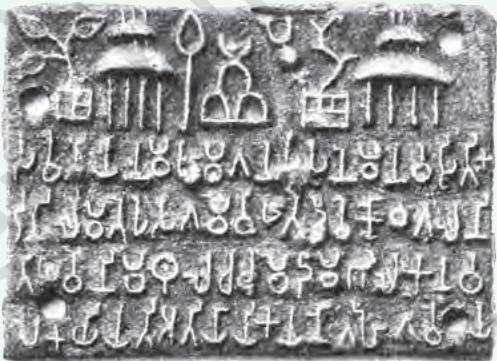 Fig. 5.19
in Prakrit using the Brahmi script and is believed to have been issued during the reign of Chandragupta Maurya. The inscription mentions the establishment of a granary to store grain as a precaution against famines, highlighting the state's efforts to ensure food security and support its people during times of crisis.
Megasthenes' account also throws some light on the society of that time. A substantial proportion of the population was engaged in agriculture, which was an important source of revenue for the empire. Two crops were sown in a year, as rain fell in both summer and winter. This ensured that famines were
rare and people had ample food. Granaries were well stocked for any eventualities. Even if war raged nearby, farmers were protected from it, and agriculture was not disturbed.
Blacksmiths, potters, carpenters, jewellers and other artisans lived in the cities. The cities were well-planned and had signage on the streets. Communication happened through couriers who carried messages from place to place. The houses were made of wood and could be up to two storeys tall. The streets had vessels of water stored at regular intervals in case of fire.
Later accounts describe the cotton dresses people wore—a lower garment that reached below the knee halfway down to the ankles and an upper garment that they threw over their shoulders. Some wore leather shoes with designs and thick soles to make them look taller.
LET'S EXPLORE
Wear the hat of a historian. Look carefully at the artefacts presented on the spread on the next page. What conclusions can you draw about people and life during the Mauryan era?
Fig. 5.20 has many messages for us, apart from the beauty and perfection of the sculpture, and is a fine example of Mauryan art. This capital (a word which, here, means 'top portion' or head') was the top of a pillar that Ashoka got erected at Sarnath, near Varanasi, where the Buddha gave his first teaching. The four lions symbolise the royal power; on the ring below, four powerful animals (an elephant, a bull, a horse and one more lion) are depicted, along with the dharmachakra or wheel of dharma, which symbolises the Buddha's teachings.
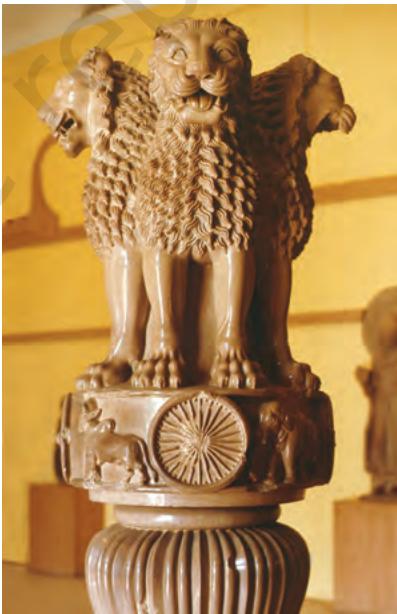 Fig. 5.20. The Mauryas were renowned for their highly polished stone pillars, as can be seen in this capital of the Sarnath pillar.
Some Contributions of the Mauryas Life and people
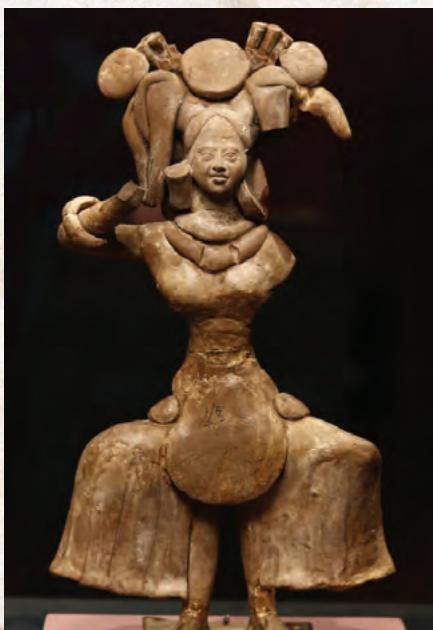 Fig. 5.21. Terracotta figurine of a dancing girl (notice her elaborate headdress, hairstyle and jewellery.
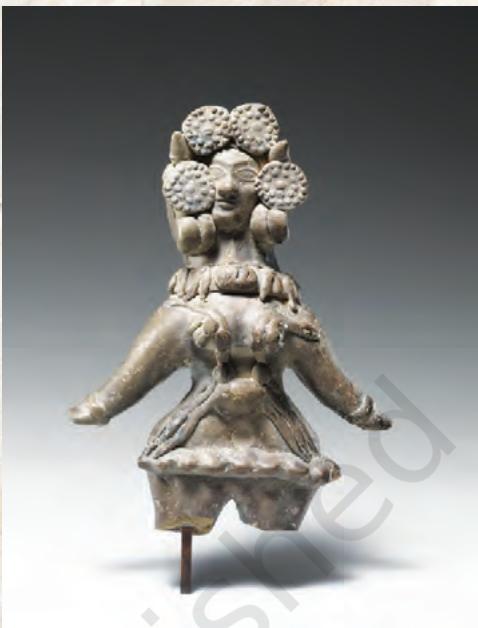 Fig. 5.22. Terracotta figurine of a female deity.
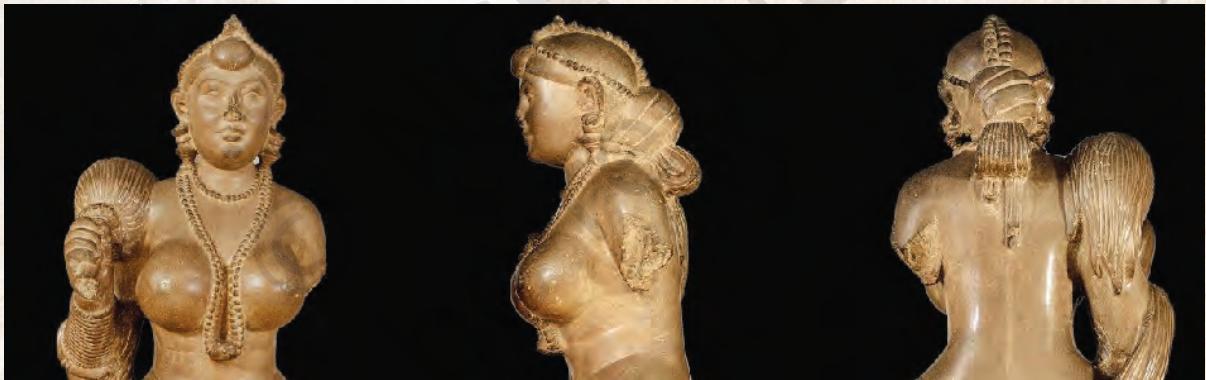 Fig. 5.23. Female deity (yakshi) holding a fly whisk.
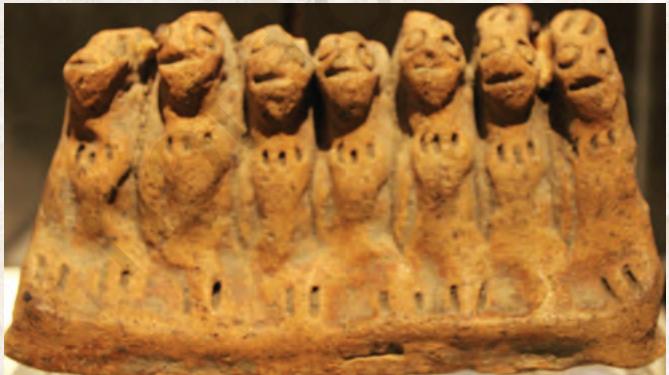 Fig. 5.24. Terracotta of Saptamatrikäs or seven mother goddesses (a continuing tradition).
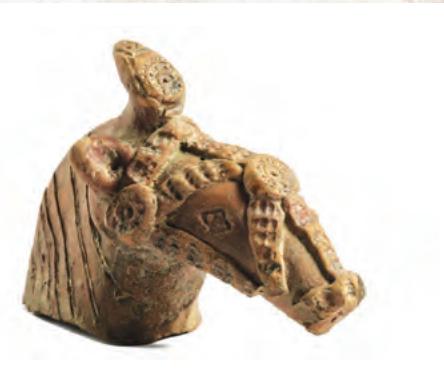 Fig. 5.25. Head of a terracotta horse (notice the elaborate design of the bridle).
Art and architecture
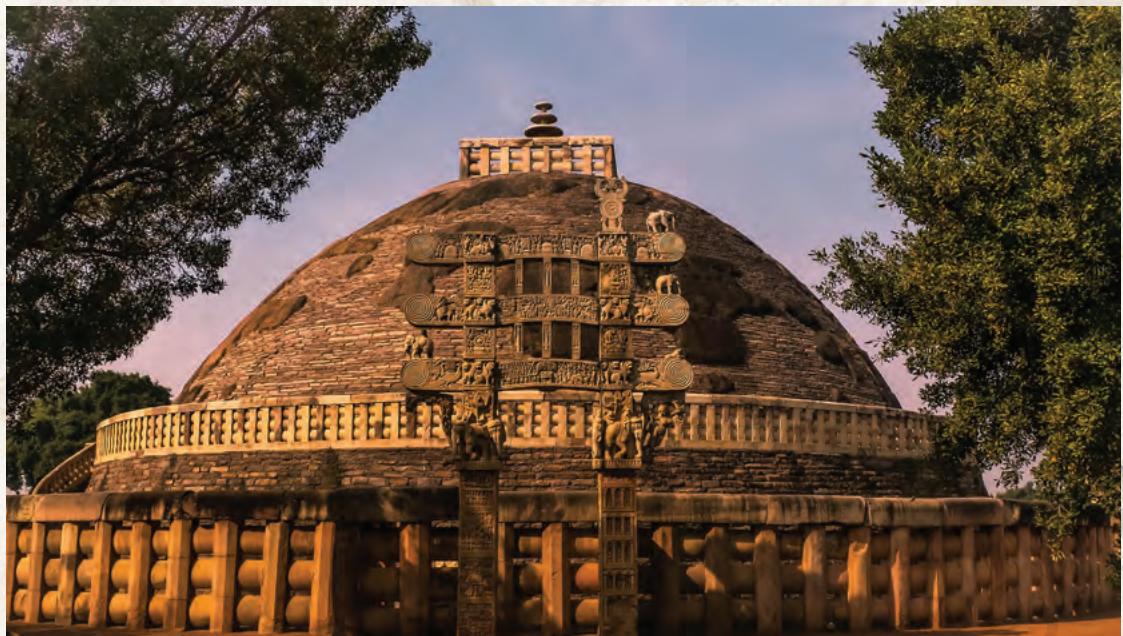 Fig. 5.26. As one of India's oldest stone structures, the Great Stupa at Sanchi is among the finest examples of Indian architecture. Note that the original structure was made of bricks and was later enlarged using stone. Ashoka is said to have constructed many such stüpas, chaityas, and viharas for worship, study, and meditation.
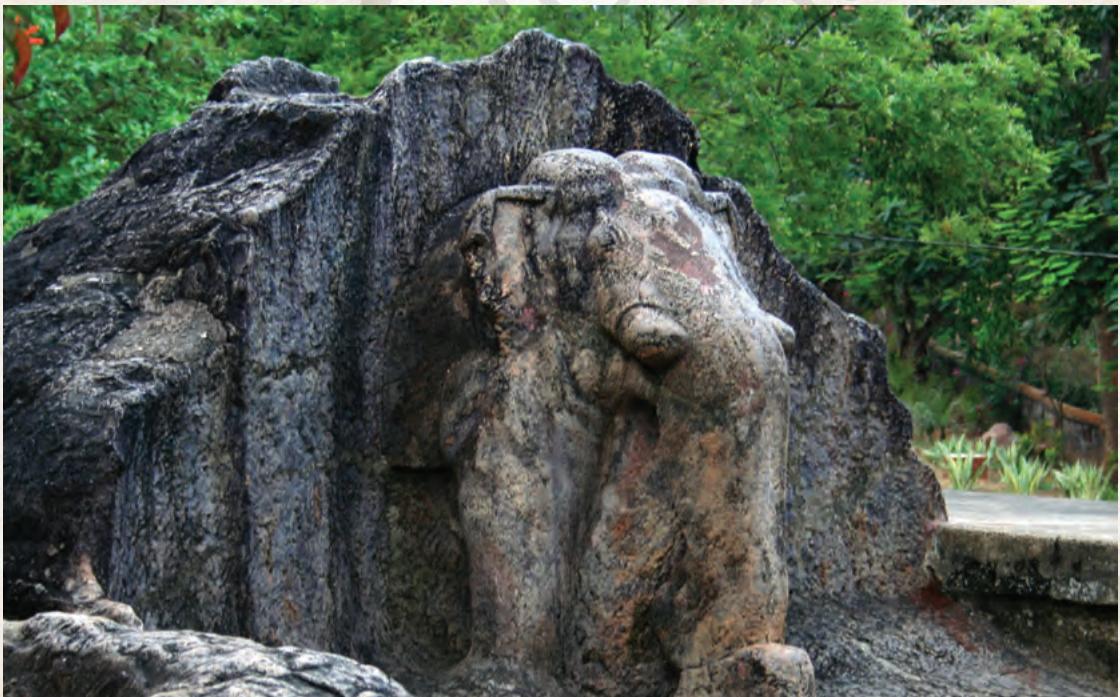 Fig. 5.27. Rock sculpture of a life-size elephant at Dhauli (in present-day Odisha, near Bhubaneswar), which symbolises the Buddha—intelligent, powerful, patient, and calm. An edict of Ashoka was engraved on a rock nearby.
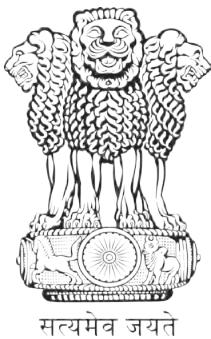 Fig. 5.28
This image may be familiar to some of you. Indeed, this capital was chosen as India's national emblem, to which was added the Sanskrit motto satyameva jayate or "truth alone triumphs" (see the national emblem on the left). Besides, the dharmachakra is depicted at the centre of our national flag, as you may also have noticed. The motto comes from the Mundaka Upanishad; in full, it reads satyameva jayate nanritam, that is, "truth alone triumphs, not falsehood".
LET'S EXPLORE
Notice the different symbols on the coins. Can you guess what any of the symbols in the coins below might mean?
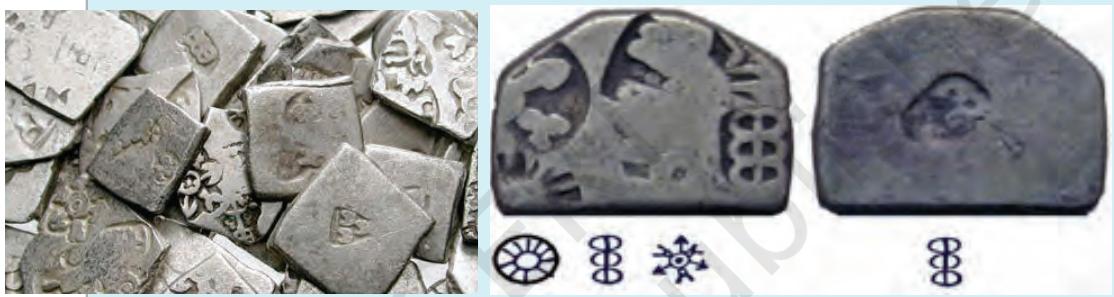 Fig. 5.29.1. A hoard of Mauryan punch-marked coins, Fig. 5.29.2. A punch-marked coin of Ashoka
DON'T MISS OUT
The big, round hemispherical structure in the centre of the stüpa is called the anda. It represents the universe and is often built to house sacred relics. People walk around it in a circle as a form of worship (pradakshina).
The Fragile Nature of Empires
You will hear in higher grades about past mighty empires elsewhere in the world, such as the Roman, the Persian, the Ottoman, the Spanish, the Russian, the British empires, and so on. All of them are long gone, but historians keep debating the causes of their decline.
One of those causes, as we saw, is the temptation for some of the empire's regions to try and become independent. This could happen if, for example, the emperor needed more resources for long military campaigns or in times of drought; local rulers would be burdened with increasing demands for tribute, leading to resentment. Or if a powerful emperor was followed by one perceived to be weak, local kings or chieftains might simply decide to take a chance and stop paying tribute. Also, the larger an empire, the more difficult it is to hold it together, as Alexander experienced; far-off territories are often the first to split away from the empire. Finally, economic crises caused by natural calamities (such as a long drought or floods) could also shake an empire's structure.
Empires are, therefore, something of a paradox. On the one hand, they can bring about political unity, as the Mauryan empire did to almost the entire Subcontinent, and reduce or eliminate warfare among the smaller kingdoms indeed, a well-managed empire could lead to greater prosperity than smaller, warring kingdoms. On the other hand, empires have almost always been established through war and have maintained their existence
through force and repression. This makes them fragile at their core and unstable over time.
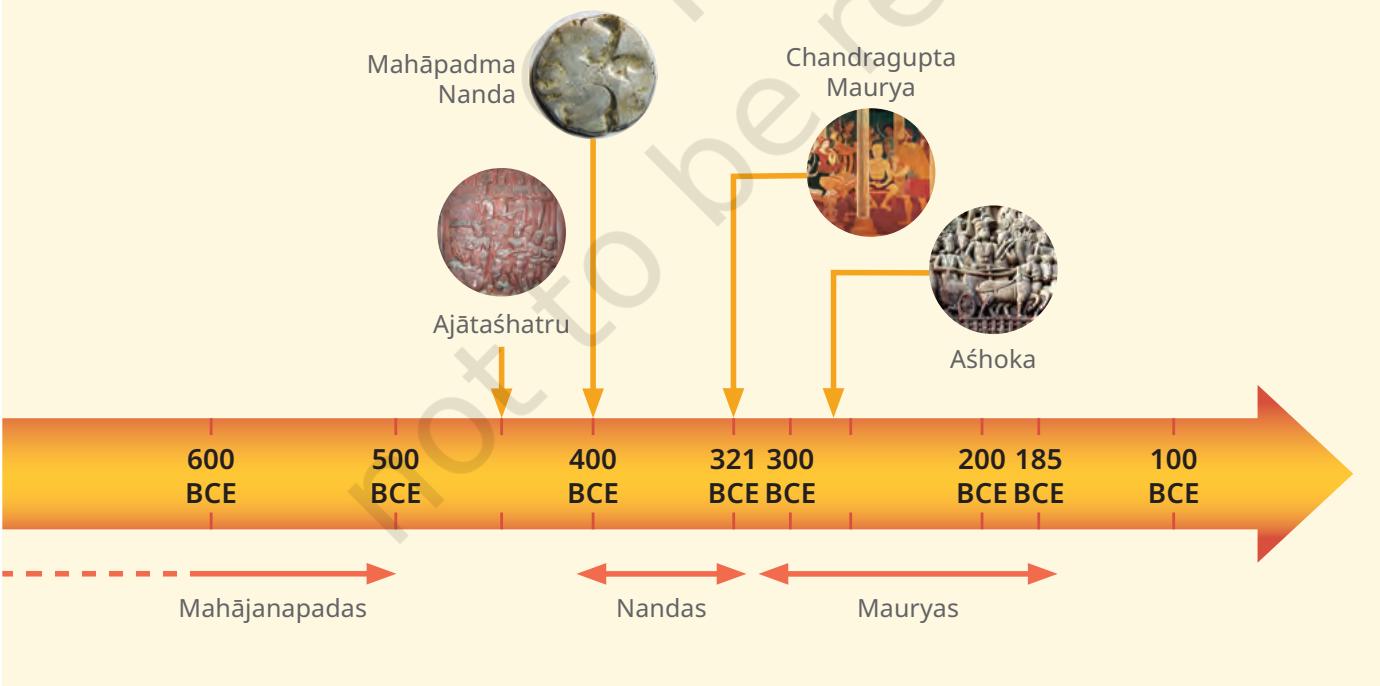 Fig. 5.30
Before we move on
An empire is a large territory made up of many smaller kingdoms or territories. Emperors expanded their kingdoms mostly to gain fame, amass power, including military power, and control resources and economic life.
The first empires of India emerged in regions blessed with abundant natural resources, rivers for irrigation and transport, and the production of a variety of goods for trade.
Alexander's campaign in northwest India had a limited political impact but opened the door for Indo-Greek cultural contacts.
The Mauryas created a vast empire with a legacy that lasted centuries. Their legacy includes strengthening trade routes and economic systems, extensive use of coins for trade, well-designed urban settlements, and an elaborate system of administration. They also promoted art and architecture.
Ashoka was keen to advertise his achievements and project the image of a benevolent ruler who encouraged his subjects to follow dharma.
Questions and activities
What are the features of an empire, and how is it different from a kingdom? Explain.
What are some important factors for the transition from kingdoms to empires?
Alexander is considered an important king in the history of the world —why do you think that is so?
In early Indian history, the Mauryas are considered important. State your reasons.
What were some of Kautilya's key ideas? Which ones of these can you observe even today in the world around us?
What were the unusual things about Ashoka and his empire? What of that has continued to influence India and why? Write your opinion in about 250 words.
Thus speaks the Beloved of the Gods, the king Piyadasi: My officers of Dhamma are busy in many matters of public benefit, they are busy among members of all sects, both ascetics and householders. I have appointed some to concern themselves with the Buddhist Order, with brahmans and Ajivika.., with the Jains.., and with various sects. There are many categories of officers with a variety of duties, but my officers of Dhamma are busy with the affairs of these and other sects.
After reading the above edict of Ashoka, do you think he was tolerant towards other religious beliefs and schools of thought? Share your opinion in the classroom.
The Brahmi script was a writing system that was widely used in ancient India. Try to learn more about this script, taking help from your teacher wherever required. Create a small project and include what you have learnt about Brahmi.
Suppose you had to travel from Kaushámbi to Kaveripattanam in the 3rd century BCE. How would you undertake this journey, and how long would you expect it to take, with reasonable halts on the way?