Acids, Bases and Everyday Chemistry: Why Lemon Stings and Soap is Slippery
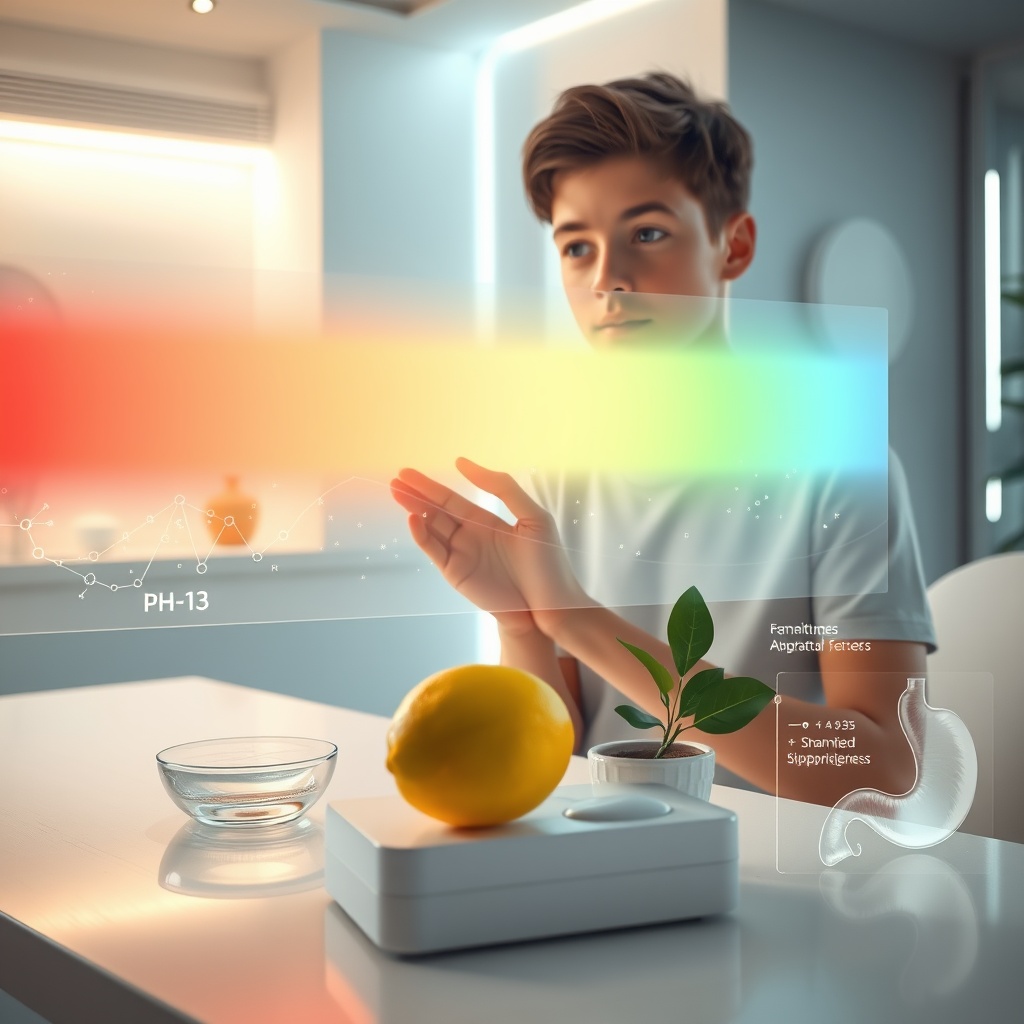
Ever wonder why a splash of lemon juice stings a small cut, or why soap feels so distinctively slippery between your fingers?
Overview
Ever wonder why a splash of lemon juice stings a small cut, or why soap feels so distinctively slippery between your fingers? These aren't just random sensations, but direct results of fundamental chemical properties: acidity and basicity. Lemon juice, with a pH typically between 2 and 3 due to its citric acid content, irritates exposed tissue. Soap, conversely, is alkaline, with a pH usually around 9 to 10, creating a slick film by reacting with oils on your skin. This interaction is a perfect entry point into understanding Acids, Bases and Everyday Chemistry.
For many students, the classroom definitions of acids and bases can feel abstract, disconnected from these daily experiences. They might memorize that acids donate protons and bases accept them, but struggle to apply this to why an antacid works or why agricultural soil pH needs careful monitoring. YoLearn AI helps bridge this gap, transforming theoretical knowledge into intuitive understanding by connecting textbook concepts to these common occurrences, making topics like chemical reactions much more relatable.
History & Background
Our understanding of acids and bases has evolved significantly. Early chemists identified them by their observable properties: acids tasted sour and corroded metals, while bases tasted bitter and felt slippery. The Arrhenius definition, proposed in the late 19th century, was a major step, explaining acids as substances that produce hydrogen ions (H⁺) in water and bases as those producing hydroxide ions (OH⁻). This explained why a strong acid like hydrochloric acid (HCl) releases H⁺, causing its corrosive nature.
Later, the Brønsted-Lowry theory expanded this by defining acids as proton donors and bases as proton acceptors, which better explained reactions outside of aqueous solutions. The ultimate game-changer for Acids, Bases and Everyday Chemistry was the introduction of the pH scale by Søren Sørensen in 1909. This logarithmic scale provided a quantitative measure of acidity and alkalinity, allowing scientists and even home gardeners to precisely measure the strength of an acid or base. This shift from qualitative observation to quantitative measurement laid the groundwork for modern chemical analysis.
Benefits
A solid understanding of acids and bases offers several advantages for students:
Using YoLearn AI specifically for Acids, Bases and Everyday Chemistry translates into tangible learning gains:
Applications
Understanding acids and bases isn't just for chemists; it’s crucial across various fields and daily life:
YoLearn AI offers specific tools to help students grasp these practical applications:
Future
The future of learning about acids and bases will increasingly involve immersive and interactive simulations. Imagine a virtual lab where students can safely mix different concentrations of acids and bases, observing real-time pH changes on a digital indicator, without needing physical chemicals or glassware. These tools will go beyond static diagrams, offering dynamic visual feedback to solidify understanding of titration curves or buffer solutions.
YoLearn AI is already paving the way for such interactive learning. Its real-time voice conversations can guide students through hypothetical experiments, explaining observations and predicting outcomes, acting as a personal lab assistant. As AI evolves, YoLearn AI will integrate more sophisticated simulations, allowing students to virtually experiment with various Solutions Chemistry Notes compositions and their acidic or basic properties. To start exploring the fascinating world of Acids Bases And Salts Science Notes, download the app today: https://play.google.com/store/apps/details?id=com.yolearn.student&hl=en_IN