Diffusion vs. Osmosis: Real Examples Explained for Biology Students
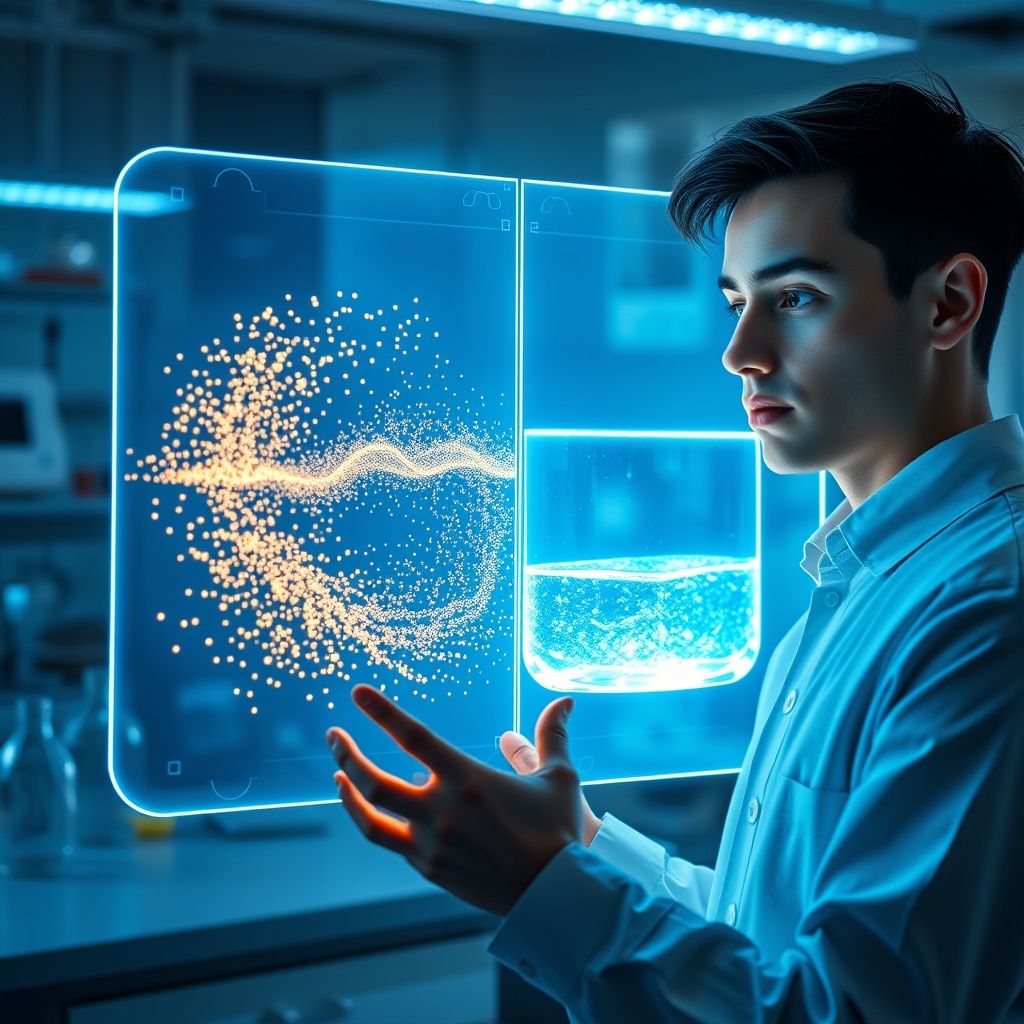
Imagine dropping a single tea bag into a cup of hot water. Soon, the entire cup changes color as the tea particles spread out from the bag into the surrounding water. This spontaneous movement of particles from a region of higher concentration to a region of lower concentration is a direct illustration of diffusion. Understanding the difference between diffusion and osmosis is crucial for biology students, especially when concepts like cellular transport or plant physiology come into play.
Overview
Imagine dropping a single tea bag into a cup of hot water. Soon, the entire cup changes color as the tea particles spread out from the bag into the surrounding water. This spontaneous movement of particles from a region of higher concentration to a region of lower concentration is a direct illustration of diffusion. Understanding the difference between diffusion and osmosis is crucial for biology students, especially when concepts like cellular transport or plant physiology come into play.
Many students grasp the general idea of movement but often struggle to articulate the specific conditions that define diffusion versus osmosis, particularly the role of a semi-permeable membrane. This confusion often surfaces during internal assessments or competitive exams like NEET, where precise definitions and application-based scenarios are tested. YoLearn.AI can help bridge this gap by offering immediate, detailed explanations tailored to individual queries, clarifying these fundamental biological processes.
History & Background
The earliest observations of particle movement, such as Robert Brown's 1827 description of pollen grains jiggling in water, laid the groundwork for understanding diffusion. This led to the concept of Brownian motion, where random collisions drive particles to spread out. Initial models focused on the natural tendency for any substance to distribute itself evenly within an available space, without needing external energy input.
The distinct phenomenon of osmosis began to be recognized with the study of membranes. In 1748, Jean-Antoine Nollet first documented that water could pass through an animal bladder while alcohol could not, noticing the pressure exerted. Later, the work of Jacobus Henricus van 't Hoff in the late 19th century mathematically defined osmotic pressure, solidifying the idea that water movement across a selectively permeable barrier was a separate, critical biological process, distinct from the simple diffusion of solutes.
Benefits
YoLearn.AI enhances learning the difference between diffusion and osmosis through several key benefits:
Applications
For students trying to visualize these processes or understand their nuances, YoLearn.AI offers specific tools. If a student is unsure about how oxygen enters red blood cells, they can use the photo doubt solving feature to snap a picture of a lung diagram; the AI can then explain the diffusion gradient of O2. If a question arises during a late-night study session about why a wilted plant perks up after watering, the Real-Time AI Voice Tutor by YoLearn.AI can walk through the concept of osmosis and water potential, explaining the cellular mechanisms involved. Students can also request instant quizzes on "Transport in Plants" topics, which often feature real-world scenarios requiring a clear understanding of both processes.
Future
The future of learning these biological transport mechanisms will likely involve highly interactive, three-dimensional simulations where students can manipulate factors like concentration gradients, membrane permeability, and particle size, observing the dynamic processes of diffusion and osmosis in real-time within a virtual cell environment.
YoLearn.AI is moving towards integrating more advanced interactive elements, allowing students to not just receive explanations but actively experiment with biological models. Imagine adjusting the salt concentration around a virtual plant cell and immediately seeing the effects of osmosis, explained through a Real-Time AI Voice Tutor by YoLearn.AI: Transforming Student Learning. This hands-on virtual experience, combined with the personalized AI feedback, will deepen understanding beyond static textbook diagrams. Discover this approach to biology by trying the app: https://apps.apple.com/in/app/yotutor-ai/id6759192307