UNIT 3
CLASSIFICATION OF ELEMENTS AND PERIODICITY IN PROPERTIES
Objectives
After studying this Unit, you will be able to
- appreciate the foundational role of element grouping based on properties in the evolution of the Periodic Table;
- comprehend the Periodic Law;
- grasp the importance of atomic number and electron configuration as the underlying principles of periodic classification;
- name elements possessing an atomic number $Z > 100$ in accordance with IUPAC guidelines;
- categorize elements into $s, p, d, f$ blocks and identify their primary attributes;
- recognize the systematic variations in the physical and chemical properties of elements across periods and groups;
- compare the reactivity of elements and establish its relationship with their natural abundance and distribution;
- elucidate the correlation between ionization enthalpy and the metallic character of elements;
- employ precise scientific terminology to articulate concepts pertaining to key atomic properties, such as atomic/ionic radii, ionization enthalpy, electron gain enthalpy, electronegativity, and elemental valence.
The Periodic Table is arguably the most important concept in chemistry, both in principle and in practice. It is the everyday support for students, it suggests new avenues of research to professionals, and it provides a succinct organization of the whole of chemistry. It is a remarkable demonstration of the fact that the chemical elements are not a random cluster of entities but instead display trends and lie together in families. An awareness of the Periodic Table is essential to anyone who wishes to disentangle the world and see how it is built up from the fundamental building blocks of the chemistry, the chemical elements.
Glenn T. Seaborg
Within this Unit, our focus will be on tracing the historical evolution of the contemporary Periodic Table and exploring the Modern Periodic Law. Furthermore, we will investigate how the periodic arrangement of elements emerges as a direct outcome of their atomic electron configurations. Lastly, we will analyze several periodic patterns observed in the physical and chemical attributes of elements.
3.1 WHY DO WE NEED TO CLASSIFY ELEMENTS?
It is now established that elements constitute the fundamental constituents of all forms of matter. In the year 1800, merely 31 elements had been identified. By 1865, this count had more than doubled, reaching 63. Currently, 114 elements are recognized, with the more recently discovered ones being synthetic. Research to create additional elements remains ongoing. Given the extensive quantity of elements, it presents a considerable challenge to investigate the chemistry of each individually, along with their countless associated compounds. To mitigate this difficulty, researchers sought a methodical approach to structure their understanding through elemental classification. Such a system would not only provide a coherent explanation for existing chemical data concerning elements but also enable the prediction of novel properties for subsequent investigations.
3.2 GENESIS OF PERIODIC CLASSIFICATION
The grouping of elements and the subsequent formulation of the Periodic Law and Periodic Table emerged from the systematic organization of empirical knowledge amassed by numerous scientists through rigorous observations and experimentation. During the early 19th century, the German chemist Johann Dobereiner pioneered the concept of discernible patterns within elemental properties. By 1829, he observed correlations in the physical and chemical characteristics across various sets of three elements, which he termed 'Triads.' Notably, in each Triad, the atomic weight of the central element approximated the arithmetic mean of the atomic weights of the other two (refer to Table 3.1). Concurrently, the properties exhibited by this middle element typically lay intermediate to those of its flanking counterparts. However, Dobereiner's correlation, known as the Law of Triads, proved applicable to only a limited number of elements and was consequently regarded as a mere fortuitous occurrence. A subsequent effort to categorize elements was undertaken in 1862 by the French geologist A.E.B. de Chancourtois. He organized the elements known at that time according to their increasing atomic weights, devising a cylindrical arrangement to illustrate the periodic repetition of their characteristics. This endeavor, too, garnered limited recognition. In 1865, the English chemist John Alexander Newlands put forth the Law of Octaves. He sequenced the elements by ascending atomic weight, observing that the properties of every eighth element mirrored those of the first element (refer to Table 3.2). This pattern was likened to the octave in music, where every eighth note replicates the first. Newlands's Law of Octaves demonstrated validity only for elements up to calcium. Despite its initial lack of widespread acceptance, his pioneering work was later acknowledged with the Davy Medal in 1887 by the Royal Society in London.
The Periodic Law, as we know it today owes its development to the Russian chemist, Dmitri Mendeleev (1834-1907) and the German chemist, Lothar Meyer (1830-1895).
Table 3.1 Dobereiner's Triads
| Element | Atomic weight | Element | Atomic weight | Element | Atomic weight |
|---|---|---|---|---|---|
| Li | 7 | Ca | 40 | Cl | 35.5 |
| Na | 23 | Sr | 88 | Br | 80 |
| K | 39 | Ba | 137 | I | 127 |
In 1869, two chemists, working independently, advanced the hypothesis that when elements are organized in ascending order of their atomic weights, resemblances in physical and chemical properties manifest at consistent intervals. Lothar Meyer, for example, charted physical attributes such as atomic volume, melting point, and boiling point against atomic weight, thereby revealing
Table 3.2 Newlands' Octaves
| Element | Li | Be | B | C | N | O | F |
|---|---|---|---|---|---|---|---|
| At. wt. | 7 | 9 | 11 | 12 | 14 | 16 | 19 |
| Element | Na | Mg | Al | Si | P | S | Cl |
| At. wt. | 23 | 24 | 27 | 29 | 31 | 32 | 35.5 |
| Element | K | Ca | |||||
| At. wt. | 39 | 40 |
a recurring pattern. Distinct from Newlands, Lothar Meyer observed variability in the length of this repeating sequence. By 1868, Lothar Meyer had already formulated a table of elements that bore a close resemblance to the contemporary Periodic Table. However, his findings were not publicly disseminated until after the work of Dmitri Mendeleev, the individual generally credited with establishing the Modern Periodic Table.
While Dobereiner inaugurated the inquiry into periodic relationships, it was Mendeleev who assumed responsibility for the initial publication of the Periodic Law. It states as follows:
Elemental characteristics exhibit periodicity when arranged by their atomic weights.
Dmitri Mendeleev systematically organized elements into horizontal rows and vertical columns within a table, based on their ascending atomic weights. This arrangement ensured that elements sharing analogous properties were positioned within the identical vertical column, or group. Mendeleev's approach to classifying elements surpassed Lothar Meyer's system in its intricacy. He profoundly appreciated the importance of periodicity and employed a more extensive spectrum of physical and chemical characteristics for elemental classification. Notably, Mendeleev placed considerable emphasis on the resemblances observed in the empirical formulas and compound properties generated by these elements. He recognized that certain elements would not conform to his classification framework if the atomic weight sequence were rigidly adhered to. Consequently, he disregarded the atomic weight order, presuming potential inaccuracies in atomic mass determinations, and instead grouped elements exhibiting similar attributes. For instance, iodine, possessing a lower atomic weight than tellurium (located in Group VI), was assigned to Group VII alongside fluorine, chlorine, and bromine due to their shared properties (Fig. 3.1). Concurrently, prioritizing the arrangement of elements with analogous properties into common groups, he posited the existence of yet-undiscovered elements, thereby introducing several vacant positions within his table. For example, both gallium and germanium remained unknown when Mendeleev's Periodic Table was first presented. He designated spaces beneath aluminium and silicon, referring to these hypothetical elements as Eka-Aluminium and Eka-Silicon, respectively. Mendeleev accurately foretold not only the presence of gallium and germanium but also detailed several of their general physical attributes. These elements were subsequently identified. A comparison of Mendeleev's predicted properties for these elements against experimentally determined values is provided in Table 3.3.
The audacious nature of Mendeleev's quantitative forecasts and their subsequent corroboration ultimately brought considerable renown to both him and his Periodic Table. Mendeleev's Periodic Table, as published in 1905, is depicted in Fig. 3.1.
Table 3.3 Mendeleev's Predictions for the Elements Eka-aluminium (Gallium) and Eka-silicon (Germanium)
| Property | Eka-aluminium (predicted) | Gallium (found) | Eka-silicon (predicted) | Germanium (found) |
|---|---|---|---|---|
| Atomic weight | 68 | 70 | 72 | 72.6 |
| Density/(g/cm3) | 5.9 | 5.94 | 5.5 | 5.36 |
| Melting point/K | Low | 302.93 | High | 1231 |
| Formula of oxide | E2O3 | Ga2O3 | EO2 | GeO2 |
| Formula of chloride | E Cl3 | GaCl3 | ECl4 | GeCl4 |
CLASSIFICATION OF ELEMENTS AND PERIODICITY IN PROPERTIES
PERIODIC SYSTEM OF THE ELEMENTS IN GROUPS AND SERIES
| SERIES | GROUPS OF ELEMENTS | ||||||||||
|---|---|---|---|---|---|---|---|---|---|---|---|
| 0 | I | II | III | IV | V | VI | VII | VIII | |||
| 1 | Helium He 4.0 | Hydrogen H 1.008 Lithium Li 7.03 Sodium Na 23.5 | Beryllium Be 9.1 Magnesium Mg 24.3 | Boron B 11.0 Aluminium Al 27.0 | Carbon C 12.0 Silicon Si 28.4 | Nitrogen N 14.04 Phosphorus P 31.0 | Oxygen O 16.00 Sulphur S 32.06 | Fluorine F 19.0 Chlorine Cl 35.45 | |||
| 2 | Argon Ar 38 | Potassium K 39.1 Copper Cu 63.6 | Calcium Ca 40.1 Zinc Zn 65.4 | Scandium Sc 44.1 Gallium Ga 70.0 | Titanium Ti 48.1 Germanium Ge 72.3 | Vanadium V 51.4 Arsenic As 75 | Chromium Cr 52.1 Selenium Se 79 | Manganese Mn 55.0 Bromine Br 79.95 | Iron Cobalt Nickel Fe Co Ni (Cu) 55.9 59 59 | ||
| 3 | Krypton Kr 81.8 | Rubidium Rb 85.4 Silver Ag 107.9 | Strontium Sr 87.6 Cadmium Cd 112.4 | Yttrium Y 89.0 Indium In 114.0 | Zirconium Zr 90.6 Tin Sn 119.0 | Niobium Nb 94.0 Antimony Sb 120.0 | Molybdenum Mo 96.0 Tellurium Te 127.6 | Iodine I 126.9 | Ruthenium Rhodium Palladium Ru Rh Pd (Ag) 101.7 103.0 106.5 | ||
| 4 | Xenon Xe 128 | Caesium Cs 132.9 | Barium Ba 137.4 | Lanthanum La 139 | Cerium Ce 140 | - | - | - | |||
| 5 | - | - | - | Ytterbium Yb 173 Thallium Ti 204.1 | - Lead Pb 206.9 | Tantalum Ta 183 Bismuth Bi 208 | Tungsten W 184 | - | Osmium Iridium Platinum Os Ir Pt (Au) 191 193 194.9 | ||
| 6 | - | - | - | - | - | - | - | - | |||
| 7 | - | - | - | - | - | - | - | - | |||
| 8 | Xenon Xe 128 | Caesium Cs 132.9 | Barium Ba 137.4 | Lanthanum La 139 | Cerium Ce 140 | - | - | - | |||
| 9 | - | - | - | - | - | - | - | - | |||
| 10 | - | - | - | Ytterbium Yb 173 Thallium Ti 204.1 | - Lead Pb 206.9 | Tantalum Ta 183 Bismuth Bi 208 | Tungsten W 184 | - | Osmium Iridium Platinum Os Ir Pt (Au) 191 193 194.9 | ||
| 11 | - | - | - | - | - | - | - | - | |||
| 12 | - | - | Radium Ra 224 | - | Thorium Th 232 | - | Uranium U 239 | - | |||
| R | R2O | RO | R2O3 | HIGHER SALINE OXIDES RO2 R2O5 RO3 R2O7 HIGHER GASEOUS HYDROGEN COMPOUNDS RH4 RH3 RH2 RH | RO4 |
Fig. 3.1 Mendeleev's Periodic Table published earlier
CHEMISTRY
3.3 MODERN PERIODIC LAW AND THE PRESENT FORM OF THE PERIODIC TABLE
It is crucial to acknowledge that during the formulation of Mendeleev's Periodic Table, the intricate internal architecture of atoms remained unknown to chemists. Nevertheless, the early 20th century brought significant advancements in theories concerning subatomic constituents. In 1913, Henry Moseley, an English physicist, identified systematic patterns within the characteristic X-ray spectra of various elements. His investigation revealed that graphing $\sqrt{\nu}$ (where $\nu$ represents the frequency of emitted X-rays) against atomic number ($Z$) yielded a linear relationship, unlike plotting $\sqrt{\nu}$ against atomic mass. This evidence demonstrated that an element's atomic number constitutes a more fundamental characteristic than its atomic mass. Consequently, Mendeleev’s Periodic Law underwent a necessary revision, now recognized as the Modern Periodic Law, which posits:
The physical and chemical attributes of elements exhibit periodic dependence on their atomic numbers.
The Periodic Law elucidated crucial resemblances among the 94 elements occurring naturally (it's noteworthy that neptunium and plutonium, akin to actinium and protoactinium, are also discovered within pitchblende, a uranium ore). This framework invigorated the field of Inorganic Chemistry and continues to be relevant, extending to the synthesis of transient, artificially created elements. As a reminder, the atomic number corresponds to the nuclear charge (i.e., the count of protons) or, in a neutral atom, the number of electrons. From this understanding, the profound role of quantum numbers and electronic configurations in governing the periodicity of elements becomes readily apparent. Indeed, it is now established that the Periodic Law fundamentally arises from the cyclical changes in electronic configurations, which are the primary determinants of the physical and chemical characteristics of elements and their associated compounds.
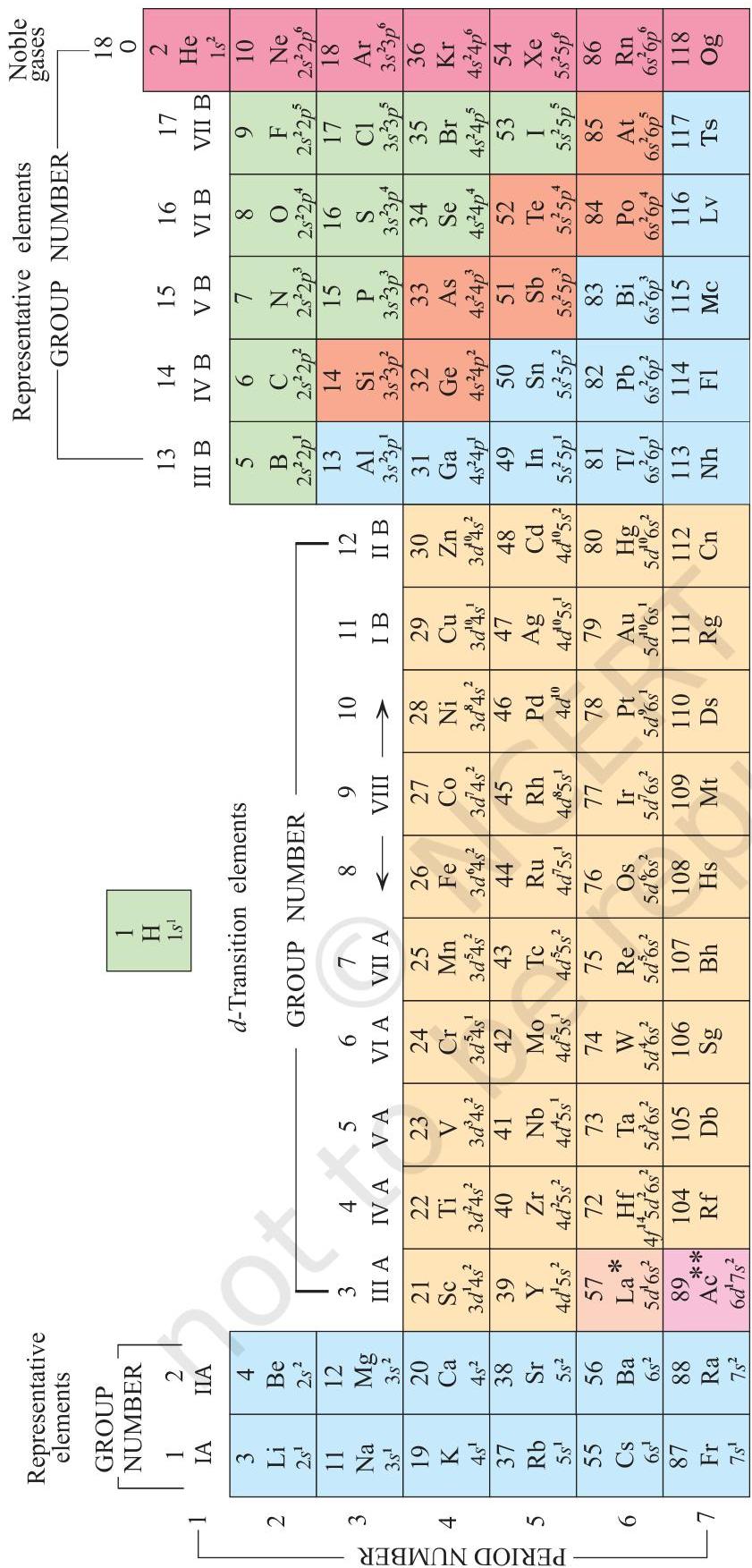
Over time, a multitude of Periodic Table representations have been conceived. Certain versions prioritize chemical reactivity and valence, while others underscore the electronic arrangements of elements. Among these, a contemporary iteration, commonly termed the “long form” of the Periodic Table of the elements (Fig. 3.2), stands out as the most practical and extensively employed. The horizontal sequences, which Mendeleev originally designated as series, are now known as periods, and the vertical alignments are termed groups. Elements exhibiting analogous outer electronic configurations within their atoms are systematically organized into these vertical columns, known as groups or families. In accordance with the guidelines set forth by the International Union of Pure and Applied Chemistry (IUPAC), groups are now sequentially numbered from 1 to 18, superseding the former designations such as groups IA ... VIIA, VIII, IB ... VIIB, and 0.
A total of seven periods comprise the current table. The numerical designation of each period directly correlates with the highest principal quantum number ($n$) characteristic of the elements within that period. The initial period encompasses 2 elements. Subsequent periods are composed of 8, 8, 18, 18, and 32 elements, respectively. The seventh period remains unfinished, and, analogous to the sixth period, it possesses a theoretical capacity (determined by quantum numbers) for 32 elements. Within this particular arrangement of the Periodic Table, 14 elements from both the sixth and seventh periods (known as lanthanoids and actinoids, respectively) are conventionally positioned in distinct blocks situated beneath the main table*.
3.4 NOMENCLATURE OF ELEMENTS WITH ATOMIC NUMBERS > 100
Historically, the authority to name newly synthesized elements rested with their discoverer(s), with the proposed designation subsequently requiring ratification by the International Union of Pure and Applied Chemistry (IUPAC). However, this practice has generated considerable debate in more recent times. Elements possessing exceptionally high atomic numbers exhibit extreme instability, resulting in the production of merely infinitesimal amounts, occasionally limited to just a handful of individual atoms.
- During the mid-20th century, Glenn T. Seaborg's pioneering research, commencing with the identification of plutonium in 1940 and extending to the discovery of all transuranium elements from atomic number 94 to 102, instigated a fundamental reorganization of the periodic table, positioning the actinoid series beneath the lanthanoid series. For these contributions, Seaborg received the Nobel Prize in chemistry in 1951. Element 106 was subsequently designated Seaborgium (Sg) in recognition of his achievements.
| 58 Ce 4/5d*6s2 | 59 Pr 4/5d*6s2 | 60 Nd 4/5d*6s2 | 61 Pm 4/5d*6s2 | 62 Sm 4/5d*6s2 | 63 Eu 4/5d*6s2 | 64 Gd 4/5d*6s2 | 65 Tb 4/5d*6s2 | 66 Dy 4/5d*6s2 | 67 Ho 4/5d*6s2 | 68 Er 4/5d*6s2 | 69 Tm 4/5d*6s2 | 70 Yb 4/5d*6s2 | 71 Lu 4/5d*6s2 |
|---|---|---|---|---|---|---|---|---|---|---|---|---|---|
| 90 Th 5/6d*7s3 | 91 Pa 5/6d*7s3 | 92 U 5/6d*7s3 | 93 Np 5/6d*7s3 | 94 Pu 5/6d*7s3 | 95 Am 5/6d*7s3 | 96 Cm 5/6d*7s3 | 97 Bk 5/6d*7s3 | 98 Cf 5/6d*7s3 | 99 Es 5/6d*7s3 | 100 Fm 5/6d*7s3 | 101 Md 5/6d*7s3 | 102 No 5/6d*7s3 | 103 Lr 5/6d*7s3 |
Fig. 3.2 Long form of the Periodic Table of the Elements with their atomic numbers and ground state outer electronic configurations. The groups are numbered 1-18 in accordance with the 1984 IUPAC recommendations. This notation replaces the old numbering scheme of IA-VIIA, VIII, IB-VIIB and 0 for the elements.
| 58 Ce 4/5d*6s2 | 59 Pr 4/5d*6s2 | 60 Nd 4/5d*6s2 | 61 Pm 4/5d*6s2 | 62 Sm 4/5d*6s2 | 63 Eu 4/5d*6s2 | 64 Gd 4/5d*6s2 | 65 Tb 4/5d*6s2 | 66 Dy 4/5d*6s2 | 67 Ho 4/5d*6s2 | 68 Er 4/5d*6s2 | 69 Tm 4/5d*6s2 | 70 Yb 4/5d*6s2 | 71 Lu 4/5d*6s2 |
|---|---|---|---|---|---|---|---|---|---|---|---|---|---|
| 90 Th 5/6d*7s3 | 91 Pa 5/6d*7s3 | 92 U 5/6d*7s3 | 93 Np 5/6d*7s3 | 94 Pu 5/6d*7s3 | 95 Am 5/6d*7s3 | 96 Cm 5/6d*7s3 | 97 Bk 5/6d*7s3 | 98 Cf 5/6d*7s3 | 99 Es 5/6d*7s3 | 100 Fm 5/6d*7s3 | 101 Md 5/6d*7s3 | 102 No 5/6d*7s3 | 103 Lr 5/6d*7s3 |
Consequently, their creation and subsequent characterization necessitate the deployment of highly advanced and expensive instrumentation within specialized laboratory environments. This type of research is conducted with considerable rivalry among a select number of global institutions. Researchers, prior to accumulating definitive data concerning a novel element, are occasionally inclined to assert its discovery prematurely. A notable instance involves the competing claims by American and Soviet scientists for element 104, which the former designated Rutherfordium and the latter Kurchatovium. To mitigate such conflicts, the IUPAC instituted a recommendation: until the discovery of a new element is conclusively substantiated and its permanent name officially sanctioned, a provisional systematic nomenclature should be formulated directly from its atomic number, employing established numerical roots for 0 and the digits 1 through 9. These roots are presented in Table 3.4 and are assembled sequentially based on the atomic number.
the numerical components of its atomic number, concluded with the suffix "ium." The systematic IUPAC names for elements possessing an atomic number $Z$ exceeding 100 are detailed in Table 3.5.
Table 3.4 Notation for IUPAC Nomenclature of Elements
| Digit | Name | Abbreviation |
|---|---|---|
| 0 | nil | n |
| 1 | un | u |
| 2 | bi | b |
| 3 | tri | t |
| 4 | quad | q |
| 5 | pent | p |
| 6 | hex | h |
| 7 | sept | s |
| 8 | oct | o |
| 9 | enn | e |
Table 3.5 Nomenclature of Elements with Atomic Number Above 100
| Atomic Number | Name according to IUPAC nomenclature | Symbol | IUPAC Official Name | IUPAC Symbol |
|---|---|---|---|---|
| 101 | Unnilunium | Unu | Mendelevium | Md |
| 102 | Unnilbium | Unb | Nobelium | No |
| 103 | Unniltrium | Unt | Lawrencium | Lr |
| 104 | Unnilquadium | Unq | Rutherfordium | Rf |
| 105 | Unnilpentium | Unp | Dubnium | Db |
| 106 | Unnilhexium | Unh | Seaborgium | Sg |
| 107 | Unnilseptium | Uns | Bohrium | Bh |
| 108 | Unniloctium | Uno | Hassium | Hs |
| 109 | Unnilennium | Une | Meitnerium | Mt |
| 110 | Ununnillium | Uun | Darmstadtium | Ds |
| 111 | Unununnium | Uuu | Rontgenium | Rg |
| 112 | Ununbium | Uub | Copernicium | Cn |
| 113 | Ununtrium | Uut | Nihonium | Nh |
| 114 | Ununquadium | Uuq | Flerovium | Fl |
| 115 | Ununpentium | Uup | Moscovium | Mc |
| 116 | Ununhexium | Uuh | Livermorium | Lv |
| 117 | Ununseptium | Uus | Tennessine | Ts |
| 118 | Ununoctium | Uuo | Oganesson | Og |
CLASSIFICATION OF ELEMENTS AND PERIODICITY IN PROPERTIES
Consequently, a newly identified element initially receives a provisional name, accompanied by a three-letter symbol. Subsequently, a permanent name and symbol are formally established through a voting process involving IUPAC representatives from each participating country. The permanent designation may honor the nation (or a specific region within it) where the element was discovered, or serve as a tribute to a distinguished scientist. To date, elements with atomic numbers up to 118 have been successfully synthesized, and their definitive names have been officially promulgated by the IUPAC.
Problem 3.1
What would be the IUPAC name and symbol for the element with atomic number 120?
Solution
Consulting Table 3.4 reveals that the numerical roots 'un', 'bi', and 'nil' correspond to the digits 1, 2, and 0, respectively. Consequently, the IUPAC symbol for this element is Ubn, and its name is unbinilium.
3.5 ELECTRONIC CONFIGURATIONS OF ELEMENTS AND THE PERIODIC TABLE
Our prior studies established that an electron within an atom is defined by a unique set of four quantum numbers, where the principal quantum number $(n)$ designates the primary energy level, conventionally termed a shell. Furthermore, we previously examined the process of electron occupation within an atom's various subshells, also known as orbitals (s, $p$, $d,f$). The arrangement of electrons across these orbitals within an atom constitutes its electronic configuration. The position an element occupies within the Periodic Table is indicative of the quantum numbers associated with its highest-energy, occupied orbital. This current section will elucidate the direct relationship between elemental electronic configurations and the structure of the long-form Periodic Table.
(a) Electronic Configurations in Periods
Each period within the Periodic Table signifies the principal quantum number $n$ corresponding to the outermost or valence electron shell. Consequently, progression through the periods of the Periodic Table is linked to the sequential occupation of progressively higher principal energy levels ($n = 1$, $n = 2$, and so forth). An observable pattern reveals that the quantity of elements within any given period is precisely double the total count of atomic orbitals present in the energy level currently undergoing electron occupancy. Commencing with the lowest energy level (1s), the initial period ($n = 1$) accommodates two elements: hydrogen ($1s^1$) and helium ($1s^2$), marking the completion of the first (K) electron shell. The second period ($n = 2$) commences with lithium, where the third electron occupies the 2s orbital. Beryllium, the subsequent element, possesses four electrons, resulting in an electronic configuration of $1s^22s^2$. From boron onward, the $2p$ orbitals become occupied by electrons, culminating in the completion of the L shell at neon ($2s^22p^6$). This process accounts for the 8 elements found in the second period. The third period ($n = 3$) initiates with sodium, as the additional electron enters a 3s orbital. The sequential filling of the 3s and $3p$ orbitals defines the third period, comprising 8 elements from sodium through argon. Potassium marks the beginning of the fourth period ($n = 4$), with added electrons occupying the 4s orbital. It is noteworthy that prior to the occupancy of the $4p$ orbital, the filling of the 3d orbitals becomes energetically favored, leading to the emergence of the 3d transition series of elements. This series commences with scandium ($Z = 21$), characterized by the electronic configuration $3d^14s^2$. The 3d orbitals are fully occupied at zinc ($Z = 30$), exhibiting an electronic configuration of $3d^{10}4s^2$. The fourth period concludes with krypton, following the complete filling of the $4p$ orbitals. In total, this fourth period encompasses 18 elements. Analogous to the fourth period, the fifth period ($n = 5$), initiating with rubidium, incorporates the 4d transition series, which begins at yttrium ($Z = 39$). Xenon marks the termination of this period, upon the complete filling of the $5p$ orbitals. Comprising 32 elements, the sixth period ($n = 6$) involves the sequential occupancy of 6s, 4f, 5d, and 6p orbitals. Specifically, the filling of the $4f$ orbitals starts with cerium ($Z = 58$) and concludes at lutetium ($Z = 71$), thereby forming the $4f$-
inner transition series, known as the lanthanoid series. The seventh period ($n = 7$) mirrors the sixth period, characterized by the sequential filling of the 7s, 5f, 6d, and 7p orbitals, and notably contains the majority of synthetic radioactive elements. This period is projected to culminate with the element possessing atomic number 118, which is expected to be a member of the noble gas family. The occupation of the $5f$ orbitals subsequent to actinium ($Z = 89$) generates the $5f$-inner transition series, designated as the actinoid series. To uphold the structural integrity of the Periodic Table and to maintain the classification principle of grouping elements with analogous properties in a single column, the $4f$- and $5f$-inner transition series are positioned distinctly.
Problem 3.2
How would you justify the presence of 18 elements in the 5th period of the Periodic Table?
Solution
For
a
principal quantum number $n
= 5
$, the possible
values for the azimuthal quantum number ($l$) are 0, 1, 2, and 3. The energetic ordering of the relevant available orbitals—specifically 4d, 5s, and 5p—follows the sequence: $5s < 4d < 5p$. This arrangement makes a total of nine distinct orbitals accessible. Given that each orbital can accommodate a maximum of two electrons, the fifth period is capable of housing up to 18 electrons, thereby accounting for the inclusion of 18 elements in this period.
(b) Groupwise Electronic Configurations
Elements located within the same vertical column, or group, on the Periodic Table exhibit analogous properties. This similarity stems from their consistent valence shell electron configurations and the identical number of electrons present in their outermost orbitals. For instance, all elements in Group 1, known as the alkali metals, share an $ns^1$ valence shell electronic configuration, as illustrated in the table below.
| Atomic number | Symbol | Electronic configuration |
|---|---|---|
| 3 | Li | 1s²2s¹ (or) [He]2s¹ |
| 11 | Na | 1s²2s²2p⁶3s¹ (or) [Ne]3s¹ |
| 19 | K | 1s²2s²2p⁶3s²3p⁶4s¹ (or) [Ar]4s¹ |
| 37 | Rb | 1s²2s²2p⁶3s²3p⁶3d¹⁰4s²4p⁶5s¹ (or) [Kr]5s¹ |
| 55 | Cs | 1s²2s²2p⁶3s²3p⁶3d¹⁰4s²4p⁶4d¹⁰5s²5p⁶6s¹ (or) [Xe]6s¹ |
| 87 | Fr | [Rn]7s¹ |
This demonstrates that the characteristics of an element are periodically dependent on its atomic number, rather than its relative atomic mass.
3.6 ELECTRONIC CONFIGURATIONS AND TYPES OF ELEMENTS: S-, P-, D-, F- BLOCKS
The periodic categorization of elements finds its theoretical basis in the aufbau (build-up) principle and the electronic arrangements of atoms. Within the Periodic Table, elements situated in the same vertical column form a group or family, displaying comparable chemical characteristics. This commonality stems from the identical count and arrangement of electrons within their outermost orbitals. Elements can be categorized into four distinct blocks—$s$-, $p$-, $d$-, and $f$-blocks—based on the specific type of atomic orbitals undergoing electron occupancy. This classification is depicted in Fig. 3.3. Two exceptions to this classification scheme are observable. Although helium is fundamentally an $s$-block element, its placement within the $p$-block alongside other Group 18 elements is warranted due to its fully occupied valence shell (1s²), which consequently leads to properties consistent with other noble gases. Hydrogen represents the second exception. Possessing a single $s$-electron, it could theoretically be assigned to Group 1 (alkali metals). Alternatively, it can acquire an electron to attain a noble gas configuration, thereby exhibiting behavior analogous to Group 17 (halogen family) elements. Given its unique nature, hydrogen is conventionally positioned distinctly at the apex of the Periodic Table, as illustrated in Fig. 3.2 and Fig. 3.3. A concise overview of the prominent characteristics of the four categories of elements delineated in the Periodic Table will be provided. Further details concerning these elements will be elaborated upon subsequently. In the elucidation of their attributes, specific terminology has been employed, which is systematically defined in Section 3.7.
3.6.1 The s-Block Elements
Comprising Group 1 (the alkali metals) and Group 2 (the alkaline earth metals), the $s$-Block Elements are characterized by their outermost electronic configurations of ns¹ and ns², respectively. These elements universally function as reactive metals, possessing notably low ionization enthalpies. They readily relinquish their valence electron(s), resulting in the formation of 1+ cations for alkali metals and 2+ cations for alkaline earth metals.
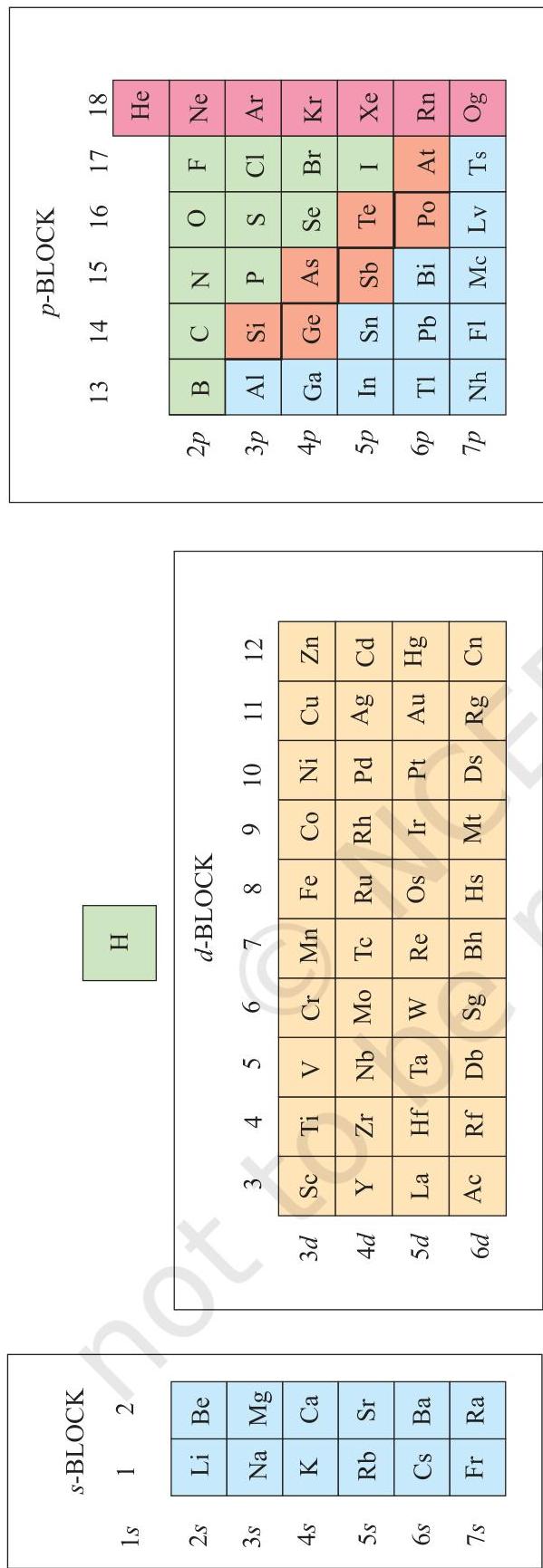
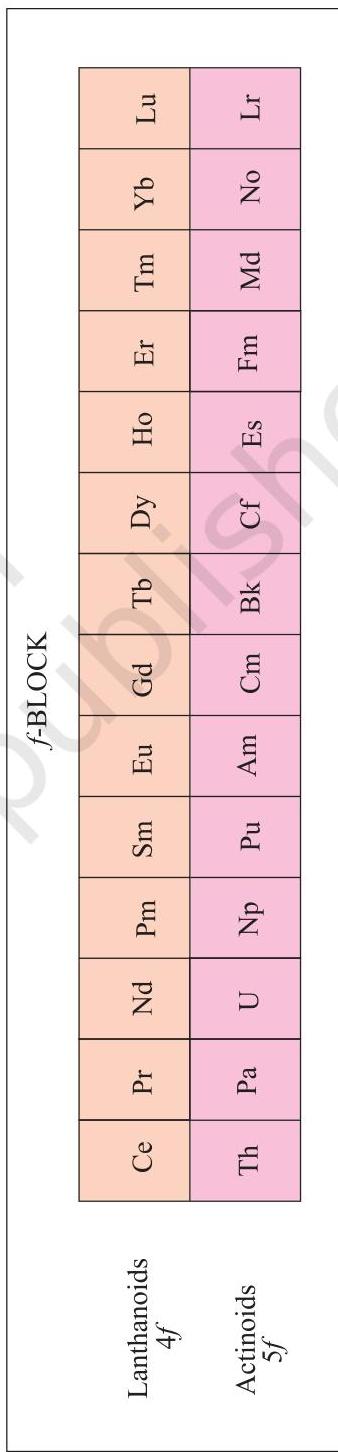 Fig. 3.3 The types of elements in the Periodic Table based on the orbitals that are being filled. Also shown is the broad division of elements into METALS $(\square \square \square \square)$, NON-METALS $(\square \square \square)$ and METALLOIDS $(\square \square)$.
As one descends each group, both metallic character and chemical reactivity progressively intensify. Owing to their pronounced reactivity, these elements are invariably encountered in combined forms within natural environments, rather than as free metals. With the notable exceptions of lithium and beryllium, the compounds formed by $s$-block elements largely exhibit an ionic character.
3.6.2 The p-Block Elements
The elements categorized as $p$-block span Groups 13 through 18. When considered alongside the $s$-block elements, they are collectively known as the Representative or Main Group Elements. Across any given period, their outermost electronic configuration progresses from $ns^2np^1$ to $ns^2np^6$. Concluding every period is a noble gas element, distinguished by a fully occupied valence shell, specifically an $ns^2np^6$ configuration. The valence shell orbitals of noble gases are entirely filled with electrons, rendering this stable arrangement exceptionally resistant to modification through either electron gain or loss. Consequently, noble gases display markedly low chemical reactivity. Immediately preceding the noble gas series are two non-metallic groups of considerable chemical significance. These are identified as the halogens (Group 17) and the chalcogens (Group 16). Both of these elemental groups possess notably negative electron gain enthalpies, enabling them to readily acquire one or two electrons, respectively, thereby achieving the stable electron configuration characteristic of a noble gas. Within a period, the non-metallic character intensifies from left to right, whereas down a group, the metallic character exhibits an increasing trend.
3.6.3 The d-Block Elements (Transition Elements)
Positioned centrally within the Periodic Table, spanning Groups 3 through 12, these elements are characterized by the sequential filling of their internal $d$ orbitals with electrons, hence their designation as $d$-Block Elements. Their typical outer electronic configuration is expressed as $(n - 1)d^{1 - 10}ns^{0 - 2}$, with the notable exception of Palladium (Pd), which exhibits a configuration of $4d^{10}5s^0$. All members of this block are metallic in nature. They predominantly form colored ions, display a range of oxidation states (variable valence), exhibit paramagnetism, and frequently function as catalysts. However, elements such as Zinc (Zn), Cadmium (Cd), and Mercury (Hg), possessing the electronic configuration $(n - 1)d^{10}ns^2$, do not manifest many of the typical properties associated with transition elements. In essence, transition metals bridge the gap between the chemically reactive metals of the $s$-block and the less reactive elements found in Groups 13 and 14, thereby earning their well-known appellation "Transition Elements."
3.6.4 The f-Block Elements (Inner-Transition Elements)
Comprising the two distinct series located at the base of the Periodic Table, namely the Lanthanoids, extending from $\mathrm{Ce}(Z = 58)$ to $\mathrm{Lu}(Z = 71)$, and the Actinoids, spanning from $\mathrm{Th}(Z = 90)$ to $\mathrm{Lr}(Z = 103)$, these elements are defined by the outer electronic configuration $(n - 2)f^{1 - 14}$ $(n - 1)d^{0 - 1}ns^2$. The final electron added to each element occupies an $f$-orbital. Consequently, these two elemental series are referred to as Inner-Transition Elements or $f$-Block Elements. All these elements are metallic. Within each respective series, the chemical and physical characteristics of the elements exhibit considerable similarity. The chemical behavior of the earlier actinoid elements is notably more intricate compared to their corresponding lanthanoid counterparts, primarily due to the broader spectrum of oxidation states accessible to these actinoid species. Actinoid elements are inherently radioactive. A substantial number of actinoid elements have been synthesized only in minute quantities, often nanograms or less, through nuclear reactions, leading to an incomplete understanding of their full chemical profiles. Those elements succeeding uranium in atomic number are termed Transuranium Elements.
Problem 3.3
Consider the hypothetical elements with atomic numbers $Z = 117$ and $Z = 120$, which are currently undiscovered. Determine their likely familial/group placement within the periodic table and provide their respective electronic configurations.
Solution
Referencing Fig. 3.2, the element characterized by an atomic number of $Z = 117$ is predicted to be a member of the halogen family (Group 17), possessing an electronic configuration of [Rn]$5f^{14}6d^{10}7s^{2}7p^{5}$. Furthermore, the element with $Z = 120$ is expected to reside in Group 2, among the alkaline earth metals, exhibiting an electronic configuration of [Uuo]$8s^{2}$.
CLASSIFICATION OF ELEMENTS AND PERIODICITY IN PROPERTIES
3.6.5 Metals, Non-metals and Metalloids
Beyond the categorization of elements into $s$-, $p$-, $d$-, and $f$-blocks, Fig. 3.3 illustrates an alternative extensive classification grounded in their intrinsic properties. This scheme partitions elements into the primary categories of Metals and Non-Metals. Metals constitute over $78%$ of all identified elements, predominantly occupying the left portion of the Periodic Table. Typically, metals exist as solids at ambient temperature, with notable exceptions such as mercury, and gallium and caesium which possess exceptionally low melting points (303K and 302K, respectively). Characteristically, metals exhibit elevated melting and boiling points, alongside proficient conductivity for both heat and electricity. Their mechanical properties include malleability (the capacity to be hammered into thin sheets) and ductility (the ability to be drawn into wires). Conversely, non-metals are situated in the upper right quadrant of the Periodic Table. Across any given horizontal period, elemental characteristics transition from metallic on the left to non-metallic on the right. Non-metals are typically found as solids or gases at room temperature, generally exhibiting low melting and boiling points, though boron and carbon deviate from this trend. They demonstrate poor conductivity for heat and electricity. Furthermore, the majority of non-metallic solids are brittle, lacking both malleability and ductility. A descending progression within a group correlates with an enhancement of metallic properties, whereas movement from left to right across a period results in an intensification of non-metallic character. This transition between metallic and non-metallic attributes is not sudden, as depicted by the prominent zig-zag line in Fig. 3.3. Elements situated adjacent to this demarcation, extending diagonally across the Periodic Table (such as silicon, germanium, arsenic, antimony, and tellurium), exhibit a hybrid set of properties, characteristic of both metals and non-metals. These substances are designated as Semi-metals or Metalloids.
Problem 3.4
Given their atomic number and periodic table placement, order the subsequent elements—Si, Be, Mg, Na, P—according to their ascending metallic character.
Solution
The metallic character of elements generally augments when descending a group and diminishes when traversing from left to right across a period. Consequently, the arrangement of these elements by increasing metallic character is: $\mathrm{P} < \mathrm{Si} < \mathrm{Be} < \mathrm{Mg} < \mathrm{Na}$ .
3.7 PERIODIC TRENDS IN PROPERTIES OF ELEMENTS
Numerous discernible regularities are evident in the physical and chemical attributes of elements, both when progressing downwards within a group and when traversing horizontally across a period in the Periodic Table. For instance, within any given period, the chemical reactivity typically registers as elevated among Group 1 metals, diminishes for elements situated near the center of the table, and subsequently escalates to its apex among the Group 17 non-metals. Similarly, when examining a group of representative metals (such as the alkali metals), reactivity is observed to heighten with descent down the group. Conversely, within a group of non-metals (e.g., the halogens), reactivity tends to diminish as one moves further down the group. What underlying reasons dictate these observed elemental property trends? Furthermore, what mechanisms account for the phenomenon of periodicity itself? To address these inquiries, an examination of atomic structure theories and the fundamental properties of the atom becomes imperative. This section will therefore be dedicated to exploring the periodic variations in specific physical and chemical properties, with an endeavor to elucidate them through the lens of electron count and energy level configurations.
3.7.1 Trends in Physical Properties
Elements exhibit a range of physical characteristics, including melting and boiling temperatures, enthalpies of fusion and vaporization, and atomization energies, all of which display systematic periodic changes. Nevertheless, our focus here will be on the periodic behavior of atomic and ionic radii, ionization enthalpy, electron gain enthalpy, and electronegativity.
(a) Atomic Radius
Conceiving the dimension of an atom presents considerably greater complexity than simply gauging the radius of a macroscopic sphere. This is primarily due to two factors: first, the exceedingly minute scale of an atom (approximately $\sim 1.2$ Å, or $1.2 \times 10^{-10}$ m in radius); and second, the inherent lack of a sharply defined periphery for the electron cloud encapsulating the nucleus. Consequently, an exact measurement of atomic size is unattainable, implying that no direct method exists for determining the size of a solitary atom. Nevertheless, an approximation of atomic dimensions can be derived from the interatomic distances observed when atoms are chemically bonded.
A pragmatic methodology for estimating the atomic size of a non-metallic element involves determining the internuclear separation between two atoms linked by a single covalent bond within a molecule; this measurement then permits the derivation of the element's "Covalent Radius." Illustratively, the bond length in the chlorine molecule $(\mathrm{Cl}_2)$ is $198\mathrm{pm}$, thus half of this value ($99\mathrm{pm}$) is adopted as chlorine's atomic radius. For metallic elements, the concept of "Metallic Radius" is introduced, defined as half the internuclear distance between contiguous metal cores within a crystalline metallic lattice. For instance, the separation between two neighboring copper atoms in solid copper is $256\mathrm{pm}$, leading to the assignment of $128\mathrm{pm}$ as the metallic radius for copper. To maintain clarity within this text, the designation 'Atomic Radius' will be employed generically to encompass either the covalent or metallic radius, contingent upon whether the element in question is a non-metal or a metal, respectively. Techniques such as X-ray diffraction or various spectroscopic methods enable the experimental determination of atomic radii.
Table 3.6 presents the atomic radii for a selection of elements, revealing two discernible patterns. These patterns can be elucidated by considering the interplay of nuclear charge and electron energy levels. Across any given period, atomic size typically diminishes, as exemplified by the elements of the second period in Fig. 3.4(a). This phenomenon occurs because, within a period, the outermost electrons occupy the same valence shell, while the effective nuclear charge progressively rises with increasing atomic number. This augmentation in effective nuclear charge intensifies the electrostatic attraction exerted on the electrons by the nucleus. Conversely, moving down a family or vertical group in the periodic table, the atomic radius consistently expands with an increase in atomic number, as depicted in Fig. 3.4(b). In the case of alkali metals and halogens, as one progresses down these groups, the principal quantum number $(n)$ increases, positioning the valence electrons at greater distances from the nucleus. This expansion is attributed to the sequential filling of inner energy levels by electrons, which, in turn, effectively screen the outer electrons from the full attractive force of the nucleus. The net outcome is an increase in atomic size, which is precisely reflected in the observed atomic radii.
The atomic radii of noble gases are not included in this analysis. As these elements exist as monoatomic entities, their non-bonded radii are considerably large. Consequently, the radii of noble gases are more suitably compared to the van der Waals radii of other elements, rather than their covalent radii.
Table 3.6(a) Atomic Radii/pm Across the Periods
| Atom (Period II) | Li | Be | B | C | N | O | F |
|---|---|---|---|---|---|---|---|
| Atomic radius | 152 | 111 | 88 | 77 | 74 | 66 | 64 |
| Atom (Period III) | Na | Mg | Al | Si | P | S | Cl |
| Atomic radius | 186 | 160 | 143 | 117 | 110 | 104 | 99 |
Table 3.6(b) Atomic Radii/pm Down a Family
| Atom (Group I) | Atomic Radius | Atom (Group 17) | Atomic Radius |
|---|---|---|---|
| Li | 152 | F | 64 |
| Na | 186 | Cl | 99 |
| K | 231 | Br | 114 |
| Rb | 244 | I | 133 |
| Cs | 262 | At | 140 |
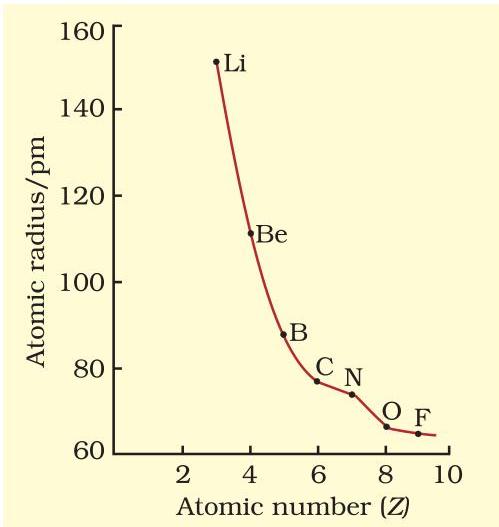 Fig. 3.4 (a) Variation of atomic radius with atomic number across the second period
(b) Ionic Radius
When an atom loses an electron, a positively charged ion, or cation, is formed; conversely, the acquisition of an electron by an atom yields a negatively charged ion, or anion. The determination of ionic radii typically involves assessing the internuclear distances between cations and anions within crystalline ionic compounds. Broadly, the patterns observed for ionic radii among elements parallel those of atomic radii. A cation consistently possesses a smaller radius than its neutral precursor atom, primarily due to the reduction in the number of electrons while the positive charge of the nucleus remains constant. Conversely, an anion will exhibit a larger radius than its corresponding parent atom; this expansion results from the augmented electron-electron repulsion caused by the addition of one or more electrons, which simultaneously diminishes the effective nuclear charge experienced by the valence electrons. Illustratively, the fluoride ion (F⁻) has an ionic radius of 136 pm, significantly larger than the 64 pm atomic radius of fluorine. In contrast, the atomic radius of sodium is 186 pm, which is considerably greater than the 95 pm ionic radius of the Na⁺ ion.
Entities possessing an identical electron count, whether atoms or ions, are designated as isoelectronic species*. For instance, species such as O²⁻, F⁻, Na⁺, and Mg²⁺ all share a common electron configuration of 10 electrons. Despite this electronic similarity, their respective radii diverge significantly, a phenomenon attributable to variations in their nuclear charges. The
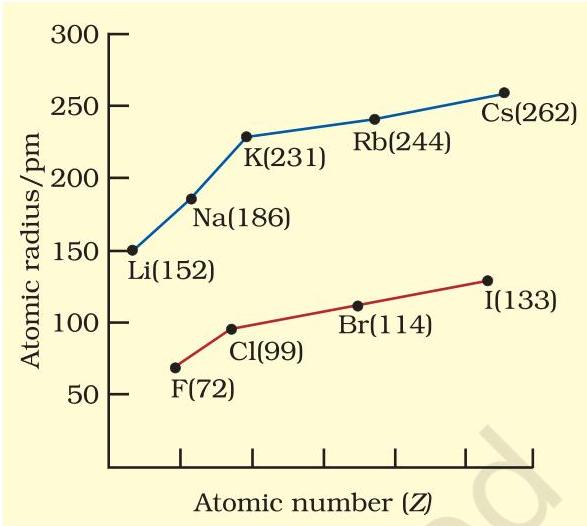 Fig. 3.4 (b) Variation of atomic radius with atomic number for alkali metals and halogens
Specifically, a cation bearing a more pronounced positive charge will exhibit a smaller radius, a direct consequence of the enhanced electrostatic attraction exerted by the nucleus on its electron cloud. Conversely, an anion characterized by a more substantial negative charge will possess a larger radius. This enlargement occurs because the augmented electron-electron repulsion within the ion overcomes the attractive force of the nucleus, leading to an overall expansion of the electron shell.
Problem 3.5
Which of the following species will have the largest and the smallest size?
Mg, Mg²⁺, Al, Al³⁺.
Solution
The atomic radius generally diminishes across a period. Cations are consistently smaller than their parent atoms. Among isoelectronic species, a greater positive nuclear charge leads to a smaller radius. Therefore, Mg is identified as the largest species, and Al³⁺ as the smallest.
(c) Ionization Enthalpy
The propensity of an element to shed an electron is quantitatively assessed by its Ionization Enthalpy. This metric signifies the energy expenditure required to detach an electron from an isolated gaseous atom (X) in its ground electronic state.
- Two or more species with same number of atoms, same number of valence electrons and same structure, regardless of the nature of elements involved.
CHEMISTRY
Expressed differently, the initial ionization enthalpy for element X corresponds to the enthalpy alteration $(\Delta_{i}H)$ associated with the reaction illustrated in equation 3.1.
$ \mathrm{X}(\mathrm{g}) \rightarrow \mathrm{X}^{*}(\mathrm{g}) + \mathrm{e}^{-} \tag{3.1} $
This enthalpy of ionization is quantified in units of kJ mol⁻¹. The second ionization enthalpy is delineated as the energy necessary to extract the subsequent most weakly bound electron; specifically, it is the energy expenditure for the transformation presented in equation 3.2.
$ \mathrm{X}^{*}(\mathrm{g}) \rightarrow \mathrm{X}^{2+}(\mathrm{g}) + \mathrm{e}^{-} \tag{3.2} $
The process of electron removal from an atom invariably necessitates energy input, thus rendering ionization enthalpies consistently positive. The second ionization enthalpy invariably surpasses the first, owing to the increased difficulty in detaching an electron from a positively charged ion compared to a neutral atom. Analogously, the third ionization enthalpy will exceed the second, and this pattern continues. Unless otherwise specified, the designation "ionization enthalpy" conventionally refers to the first ionization enthalpy.
Figure 3.5 illustrates the first ionization enthalpies for elements with atomic numbers extending up to 60. The periodic nature exhibited by this graphical representation is notably pronounced. Peak values are observed corresponding to the noble gases, characterized by their filled electron shells and highly stable electron configurations. Conversely, troughs are evident at the alkali metals, whose reduced ionization enthalpies
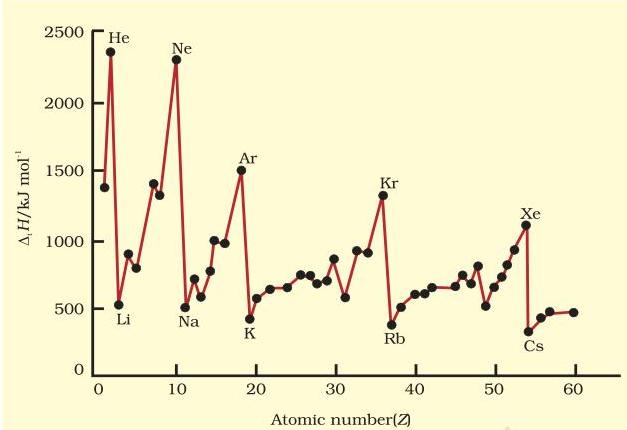 Fig. 3.5 Variation of first ionization enthalpies $(\Delta_{i}H)$ with atomic number for elements with $Z = 1$ to 60
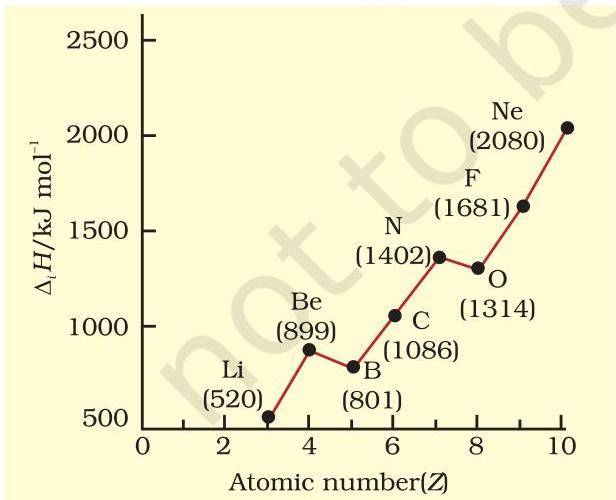
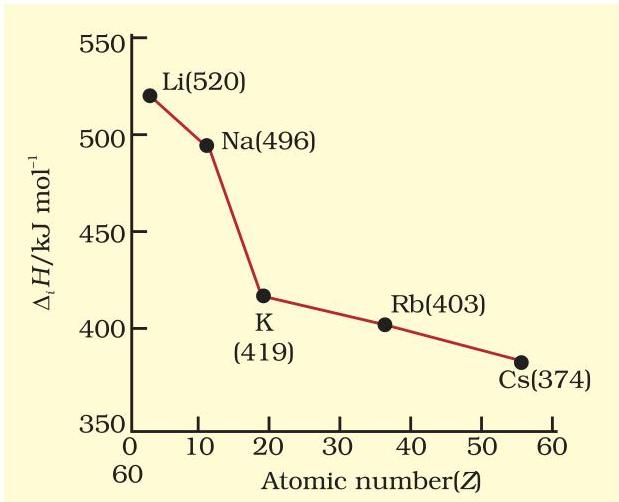
can be correlated with their elevated reactivity. Furthermore, two discernible patterns emerge: the first ionization enthalpy typically rises when traversing a period and diminishes when moving down a group. These tendencies are depicted in Figures 3.6(a) and 3.6(b), which pertain to the elements of the second period and the first group of the periodic table, respectively. It is important to recognize the intimate relationship between ionization enthalpy and atomic radius. A comprehensive understanding of these trends necessitates the consideration of two primary factors: (i) the attractive forces exerted by the nucleus on the electrons, and (ii) the repulsive interactions among the electrons themselves. The effective nuclear charge experienced by a
 3.6 (a)
 3.6 (b)
Fig. 3.6(a) First ionization enthalpies $(\Delta_{i}H)$ of elements of the second period as a function of atomic number (Z) and Fig. 3.6(b) $\Delta_{i}H$ of alkali metals as a function of Z.
3.6 (b)
Fig. 3.6(a) First ionization enthalpies $(\Delta_{i}H)$ of elements of the second period as a function of atomic number (Z) and Fig. 3.6(b) $\Delta_{i}H$ of alkali metals as a function of Z.
CLASSIFICATION OF ELEMENTS AND PERIODICITY IN PROPERTIES
The effective positive charge experienced by a valence electron within an atom will be diminished compared to the actual nuclear charge. This phenomenon is attributed to the "shielding" or "screening" effect, where core electrons situated between the nucleus and the valence electron reduce the nuclear attraction. For instance, the $2s$ electron in lithium experiences less attraction from the nucleus due to the screening provided by the inner $1s$ electrons. Consequently, this valence electron is subject to an effective positive charge that is less than the true nuclear charge of +3. Generally, shielding proves most effective when the inner shells possess a complete set of electrons. This scenario is characteristic of alkali metals, which feature a single outermost $ns$-electron preceded by a stable noble gas electron configuration.
As one progresses from lithium to fluorine across the second period, additional electrons are successively incorporated into orbitals residing within the same principal quantum level. The screening effect exerted by the internal core electrons does not significantly intensify to counteract the augmented attraction between the electron and the nucleus. Therefore, moving across a period, the escalating nuclear charge predominates over the shielding effect. This results in the outermost electrons being progressively more tightly bound, leading to an increase in ionization enthalpy across the period. Conversely, when descending a group, the outermost electron is situated at an increasingly greater distance from the nucleus. This increased distance correlates with enhanced shielding of the nuclear charge by the electrons in the underlying energy levels. In this particular context, the heightened shielding surpasses the effect of the increasing nuclear charge, meaning less energy is required to detach the outermost electron when moving down a group.
Referring to Fig. 3.6(a), it can also be observed that the first ionization enthalpy of boron $(Z = 5)$ is marginally lower than that of beryllium $(Z = 4)$, despite boron possessing a higher nuclear charge. Within the same principal quantum level, an $s$-electron exhibits a stronger attraction to the nucleus compared to a $p$-electron. In the case of beryllium, the electron dislodged during ionization is a $2s$-electron, whereas for boron, the removed electron is a $2p$-electron. The $2s$-electron demonstrates greater penetration towards the nucleus than a $2p$-electron; hence, the $2p$-electron of boron is more extensively shielded from the nucleus by the inner core electrons than the $2s$-electrons of beryllium. Consequently, the removal of a $2p$-electron from boron is energetically more favorable than the removal of a $2s$-electron from beryllium. This explains why boron exhibits a lower first ionization enthalpy than beryllium. Another deviation from the expected trend is the comparatively smaller first ionization enthalpy of oxygen relative to nitrogen. This phenomenon arises because, in a nitrogen atom, three $2p$-electrons occupy distinct atomic orbitals in accordance with Hund's rule. In contrast, within an oxygen atom, two of the four $2p$-electrons must share the same $2p$-orbital, leading to increased electron-electron repulsion. As a result, it is easier to remove the fourth $2p$-electron from oxygen than to remove one of the three $2p$-electrons from nitrogen.
Problem 3.6
The initial ionization enthalpy ($\Delta_{i}H$) values for the third-period elements, specifically sodium (Na), magnesium (Mg), and silicon (Si), are recorded as 496, 737, and $786\mathrm{kJmol^{-1}}$ respectively. Determine whether the primary $\Delta_{i}H$ value for aluminum (Al) is more accurately predicted to be $575\mathrm{kJmol^{-1}}$ or $760\mathrm{kJmol^{-1}}$, and provide a rationale for your selection.
Solution
The value for aluminum is expected to be closer to $575\mathrm{kJmol^{-1}}$. This prediction is based on the principle that Al's first ionization enthalpy should be less than that of Mg, primarily due to the effective shielding of its $3p$ electrons from the nuclear charge by the inner $3s$ electrons.
(d) Electron Gain Enthalpy
When a neutral gaseous atom (X) accepts an electron to become a negatively charged ion, the corresponding enthalpy variation is termed the Electron Gain Enthalpy ($\Delta_{eg}H$). This thermodynamic quantity quantifies the propensity of an atom to acquire an electron and form an anion, as illustrated in Equation 3.3.
$ \mathrm {X} (\mathrm {g}) + \mathrm {e} ^ {-} \rightarrow \mathrm {X} ^ {-} (\mathrm {g}) \tag {3.3} $
The nature of this process—whether energy is absorbed (endothermic) or released (exothermic)—is contingent upon the specific element. In numerous instances, the addition of an electron to an atom results in energy liberation, signifying a negative electron gain enthalpy. A prime illustration involves Group 17 elements (halogens), which exhibit substantially negative
Table 3.7 Electron Gain Enthalpies* / (kJ mol⁻¹) of Some Main Group Elements
| Group 1 | Δ_{eg}H | Group 16 | Δ_{eg}H | Group 17 | Δ_{eg}H | Group 0 | Δ_{eg}H |
|---|---|---|---|---|---|---|---|
| H | –73 | He | +48 | ||||
| Li | –60 | O | –141 | F | –328 | Ne | +116 |
| Na | –53 | S | –200 | Cl | –349 | Ar | +96 |
| K | –48 | Se | –195 | Br | –325 | Kr | +96 |
| Rb | –47 | Te | –190 | I | –295 | Xe | +77 |
| Cs | –46 | Po | –174 | At | –270 | Rn | +68 |
electron gain enthalpies. This is due to their ability to achieve stable noble gas electron configurations upon accepting an electron. Conversely, noble gases possess considerably positive electron gain enthalpies, as an incoming electron must occupy the subsequent principal quantum level, resulting in a highly unstable electron arrangement. It is noteworthy that electron gain enthalpies tend to exhibit significantly negative values in the upper right region of the periodic table, particularly for elements immediately preceding the noble gas group.
The observed variations in electron gain enthalpies among elements present a less systematic pattern compared to those of ionization enthalpies. Typically, electron gain enthalpy becomes increasingly negative as the atomic number rises across a given period. This phenomenon is attributable to the increasing effective nuclear charge from left to right within a period, which facilitates the addition of an electron to a smaller atom, as the incoming electron would, on average, reside nearer to the positively charged nucleus. Conversely, a reduction in the negativity of electron gain enthalpy is anticipated when progressing down a group. This is due to the concomitant increase in atomic size, which positions the newly acquired electron at a greater distance from the nucleus. This general trend is largely substantiated by the data presented in Table 3.7. Nevertheless, a notable exception occurs where the electron gain enthalpy of oxygen (O) or fluorine (F) is less negative than that of the subsequent element in their respective groups. This anomaly arises because, upon electron addition to O or F, the incoming electron enters the relatively compact $n = 2$ quantum level, thereby experiencing considerable repulsion from the pre-existing electrons in that shell. In contrast, for elements in the $n = 3$ quantum level (e.g., sulfur (S) or chlorine (Cl)), the added electron occupies a more expansive spatial volume, leading to a significantly diminished electron-electron repulsion.
Problem 3.7
Which of the following will have the most negative electron gain enthalpy and which the least negative?
P, S, Cl, F.
Explain your answer.
Solution
The tendency for electron gain enthalpy to become more negative typically increases when traversing a period from left to right. Conversely, descending a group, the electron gain enthalpy tends to exhibit a less negative value. Nonetheless, the introduction of an electron into a $2p$-orbital results in a more pronounced electron-electron repulsion compared to its addition into the more expansive $3p$-orbital. Consequently, chlorine possesses the most negative electron gain enthalpy among the given elements, while phosphorus exhibits the least negative value.
(e) Electronegativity
Electronegativity is defined as a qualitative metric quantifying an atom's propensity, within a chemical compound, to draw shared electrons towards itself. In contrast to ionization enthalpy and electron gain enthalpy, electronegativity does not represent a directly quantifiable property. Nevertheless, several numerical scales have been devised to assign electronegativity values to elements, including the Pauling, Mulliken-Jaffe, and Allred-Rochow scales. The Pauling scale, conceived by American scientist Linus Pauling in 1922, is the most prevalent. Pauling arbitrarily assigned a value of 4.0 to fluorine, recognizing it as the element with the highest electron-attracting capacity.
- It is noteworthy that in numerous texts, the negative of the enthalpy change associated with the process illustrated in equation 3.3 is designated as the ELECTRON AFFINITY ($A_e$) of the atom in question. When an electron's addition to an atom results in energy release, electron affinity is conventionally considered positive, which contradicts standard thermodynamic sign conventions. Conversely, if energy input is required for electron addition, the atom's electron affinity is assigned a negative value. However, electron affinity is fundamentally defined at absolute zero; therefore, at any other temperature ($T$), the heat capacities of both reactants and products must be incorporated into the calculation: $ \Delta_{eg}H = -A_e - S/2RT $
Table 3.8(a) presents approximate electronegativity values for a selection of elements.
The electronegativity for a specific element is not an invariant property; rather, it fluctuates based on the particular element with which it forms a bond. Although not a directly measurable quantity, electronegativity offers a valuable method for forecasting the type of attractive force binding two atoms together – a concept to be further examined subsequently.
Within the periodic table, electronegativity typically escalates when moving from left to right across a period (e.g., from lithium to fluorine), and conversely, it diminishes when descending a group (e.g., from fluorine to astatine). What underlies these observed trends? Is there a correlation between electronegativity and atomic radii, given that atomic radii generally contract across periods from left to right but expand down groups? As the atomic radius contracts across a period, the attractive force exerted by the nucleus on the outermost (valence) electrons intensifies. Concurrently, electronegativity also rises.
Correspondingly, a rise in atomic radii when moving down a group leads to a reduction in electronegativity values. This pattern mirrors that observed for ionization enthalpy.
Building upon the understanding of the relationship between electronegativity and atomic radius, one can then conceptualize the link between electronegativity and the non-metallic attributes of elements. Non-metallic species inherently possess a pronounced propensity
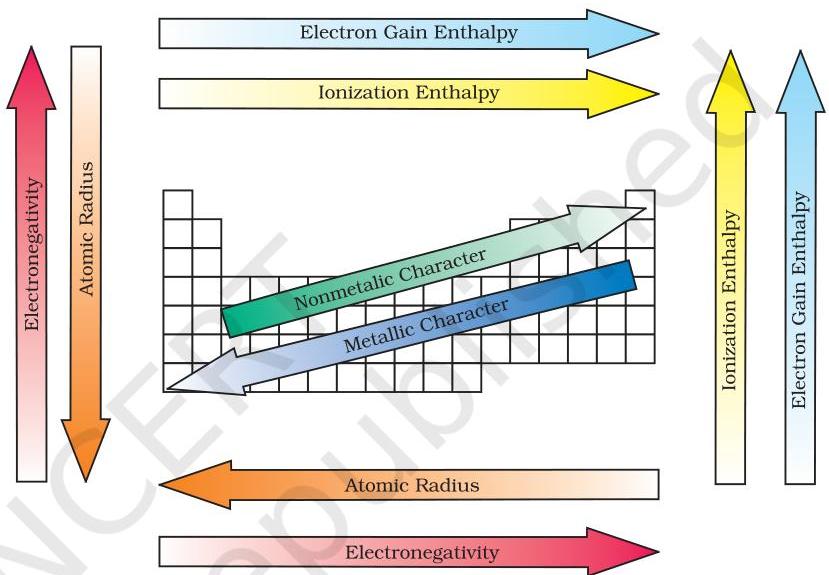 Fig. 3.7 The periodic trends of elements in the periodic table
Table 3.8(a) Electronegativity Values (on Pauling scale) Across the Periods
| Atom (Period II) | Li | Be | B | C | N | O | F |
|---|---|---|---|---|---|---|---|
| Electronegativity | 1.0 | 1.5 | 2.0 | 2.5 | 3.0 | 3.5 | 4.0 |
| Atom (Period III) | Na | Mg | Al | Si | P | S | Cl |
| Electronegativity | 0.9 | 1.2 | 1.5 | 1.8 | 2.1 | 2.5 | 3.0 |
Table 3.8(b) Electronegativity Values (on Pauling scale) Down a Family
| Atom (Group I) | Electronegativity Value | Atom (Group 17) | Electronegativity Value |
|---|---|---|---|
| Li | 1.0 | F | 4.0 |
| Na | 0.9 | Cl | 3.0 |
| K | 0.8 | Br | 2.8 |
| Rb | 0.8 | I | 2.5 |
| Cs | 0.7 | At | 2.2 |
to acquire electrons. Consequently, a direct correlation exists between electronegativity and the non-metallic characteristics of an element. This principle can be extended to infer an inverse relationship between electronegativity and an element's metallic properties. Therefore, the observed rise in electronegativity values when traversing across a period is concurrently associated with an augmentation in non-metallic behavior (or a reduction in metallic behavior) among elements. Conversely, the diminution in electronegativity observed when descending a group corresponds to a decline in non-metallic properties (or an enhancement in metallic properties) of elements.
These overarching periodic tendencies are comprehensively illustrated in Figure 3.7.
3.7.2 Periodic Trends in Chemical Properties
Many of the trends observed in the chemical characteristics of elements, including diagonal relationships, the inert pair effect, and the consequences of lanthanoid contraction, will be addressed during the detailed examination of each group in subsequent units. This particular section will focus on exploring the periodic recurrence of the valence state exhibited by elements, as well as the unique properties of the second-period elements (ranging from lithium through fluorine).
(a) Periodicity of Valence or Oxidation States
The valence represents the most distinctive attribute of elements and can be comprehended through an analysis of their electronic configurations. For representative elements, valence typically (though not exclusively) corresponds to either the number of electrons present in their outermost orbitals or eight minus the number of outermost electrons, as will be illustrated.
The term "oxidation state" is now frequently employed interchangeably with "valence." Consider two compounds containing oxygen: $\mathrm{OF}_2$ and $\mathrm{Na}_2\mathrm{O}$. The electronegativity sequence for the three elements involved in these compounds is $\mathrm{F} > \mathrm{O} > \mathrm{Na}$. In the $\mathrm{OF}_2$ molecule, each fluorine atom, possessing
an outer electronic configuration of $2s^2 2p^5$, shares a single electron with oxygen. Given that fluorine is the most electronegative element, it is assigned an oxidation state of $-1$. As there are two fluorine atoms in this molecule, oxygen, with its outer electronic configuration of $2s^2 2p^4$, shares two electrons with the fluorine atoms, thus displaying an oxidation state of $+2$. Conversely, in $\mathrm{Na}_2\mathrm{O}$, oxygen, being more electronegative, accepts two electrons—one from each of the two sodium atoms—and consequently exhibits an oxidation state of $-2$. Sodium, on the other hand, with an electronic configuration of $3s^1$, relinquishes one electron to oxygen and is therefore assigned an oxidation state of $+1$. Accordingly, the oxidation state of an element within a specific compound can be defined as the charge its atom hypothetically acquires based on electronegativity comparisons with the other atoms forming the molecule.
Problem 3.8
Leveraging the Periodic Table, deduce the chemical formulas for the potential compounds generated from the subsequent elemental pairings: (a) silicon and bromine; (b) aluminum and sulfur.
Solution
(a) Silicon, categorized within Group 14, possesses a valency of 4. Bromine, a constituent of the halogen group, exhibits a valency of 1. Consequently, the chemical formula for the resulting compound is determined to be $\mathrm{SiBr}4$. (b) Aluminum is situated in Group 13 and displays a valency of 3. Sulfur, an element from Group 16, typically presents a valency of 2. Therefore, the formula for the compound produced is $\mathrm{Al}{2}\mathrm{S}_{3}$.
Certain periodic patterns concerning the valency of elements, exemplified by their hydrides and oxides, are presented in Table 3.9. Additional periodic trends governing the chemical properties of elements are explored in other sections of this publication. A significant number of elements demonstrate variable valency. This characteristic is notably prevalent among transition elements and actinoids, topics designated for subsequent examination.
| Group | 1 | 2 | 13 | 14 | 15 | 16 | 17 | 18 |
|---|---|---|---|---|---|---|---|---|
| Number of valence electron | 1 | 2 | 3 | 4 | 5 | 6 | 7 | 8 |
| Valence | 1 | 2 | 3 | 4 | 3,5 | 2,6 | 1,7 | 0,8 |
CLASSIFICATION OF ELEMENTS AND PERIODICITY IN PROPERTIES
Table 3.9 Periodic Trends in Valence of Elements as shown by the Formulas of Their Compounds
| Group | 1 | 2 | 13 | 14 | 15 | 16 | 17 |
|---|---|---|---|---|---|---|---|
| Formula of hydride | LiH | CaH2 | B2H6 | CH4 | NH3 | H2O | HF |
| NaH | AlH3 | SiH4 | PH3 | H2S | HCl | ||
| KH | GeH4 | AsH3 | H2Se | HBr | |||
| SnH4 | H2Te | HI | |||||
| Formula of oxide | Li2O | MgO | B2O3 | CO2 | N2O3, N2O5 | - | |
| Na2O | CaO | Al2O3 | SiO2 | P4O6, P4O10 | SO3 | Cl2O7 | |
| K2O | SrO | Ga2O3 | GeO2 | As2O3, As2O5 | SeO3 | - | |
| BaO | In2O3 | SnO2 | Sb2O3, Sb2O5 | TeO3 | - | ||
| PbO2 | Bi2O3- | - |
(b) Anomalous Properties of Second Period Elements
The inaugural element within groups 1 (lithium), 2 (beryllium), and 13-17 (from boron to fluorine) exhibits characteristics that diverge significantly from the subsequent constituents of their respective groups. For instance, lithium, unlike other alkali metals, and beryllium, unlike other alkaline earth metals, form compounds characterized by a pronounced covalent nature, whereas the remaining elements in these groups predominantly form ionic compounds. Intriguingly, the chemical behavior of lithium and beryllium bears a closer resemblance to the second element of the subsequent group, specifically magnesium and aluminium, respectively. This particular type of similarity is conventionally termed the diagonal relationship in periodic properties.
| Property | Element | ||
|---|---|---|---|
| Metallic radius M/pm | Li | Be | B |
| 152 | 111 | 88 | |
| Na | Mg | Al | |
| 186 | 160 | 143 | |
| Ionic radius M+/pm | Li | Be | |
| 76 | 31 | ||
| Na | Mg | ||
| 102 | 72 |
What factors account for the distinct chemical behavior observed in the first member of an element group within the $s$- and $p$-blocks when compared to the subsequent members within the identical group? This anomalous behavior is primarily attributable to the diminutive size of these elements, their elevated charge/ radius ratio, and their high electronegativity. Furthermore, the initial element of each group possesses only four valence orbitals (2s and 2p) available for chemical bonding. In contrast, the second member of these groups has nine valence orbitals (3s, 3p, 3d) at its disposal. Consequently, the maximum covalency for the initial element in each group is restricted to four (e.g., boron can only form $\left[\mathrm{BF}4\right]^{-}$), whereas other members of the groups are capable of expanding their valence shell to accommodate more than four electron pairs (e.g., aluminium forms $\left[\mathrm{AlF}6\right]^{3-}$). Additionally, the first member of $p$-block elements manifests a pronounced capacity to form $p{\mathrm{s}} - p{\mathrm{s}}$ multiple bonds both with itself (e.g., $\mathrm{C} = \mathrm{C}$ , $\mathrm{C} \equiv \mathrm{C}$ , $\mathrm{N} = \mathrm{N}$ , $\mathrm{N} \equiv \mathrm{N}$) and with other second period elements (e.g., $\mathrm{C} = \mathrm{O}$ , $\mathrm{C} = \mathrm{N}$ , $\mathrm{C} \equiv \mathrm{N}$ , $\mathrm{N} = \mathrm{O}$), a trait less prominent in the subsequent members of the same group.
CHEMISTRY
Problem 3.9
Are the oxidation state and covalency of Al in $\left[\mathrm{AlCl}(\mathrm{H}{2} \mathrm{O}){5}\right]^{2+}$ same?
Solution
No. The oxidation state of Al is +3 and the covalency is 6.
3.7.3 Periodic Trends and Chemical Reactivity
Our previous discussions have highlighted the systematic periodic variations in key intrinsic properties, including atomic and ionic radii, ionization enthalpy, electron gain enthalpy, and valence. It is well-established that the underlying principle governing this periodicity is the electronic configuration of elements. Consequently, the entire spectrum of chemical and physical characteristics exhibited by elements can be understood as direct outcomes of their electron arrangements. This section aims to investigate the correlations between these fundamental elemental properties and their propensity for chemical reactions.
Across any given period, a general trend indicates a reduction in atomic and ionic radii from left to right. This contraction, in turn, typically leads to an increase in ionization enthalpies (with certain exceptions detailed in section 3.7.1(a)) and a greater negativity in electron gain enthalpies as one traverses the period. Consequently, elements positioned at the far left of a period exhibit the lowest ionization enthalpy, while those on the far right display the most negative electron gain enthalpy (excluding noble gases, which possess positive electron gain enthalpy due to their full valence shells). This pattern culminates in heightened chemical reactivity at both extremities of a period, with reactivity diminishing towards the center. Specifically, the highest chemical reactivity on the far left, characteristic of alkali metals, manifests through the facile loss of an electron to yield a cation. Conversely, the elements on the far right, such as halogens, achieve maximum reactivity by readily acquiring an electron to form an anion. While this behavior is intrinsically linked to the reductive and oxidative capabilities of elements, a topic to be explored subsequently, it also directly correlates with their metallic and non-metallic attributes. Thus, the metallic character, which is most pronounced on the extreme left, progressively wanes across a period, simultaneously giving way to an increasing non-metallic character. The chemical reactivity of elements is effectively demonstrated through their interactions with oxygen and halogens; for this discussion, we will focus solely on their reactions with oxygen. Elements situated at either end of a period readily react with oxygen to generate oxides. The typical oxide produced by an element on the extreme left is predominantly basic (e.g., $\mathrm{Na}{2}\mathrm{O}$), whereas the oxide formed by an element on the extreme right is notably acidic (e.g., $\mathrm{Cl}{2}\mathrm{O}{7}$). Oxides derived from elements in the central region of a period are either amphoteric (e.g., $\mathrm{Al}{2}\mathrm{O}{3}, \mathrm{As}{2}\mathrm{O}{3}$) or neutral (e.g., CO, NO, $\mathrm{N}{2}\mathrm{O}$). Amphoteric oxides exhibit the capacity to react as acids with bases and as bases with acids, while neutral oxides are devoid of both acidic and basic properties.
Problem 3.10
Show by a chemical reaction with water that $\mathrm{Na}{2}\mathrm{O}$ is a basic oxide and $\mathrm{Cl}{2}\mathrm{O}_{7}$ is an acidic oxide.
Solution
$\mathrm{Na}{2}\mathrm{O}$ with water forms a strong base whereas $\mathrm{Cl}{2}\mathrm{O}_{7}$ forms strong acid.
$ \mathrm{Na}{2}\mathrm{O} + \mathrm{H}{2}\mathrm{O} \rightarrow 2\mathrm{NaOH} \ \mathrm{Cl}{2}\mathrm{O}{7} + \mathrm{H}{2}\mathrm{O} \rightarrow 2\mathrm{HClO}{4} $
The acidic or basic characteristics of these substances can be qualitatively assessed using litmus paper.
Among transition metals (specifically, the 3d series), the alteration in atomic radii is significantly less pronounced when compared to that observed across a period for representative elements. This diminished variation in atomic radii is even more evident within the inner-transition metals (4f series). Their ionization enthalpies occupy an intermediate range, falling between those of the $s$-block and $p$-block elements. As a direct consequence, these metals exhibit lower electropositivity than the elements found in groups 1 and 2.
Within a group, the general trend for main
group elements is that an increase in atomic number correlates with an expansion in atomic and ionic radii. This expansion typically leads to a gradual decrease in ionization enthalpies and a consistent reduction in electron gain enthalpies (with specific exceptions noted for some third-period elements, as discussed in section 3.7.1(d)). Thus, descending a group is associated with an enhancement of metallic character and a corresponding diminution of non-metallic character. This observed pattern is connected to their reducing and oxidizing properties, which will be covered in later discussions. However, transition elements display a contrary trend, a phenomenon that can be rationalized by examining their atomic size and ionization enthalpy.
SUMMARY
This Unit has encompassed an exploration of the evolution of the Periodic Law and its embodiment in the Periodic Table. Mendeleev's formulation of the Periodic Table was predicated upon the principle of atomic masses. In contrast, the contemporary Periodic Table organizes elements according to their atomic numbers, distributed across seven horizontal periods and eighteen vertical groups (also known as families). Within a given period, atomic numbers are sequential, while in a group, their progression follows a distinct pattern. Consequently, elements belonging to the same group possess comparable valence shell electronic configurations, leading to the display of analogous chemical attributes. Conversely, elements within the same period demonstrate a progressive increase in electron count from left to right, resulting in varying valencies. Based on their electronic configurations, elements within the periodic table are categorized into four distinct types: $s$-block, $p$-block, $d$-block, and $f$-block elements. With a single electron residing in its $1s$ orbital, hydrogen maintains an unparalleled placement within the periodic table. Metals constitute over seventy-eight percent of the currently identified elements. Non-metals, positioned predominantly at the upper section of the periodic table, number fewer than twenty. Those elements situated at the interface between metals and non-metals (e.g., Si, Ge, As) are designated as metalloids or semi-metals. The metallic character exhibits an augmentation with increasing atomic number within a group, yet diminishes when traversing from left to right across a period. Fundamentally, the physical and chemical attributes of elements display a periodic variation correlating with their atomic numbers.
Distinct periodic trends are discernible across various elemental properties, including atomic sizes, ionization enthalpies, electron gain enthalpies, electronegativity, and valence. Specifically, atomic radii tend to contract when moving from left to right within a period, while expanding with an increasing atomic number down a group. Ionization enthalpies typically show an upward trajectory across a period and a downward trend within a group. A comparable pattern is observed for electronegativity. Electron gain enthalpies, broadly speaking, become more negative as one progresses across a period and less negative when descending a group. Valence also exhibits a degree of periodicity; for instance, among representative elements, it corresponds either to the count of electrons in the outermost orbitals or to eight less this count. Chemical reactivity reaches its zenith at the opposing ends of a period and its nadir at the central region. The heightened reactivity on the left extreme of a period is attributable to the facile loss of electrons (manifested as low ionization enthalpy). Elements demonstrating high reactivity are not naturally found in their free state; instead, they commonly exist in combined forms. Oxides derived from elements on the left side of the periodic table are basic, whereas those from elements on the right side exhibit acidic characteristics. Oxides originating from elements located in the central portion are either amphoteric or neutral.
CHEMISTRY
EXERCISES
3.1 What fundamental principle underlies the arrangement of elements within the periodic table? 3.2 What key characteristic did Mendeleev employ for the categorization of elements in his periodic table, and did he consistently adhere to this criterion? 3.3 Outline the fundamental disparity in methodology between Mendeleev's Periodic Law and the Modern Periodic Law. 3.4 Using the principles of quantum numbers, provide a rationale for the presence of 32 elements in the sixth period of the periodic table. 3.5 Identify the period and group position for the element characterized by an atomic number $Z = 114$. 3.6 State the atomic number of the element situated in the third period and the seventeenth group of the periodic table. 3.7 Which specific element do you anticipate was named by:
(i) Lawrence Berkeley Laboratory (ii) Seaborg's research team?
3.8 Account for the resemblance in physical and chemical attributes observed among elements belonging to the same group. 3.9 Elucidate your understanding of the concepts of atomic radius and ionic radius. 3.10 Describe the trends in atomic radius across a period and down a group. Provide an explanation for these observed variations. 3.11 Define the term 'isoelectronic species'. Subsequently, identify a species that is isoelectronic with each of the following atoms or ions:
(i) $\mathrm{F}^{-}$
(ii) Ar
(iii) $\mathrm{Mg}^{2+}$
(iv) $\mathrm{Rb}^{+}$
3.12 Examine the following chemical species:
$\mathrm{N}^{3-}, \mathrm{O}^{2-}, \mathrm{F}^{-}, \mathrm{Na}^{+}, \mathrm{Mg}^{2+}$ and $\mathrm{Al}^{3+}$
(a) What characteristic do they share? (b) Order these species by their increasing ionic radii.
3.13 Provide an explanation for the observation that cations possess smaller radii and anions exhibit larger radii when compared to their respective parent atoms. 3.14 Discuss the conceptual importance of the phrases 'isolated gaseous atom' and 'ground state' in the context of defining ionization enthalpy and electron gain enthalpy.
Hint: These are prerequisites for standardized comparisons.
3.15 Given that the energy of an electron in the ground state of a hydrogen atom is $-2.18 \times 10^{-18} \mathrm{~J}$, determine the ionization enthalpy of atomic hydrogen expressed in $\mathrm{J mol}^{-1}$.
Hint: Utilize the mole concept to arrive at the solution.
3.16 For elements within the second period, the observed ionization enthalpies follow the sequence: $\mathrm{Li} < \mathrm{B} < \mathrm{Be} < \mathrm{C} < \mathrm{O} < \mathrm{N} < \mathrm{F} < \mathrm{Ne}$. Provide explanations for the following:
(i) Why Be exhibits a greater $\Delta_{\mathrm{r}}H$ than B. (ii) Why O possesses a lower $\Delta_{\mathrm{r}}H$ compared to N and F.
CLASSIFICATION OF ELEMENTS AND PERIODICITY IN PROPERTIES
3.17 Provide an explanation for the observation that sodium's first ionization enthalpy is less than that of magnesium, yet its second ionization enthalpy surpasses magnesium's.
3.18 Identify and elaborate on the multiple factors contributing to the general trend of decreasing ionization enthalpy for main group elements as one descends a group.
3.19 The first ionization enthalpy values (expressed in kJ mol⁻¹) for elements in Group 13 are presented below:
| B | Al | Ga | In | Tl |
|---|---|---|---|---|
| 801 | 577 | 579 | 558 | 589 |
Account for this observed departure from the expected periodic trend.
3.20 From the subsequent list of element pairs, indicate which would exhibit a more negative electron gain enthalpy.
(i) O or F (ii) F or Cl
3.21 Considering oxygen (O), would its second electron gain enthalpy be expected to be positive, more negative, or less negative than its first? Provide a justification for your answer.
3.22 Articulate the fundamental distinction between the concepts of electron gain enthalpy and electronegativity.
3.23 What is your assessment of the assertion that nitrogen consistently exhibits an electronegativity value of 3.0 on the Pauling scale across all its compounds?
3.24 Elucidate the theoretical principles governing the atomic radius when an atom undergoes the process of (a) acquiring an electron (b) shedding an electron
3.25 For two isotopes of the identical element, would their initial ionization enthalpies be predicted to be equivalent or distinct? Substantiate your conclusion.
3.26 Outline the principal disparities characterizing metals and non-metals.
3.27 Utilize the periodic table to address the subsequent inquiries: (a) Pinpoint an element possessing five electrons within its outermost subshell. (b) Designate an element predisposed to donate two electrons. (c) Indicate an element inclined to accept two electrons. (d) Specify the group that encompasses a metal, a non-metal, a liquid, and a gas, all at ambient temperature.
3.28 The trend in reactivity for Group 1 elements demonstrates an increase from Li to Cs (Li < Na < K < Rb < Cs), while for Group 17 elements, the reactivity decreases from F to I (F > Cl > Br > I). Account for these observed patterns.
3.29 Provide the generalized outer electronic configurations characteristic of $s$-block, $p$-block, $d$-block, and $f$-block elements.
3.30 Determine the periodic table placement for elements exhibiting the following outer electronic configurations: (i) $ns^2 np^4$ when $n = 3$, (ii) $(n - 1)d^{2}ns^{2}$ when $n = 4$, and (iii) $(n - 2)f^{7}(n - 1)d^{1}ns^{2}$ when $n = 6$.
CHEMISTRY
3.31 The initial $(\Delta_fH_1)$ and subsequent $(\Delta_fH_2)$ ionization enthalpies (expressed in kJ mol⁻¹), along with the electron gain enthalpy $(\
Delta_{eq}H)$ (also in kJ mol⁻¹), for several elements are presented hereunder:
| Elements | ΔH₁ | ΔH₂ | Δ_{eq}H |
|---|---|---|---|
| I | 520 | 7300 | -60 |
| II | 419 | 3051 | -48 |
| III | 1681 | 3374 | -328 |
| IV | 1008 | 1846 | -295 |
| V | 2372 | 5251 | +48 |
| VI | 738 | 1451 | -40 |
From the elements listed above, identify which is most probable to be:
(a) the element exhibiting the lowest reactivity. (b) the most reactive metallic element. (c) the most reactive non-metallic element. (d) the non-metallic element demonstrating the lowest reactivity. (e) the metal capable of forming a stable binary halide with the general formula MX₃(X=halogen). (f) the metal that can primarily form a stable covalent halide having the formula MX (X=halogen)?
3.32 Anticipate the chemical formulas for the stable binary compounds resulting from the combination of the subsequent elemental pairs: (a) Lithium and oxygen (b) Magnesium and nitrogen (c) Aluminium and iodine (d) Silicon and oxygen (e) Phosphorus and fluorine (f) Element 71 and fluorine
3.33 Within the contemporary periodic table, the period number corresponds to the value of the:
(a) atomic number (b) atomic mass (c) principal quantum number (d) azimuthal quantum number.
3.34 Identify which of the following assertions pertaining to the modern periodic table is inaccurate:
(a) The $p$-block comprises 6 columns, given that a maximum of 6 electrons can populate all orbitals within a $p$-shell. (b) The $d$-block consists of 8 columns, as a maximum of 8 electrons can occupy all orbitals in a $d$-subshell. (c) Every block encompasses a number of columns equivalent to the maximum electron capacity of its corresponding subshell. (d) The block designation signifies the value of the azimuthal quantum number (l) for the final subshell that accommodates electrons during the construction of the electronic configuration.
CLASSIFICATION OF ELEMENTS AND PERIODICITY IN PROPERTIES
3.35 Any factor impacting an atom's valence electrons invariably influences its chemical behavior. Among the subsequent options, which factor bears no influence on the valence shell?
(a) Valence principal quantum number (n) (b) Nuclear charge $(Z)$ (c) Nuclear mass (d) Number of core electrons.
3.36 The atomic or ionic radius among the isoelectronic species, specifically $\mathrm{F}^{-}$ , Ne, and $\mathrm{Na}^{+}$ , is determined by which of the following?
(a) nuclear charge $(Z)$ (b) valence principal quantum number (n) (c) electron-electron interaction in the outer orbitals (d) none of the factors because their size is the same.
3.37 Regarding ionization enthalpy, identify the statement below that is inaccurate.
(a) The ionization enthalpy typically escalates with the removal of each subsequent electron. (b) A substantial surge in ionization enthalpy is observed when an electron is extracted from a core noble gas electronic configuration. (c) The depletion of valence electrons is signified by a pronounced increase in ionization enthalpy. (d) It is simpler to remove an electron from an orbital characterized by a lower principal quantum number ($n$) compared to one with a higher principal quantum number.
3.38 Given the elements Boron (B), Aluminum (Al), Magnesium (Mg), and Potassium (K), select the option that accurately represents their metallic character in decreasing order:
(a) $\mathrm{B} > \mathrm{Al} > \mathrm{Mg} > \mathrm{K}$
(b) $\mathrm{Al} > \mathrm{Mg} > \mathrm{B} > \mathrm{K}$
(c) $\mathrm{Mg} > \mathrm{Al} > \mathrm{K} > \mathrm{B}$
(d) $\mathrm{K} > \mathrm{Mg} > \mathrm{Al} > \mathrm{B}$
3.39 For the elements Boron (B), Carbon (C), Nitrogen (N), Fluorine (F), and Silicon (Si), identify the correct arrangement illustrating their non-metallic character:
(a) $\mathrm{B} > \mathrm{C} > \mathrm{Si} > \mathrm{N} > \mathrm{F}$
(b) $\mathrm{Si} > \mathrm{C} > \mathrm{B} > \mathrm{N} > \mathrm{F}$
(c) $\mathrm{F} > \mathrm{N} > \mathrm{C} > \mathrm{B} > \mathrm{Si}$
(d) $\mathrm{F} > \mathrm{N} > \mathrm{C} > \mathrm{Si} > \mathrm{B}$
3.40 Given the elements Fluorine (F), Chlorine (Cl), Oxygen (O), and Nitrogen (N), determine the accurate sequence reflecting their chemical reactivity based on oxidizing potential:
(a) $\mathrm{F} > \mathrm{Cl} > \mathrm{O} > \mathrm{N}$
(b) $\mathrm{F} > \mathrm{O} > \mathrm{Cl} > \mathrm{N}$
(c) $\mathrm{Cl} > \mathrm{F} > \mathrm{O} > \mathrm{N}$
(d) $\mathrm{O} > \mathrm{F} > \mathrm{N} > \mathrm{Cl}$