CHAPTER TWELVE
KINETIC THEORY
12.1 Introduction
12.2 Molecular nature of matter
12.3 Behaviour of gases
12.4 Kinetic theory of an ideal gas
12.5 Law of equipartition of energy
12.6 Specific heat capacity
12.7 Mean free path
Summary
Points to ponder
Exercises
12.1 INTRODUCTION
The law attributed to Boyle was formulated in 1661. Early attempts to elucidate gas behaviour, spearheaded by figures such as Boyle and Newton, posited that gases were composed of minuscule atomic constituents. A comprehensive atomic theory, however, only gained firm establishment over a century and a half subsequently. The kinetic theory offers an explanation for gaseous behaviour by proposing that gases comprise atoms or molecules in constant, swift motion. This model is viable because the short-range inter-atomic forces, which are significant in the condensed phases of matter (solids and liquids), can be disregarded in the context of gases. Prominent figures including Maxwell and Boltzmann were instrumental in the development of kinetic theory during the nineteenth century. Its efficacy has been notable, providing a molecular framework for understanding gas pressure and temperature, and aligning with established gas laws and Avogadro's postulate. Furthermore, it accurately accounts for the specific heat capacities of numerous gases and establishes correlations between macroscopic gaseous properties—like viscosity, thermal conductivity, and diffusion—and their underlying molecular parameters, thereby enabling estimations of molecular dimensions and masses. The ensuing chapter serves as an introductory exposition to the principles of kinetic theory.
12.2 MOLECULAR NATURE OF MATTER
Richard Feynman, a preeminent physicist of the 20th century, regarded the revelation that matter comprises atoms as profoundly significant. Should humanity face eradication (from nuclear catastrophe) or extinction (due to environmental cataclysms) without judicious action, and all scientific knowledge be lost, Feynman expressed a desire for the 'Atomic Hypothesis' to be conveyed to subsequent cosmic inhabitants. This hypothesis states: All things consist of atoms—minute particles engaged in perpetual motion, exerting mutual attraction when separated by a short distance, but exhibiting repulsion upon being compressed together.
The conjecture that matter might not be continuous was present across various cultures and geographical locations, notably with Kanada in India and Democritus.
Atomic Hypothesis in Ancient India and Greece
Although John Dalton is credited with introducing the atomic perspective into modern scientific thought, scholars in ancient India and Greece had theorized the existence of atoms and molecules long before. Within the Vaiseshika philosophical school in India, founded by Kanada (dating to the Sixth century B.C.), a comprehensive atomic model was elaborated. Atoms were conceived as eternal, indivisible, infinitesimal, and the fundamental constituents of matter. It was posited that if matter were infinitely divisible, there would be no discernible distinction between a mustard seed and the colossal Meru mountain. Four types of atoms (Paramanu—the Sanskrit term for the smallest particle) were proposed: Bhoomi (Earth), Ap (water), Tejas (fire), and Vayu (air), each endowed with characteristic mass and other properties. Akasa (space) was considered to lack atomic structure, being continuous and inert. Atoms were thought to combine to form diverse molecules (e.g., two atoms forming a diatomic molecule, known as dvyanuka; three atoms forming a tryanuka, or triatomic molecule), their attributes being contingent upon the nature and proportions of their constituent atoms. Estimates for the size of these atoms were also ventured, whether through conjecture or methods now unknown to us. These estimations varied; for instance, in Lalitavistara, a notable biography of the Buddha primarily composed in the second century B.C., the estimated atomic size approaches the modern value, on the order of $10^{-10}\mathrm{m}$.
In ancient Greece, Democritus (Fourth century B.C.) is most recognized for his atomic hypothesis. The term 'atom' itself signifies 'indivisible' in Greek. According to his theory, atoms differed physically in terms of shape, size, and other characteristics, which in turn accounted for the varied properties of the substances formed by their aggregation. Water atoms were described as smooth and spherical, lacking the capacity to 'interlock,' thereby explaining the fluid nature of liquid water. Earth atoms, conversely, were depicted as rough and jagged, enabling them to cohere and form solid materials. Fire atoms were thought to possess thorny structures, elucidating their capacity to inflict painful burns. Despite their conceptual ingenuity, these intriguing ideas failed to undergo significant further development, possibly because they originated as intuitive conjectures and philosophical speculations rather than being subjected to the rigorous testing and modification through quantitative experimentation that characterizes modern scientific methodology.
Philosophical notions originating in ancient Greece proposed that matter might be composed of indivisible units. However, the scientific formulation of the 'Atomic Theory' is commonly ascribed to John Dalton. He advanced this theory to account for the laws of definite and multiple proportions, which elements exhibit when they combine to form compounds. The first law stipulates that any specific compound invariably contains its constituent elements in a constant ratio by mass. The second law dictates that when two elements form more than one compound, for a fixed mass of one element, the masses of the other elements involved bear a ratio of small integers.
To elucidate these laws, Dalton posited, approximately two centuries ago, that the most fundamental components of an element are atoms. Atoms belonging to a single element are identical, yet they differ from those of other elements. A limited number of atoms from each element coalesce to form a molecule of a compound. Gay-Lussac's law, also formulated in the early $19^{\text{th}}$ century, asserts that when gaseous substances react chemically to produce another gas, their volumes are in ratios of small integers. Avogadro's law (or hypothesis) states that at equivalent temperatures and pressures, equal volumes of all gases contain the same number of molecules. When integrated with Dalton's theory, Avogadro's law provides an explanation for Gay-Lussac's law. Given that elements frequently exist in molecular forms, Dalton's atomic theory can also be termed the molecular theory of matter. This theory is now widely accepted within the scientific community, although it is notable that even towards the close of the nineteenth century, some prominent scientists expressed skepticism regarding the atomic theory.
Through numerous contemporary observations, we now understand that matter is composed of molecules (which themselves consist of one or more atoms). Advanced instruments such as electron microscopes and scanning tunneling microscopes even allow for their visualization. An atom typically measures about an angstrom ($10^{-10}\mathrm{m}$) in size. In solids, where particles are densely packed, atoms are separated by only a few angstroms (approximately $2\mathrm{\AA}$). In liquids, the interatomic spacing is similar; however, atoms are not as rigidly fixed as in solids and possess greater mobility, which confers upon liquids their characteristic fluidity. In gases, the interatomic distances extend to tens of angstroms. The average distance a molecule traverses without undergoing a collision is referred to as the mean free path. In gases, the mean free path is on the order of thousands of angstroms. Atoms in gases exhibit significantly greater freedom and can travel considerable distances before colliding. If not contained, gases will disperse. In both solids and liquids, the close proximity renders interatomic forces highly significant. These forces exhibit long-range attraction and short-range repulsion; atoms attract each other when separated by a few angstroms but repel when brought into closer contact. The perceived static nature of a gas
is deceptive. A gas is characterized by continuous activity, and its equilibrium state is inherently dynamic. Within this dynamic equilibrium, molecules constantly collide and undergo changes in their velocities during these interactions. Only the average properties of the system remain constant.
The atomic theory represents not the culmination of our inquiry, but rather its inception. We now recognize that atoms are neither indivisible nor elementary particles. Instead, they are composed of a nucleus and electrons. The nucleus, in turn, consists of protons and neutrons, which are themselves formed from quarks. Even quarks may not represent the ultimate fundamental constituents; there could potentially be elementary entities resembling strings. Nature consistently presents us with novel insights, yet the pursuit of understanding is frequently rewarding, and the discoveries profoundly beautiful. In the scope of this chapter, we shall confine our focus to comprehending the behaviour of gases (and, to a lesser extent, solids) as an assembly of molecules engaged in incessant motion.
12.3 BEHAVIOUR OF GASES
The characteristics of gases present a more straightforward subject of study compared to those of solids and liquids. This simplification primarily stems from the significant intermolecular distances within a gas, which render mutual interactions inconsequential apart from instances of molecular collision. Under conditions of low pressure and temperatures significantly exceeding their liquefaction (or solidification) points, gases exhibit an approximate adherence to a fundamental relationship interlinking their pressure, temperature, and volume (refer to Chapter 10).
$ P V = K T \tag {12.1} $
This equation applies to a specific gas sample, where $T$ represents the temperature expressed in Kelvin or on the absolute scale. The variable $K$ functions as a constant for that particular sample, though its value is contingent upon the gas's volume. Incorporating the atomic or molecular perspective, $K$ is directly proportional to the number of molecules, denoted as $N$, within the sample. Consequently, we can express this relationship as $K = Nk$. Empirical evidence indicates that this constant $k$ holds identical values across all gases. It is designated as the Boltzmann constant, symbolized by $k_{\mathrm{B}}$.
$ \mathrm {A s} \frac {P _ {1} V _ {1}}{N _ {1} T _ {1}} = \frac {P _ {2} V _ {2}}{N _ {2} T _ {2}} = \mathrm {c o n s t a n t} = k _ {\mathrm {B}} \tag {12.2} $
Should the pressure ($P$), volume ($V$), and temperature ($T$) be identical, it follows that the number of molecules ($N$) will also be uniform across all gases. This principle constitutes Avogadro's hypothesis, which posits that, at a constant temperature and pressure, the molecular count per unit volume remains consistent for all gaseous substances. The specific quantity of molecules found in 22.4 liters of any gas is $6.02 \times 10^{23}$. This value is termed Avogadro's number, represented by $N_{\mathrm{A}}$. Furthermore, at Standard Temperature and Pressure (S.T.P., defined as $273\mathrm{K}$ and 1 atm), the mass of 22.4 liters of any gas corresponds to its molecular weight expressed in grams. This particular quantity of substance is recognized as a mole (for a more detailed definition, refer to Chapter 1). Avogadro initially deduced the equivalence of molecular numbers in equal volumes of gases at fixed temperature and pressure through observations of chemical reactions, a hypothesis subsequently substantiated by kinetic theory.
The equation describing an ideal gas is expressible as:
$ P V = \mu R T \tag {12.3} $
In this formulation, $\mu$ denotes the quantity of moles, and $R = N_{\mathrm{A}}k_{\mathrm{B}}$ stands as a universal constant. The temperature $T$ refers to the absolute temperature. When the Kelvin scale is adopted for absolute temperature, the value of $R$ is $8.314\mathrm{J mol^{-1}K^{-1}}$. The number of moles, $\mu$, is defined as:
$ \mu = \frac {M}{M _ {0}} = \frac {N}{N _ {\mathrm {A}}} \tag {12.4} $
Here, $M$ represents the total mass of the gas, which contains $N$ molecules, $M_0$ is the molar mass, and $N_{\mathrm{A}}$ is Avogadro's number. By substituting Eq. (12.4) into Eq. (12.3), the perfect gas equation can alternatively be stated as:
$ P V = k _ {\mathrm {B}} N T \quad \text {o r} \quad P = k _ {\mathrm {B}} n T $
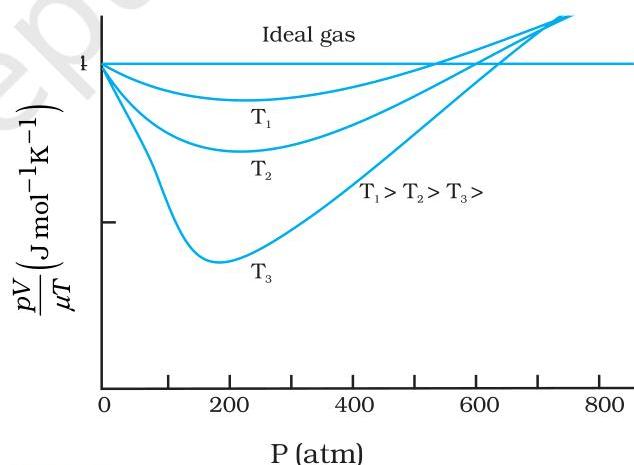 Fig.12.1 Real gases approach ideal gas behaviour at low pressures and high temperatures.
In these expressions, $n$ signifies the number density, which is defined as the count of molecules per unit volume. The constant $k_{\mathrm{B}}$ is the Boltzmann constant, as previously introduced. Its numerical value in SI units is $1.38 \times 10^{-23} \mathrm{J} \mathrm{K}^{-1}$.
Another useful form of Eq. (12.3) is
$ P = \frac {\rho R T}{M _ {0}} \tag {12.5} $
where $\rho$ is the mass density of the gas.
An ideal gas is characterized as one that precisely adheres to Eq. (12.3) across the entire spectrum of pressures and temperatures. This concept serves as a simplified theoretical construct for gaseous behaviour; however, no actual gas perfectly embodies ideal characteristics. Figure 12.1 illustrates the deviations from ideal gas behaviour observed in a real gas across three distinct temperatures, highlighting that all depicted trends converge towards ideal gas behaviour under conditions of diminished pressure and elevated temperature.
Under conditions of reduced pressure or elevated temperature, gas molecules are sufficiently separated, rendering intermolecular interactions inconsequential. In the absence of such interactions, the gas exhibits properties consistent with an ideal model.
If we fix $\mu$ and $T$ in Eq. (12.3), we get
$ PV = \text{constant} \tag{12.6} $
This implies that, with temperature held constant, the pressure exerted by a specific quantity of gas is inversely proportional to its volume, a principle widely recognized as Boyle's law. Figure 12.2 presents a comparative analysis of empirical $P$-$V$ plots against the theoretical predictions derived from Boyle's law, reiterating the observation that congruence is robust at elevated temperatures and diminished pressures. Furthermore, if pressure is maintained constant, Eq. (12.1) demonstrates a direct proportionality between volume $V$ and absolute temperature $T$, which constitutes Charles' law. Refer to Figure 12.3 for visual representation.
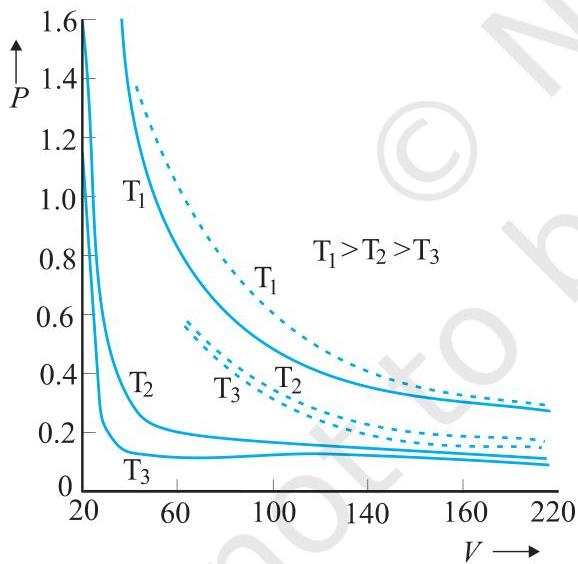 Fig. 12.2 Experimental $P$-$V$ curves (solid lines) for steam at three temperatures compared with Boyle's law (dotted lines). $P$ is in units of 22 atm and $V$ in units of 0.09 litres.
To conclude, let us examine a system comprising a blend of ideal gases that do not interact with one another: specifically, $\mu_{1}$ moles of gas 1, $\mu_{2}$ moles of gas 2, etc., contained within a vessel of volume $V$, at a temperature $T$ and under pressure $P$. The resulting equation of state for this mixture is determined to be:
$ PV = \left(\mu_{1} + \mu_{2} + \dots\right) RT \tag{12.7} $
$ \begin{array}{l} \text{i.e. } P = \mu_{1} \frac{RT}{V} + \mu_{2} \frac{RT}{V} + \dots \tag{12.8} \ = P_{1} + P_{2} + \dots \tag{12.9} \end{array} $
Evidently, $P_{1} = \mu_{1} RT / V$ represents the pressure that gas 1 alone would contribute if it occupied the given volume $V$ at temperature $T$ in the absence of other gaseous components. This quantity is designated as the partial pressure of the gas. Consequently, the aggregate pressure of an ideal gas mixture is equivalent to the summation of the individual partial pressures. This principle is known as Dalton's law of partial pressures.
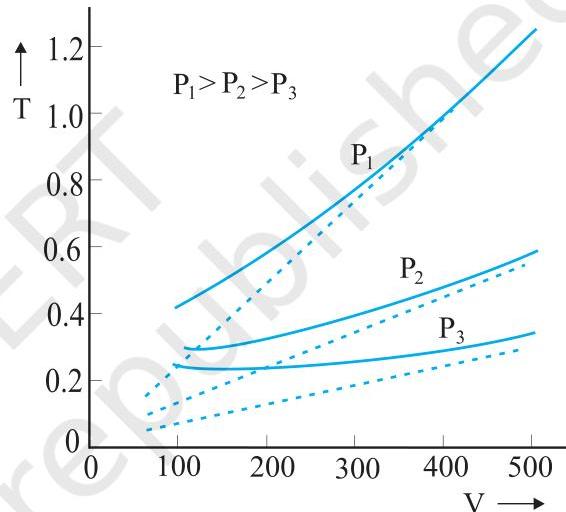 Fig. 12.3 Experimental $T$-$V$ curves (solid lines) for $CO_{2}$ at three pressures compared with Charles' law (dotted lines). $T$ is in units of 300 K and $V$ in units of 0.13 litres.
Our subsequent discussion will focus on illustrative examples that elucidate insights regarding the volumetric occupancy of molecules and the individual volume of a single molecular entity.
Example 12.1 The density of water is $1000\ \mathrm{kg\ m^{-3}}$. The density of water vapour at $100^{\circ}\mathrm{C}$ and 1 atm pressure is $0.6\ \mathrm{kg\ m^{-3}}$. The volume of a molecule multiplied by the total number gives, what is called, molecular volume. Estimate the ratio (or fraction) of the molecular volume to the total volume occupied by the water vapour under the above conditions of temperature and pressure.
Answer For a given quantity of water molecules, a larger volume directly corresponds to a reduced density. Therefore, the volume occupied by water in its gaseous state is amplified by a factor of $1000 / 0.6 = 1 / (6 \times 10^{-4})$. Assuming the densities of bulk water and individual water molecules are equivalent, the proportion of molecular volume to the total volume in the liquid phase is unity. As the volume in the vapor state has expanded, the fractional molecular volume is consequently diminished by the same ratio, specifically $6 \times 10^{-4}$.
Example 12.2 Estimate the volume of a water molecule using the data in Example 12.1.
Answer In the condensed phases (liquid or solid), water molecules are closely packed. The density of an individual water molecule may thus be considered approximately equal to the density of bulk water, which is $1000\mathrm{kg}\mathrm{m}^{-3}$. To determine the volume of a water molecule, its mass must first be ascertained. We are aware that one mole of water possesses an approximate mass of $(2 + 16)\mathrm{g} = 18\mathrm{g} = 0.018\mathrm{kg}$.
Since one mole contains approximately $6 \times 10^{23}$ molecules (Avogadro's number), the mass of a single water molecule is calculated as $(0.018) / (6 \times 10^{23}) \mathrm{kg} = 3 \times 10^{-26} \mathrm{~kg}$. Consequently, a preliminary calculation for the volume of a water molecule is as follows:
Volume of a water molecule
$= (3 \times 10^{-26} \mathrm{kg}) / (1000 \mathrm{kg} \mathrm{m}^{-3})$
$= 3 \times 10^{-29} \mathrm{m}^{3}$
$= (4 / 3) \pi (\text{Radius})^3$
Hence, Radius $\approx 2 \times 10^{-10} \mathrm{~m} = 2\mathrm{\AA}$
Example 12.3 What is the average distance between atoms (interatomic distance) in water? Use the data given in Examples 12.1 and 12.2.
Answer: A specific mass of water, when in the vapor state, occupies a volume $1.67 \times 10^{3}$ times greater than the same mass of water in the liquid state (as established in Ex. 12.1). This also represents the proportional increase in the volume available to each water molecule. When the total volume increases by a factor of $10^{3}$, the effective radius expands by $V^{1/3}$, or 10 times, resulting in $10 \times 2\mathrm{\AA} = 20\mathrm{\AA}$. Therefore, the average intermolecular distance is $2 \times 20 = 40\mathrm{\AA}$.
Example 12.4 A vessel contains two non-reactive gases: neon (monatomic) and oxygen (diatomic). The ratio of their partial pressures is 3:2. Estimate the ratio of (i)
number of molecules and (ii) mass density of neon and oxygen in the vessel. Atomic mass of Ne = 20.2 u, molecular mass of $\mathrm{O}_2$ = 32.0 u.
Answer The partial pressure of a gas within a mixture is defined as the pressure it would exert if it were the sole occupant of the vessel, maintaining the same volume and temperature. (The cumulative pressure of a mixture of non-reactive gases is the sum of the partial pressures contributed by its constituent gases.) Each gas, assumed to be ideal, adheres to the ideal gas law. Given that $V$ and $T$ are identical for both gases, we can write $P_{1}V = \mu_{1}RT$ and $P_{2}V = \mu_{2}RT$. This implies that the ratio of pressures is equal to the ratio of their mole numbers: $(P_{1} / P_{2}) = (\mu_{1} / \mu_{2})$. Here, the subscripts 1 and 2 refer to neon and oxygen, respectively. Since $(P_{1} / P_{2}) = (3 / 2)$ (as provided), it follows that $(\mu_{1} / \mu_{2}) = 3 / 2$.
(i) By definition, $\mu_{1} = (N_{1} / N_{A})$ and $\mu_{2} = (N_{2} / N_{A})$, where $N_{1}$ and $N_{2}$ represent the number of molecules of gas 1 and gas 2, respectively, and $N_{A}$ is Avogadro's number. Consequently, the ratio of the number of molecules is $(N_{1} / N_{2}) = (\mu_{1} / \mu_{2}) = 3 / 2$.
(ii) Alternatively, the quantities $\mu_1$ and $\mu_2$ may also be defined as $\mu_{1} = (m_{1} / M_{1})$ and $\mu_{2} = (m_{2} / M_{2})$, where $m_{1}$ and $m_{2}$ represent the individual masses of species 1 and 2, respectively, and $M_{1}$ and $M_{2}$ denote their corresponding molecular masses. It is imperative that both $m_{1}$ and $M_{1}$, as well as $m_{2}$ and $M_{2}$, are specified using consistent units. Considering $\rho_{1}$ and $\rho_{2}$ as the respective mass densities for species 1 and 2, the following relationship holds:
$ \begin{array}{l} \frac {\rho_ {1}}{\rho_ {2}} = \frac {m _ {1} / V}{m _ {2} / V} = \frac {m _ {1}}{m _ {2}} = \frac {\mu_ {1}}{\mu_ {2}} \times \left(\frac {M _ {1}}{M _ {2}}\right) \ = \frac {3}{2} \times \frac {20.2}{32.0} = 0.947 \ \end{array} $
12.4 KINETIC THEORY OF AN IDEAL GAS
The kinetic theory of gases is fundamentally grounded in the molecular conception of matter. Any specific quantity of gas comprises a vast ensemble of molecules (frequently on the order of Avogadro's number) characterized by continuous, chaotic movement. Under typical conditions of pressure and temperature, the mean intermolecular separation substantially exceeds (by a factor of 10 or more) the characteristic molecular dimension (e.g., $2\mathrm{\AA}$). Consequently, intermolecular interactions are considered negligible, allowing us to postulate that molecules traverse straight paths unimpeded, consistent with Newton's first law of motion. Nevertheless, at infrequent intervals, molecules approach sufficiently close to experience intermolecular forces, resulting in alterations to their velocities. Such interactions are termed collisions. These molecules continuously impact one another and the container walls, modifying their trajectories and speeds. These collisions are presumed to be perfectly elastic. An equation describing the pressure exerted by a gas can be formulated utilizing the principles of kinetic theory.
Our foundational premise is that gas molecules engage in ceaseless, random movement, undergoing impacts with each other and with the internal surfaces of
their enclosure. Every collision, whether between individual molecules or between molecules and the container boundaries, is assumed to be elastic. This stipulation signifies the conservation of total kinetic energy. As is standard, the total momentum remains conserved.
12.4.1 Pressure of an Ideal Gas
Imagine an ideal gas confined within a cubic container of unit side length. Coordinate axes are aligned with the cube's edges, as depicted in Fig. 12.4. A gas particle, possessing velocity components $(v_x, v_y, v_z)$, strikes a flat wall oriented parallel to the $yz$-plane, which has an area $A$. Given the collision is perfectly elastic, the molecule's speed remains constant. Specifically, its $y$ and $z$ velocity components are unaffected, while the $x$-component undergoes a sign reversal. Thus, the post-collision velocity is $(-v_x, v_y, v_z)$. The alteration in the molecule's momentum is calculated as $m(-v_x) - m(v_x) = -2mv_x$. In accordance with the conservation of momentum, the momentum delivered to the wall during this impact is $2mv_x$.
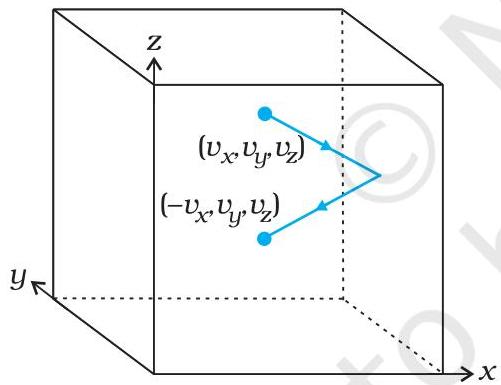 Fig. 12.4 Elastic collision of a gas molecule with the wall of the container.
To ascertain the force exerted on the wall, and consequently the pressure, it is necessary to determine the rate at which momentum is transferred to it. Within a brief time interval $\Delta t$, any molecule possessing an $x$-component of velocity $v_x$ will strike the wall if its initial distance from the wall is less than or equal to $v_x \Delta t$. Consequently, only molecules residing within a volume $A v_x \Delta t$ are candidates for impacting the wall during this period. However, statistically, approximately half of these molecules will be traveling towards the wall, while the other half will be moving away from the wall. Therefore, the count of molecules with velocity $(v_x, v_y, v_z)$ that collide with the wall during $\Delta t$ is given by $\frac{1}{2} A v_x \Delta t n$, where $n$ signifies the molecular number density. The cumulative momentum transferred to the wall by these molecules over the interval $\Delta t$ is then:
$ Q = (2 m v _ {x}) \left(\frac{1}{2} n A v _ {x} \Delta t\right) \tag {12.10} $
The force exerted upon the wall is defined as the rate of momentum transfer, $Q / \Delta t$. Pressure, in turn, is the force distributed over the unit area:
$ P = Q / (A \Delta t) = n m v _ {x} ^ {2} \tag {12.11} $
In reality, gas molecules exhibit a spectrum of velocities rather than a uniform speed; a velocity distribution exists. Consequently, the preceding equation represents the pressure generated by a specific subset of molecules characterized by an $x$-component velocity $v_x$, where $n$ denotes the number density particular to that subset. To determine the aggregate pressure, one must sum the contributions from all such molecular groups:
$ P = n m \overline{v _ {x} ^ {2}} \tag {12.12} $
Here, $\overline{v_x^2}$ signifies the mean value of the squared $x$-component of velocity. Given that the gas is isotropic, meaning there is no directional preference for molecular velocities within the container, it follows by symmetry that:
$ \begin{array}{l} \overline{v _ {x} ^ {2}} = \overline{v _ {y} ^ {2}} = \overline{v _ {z} ^ {2}} \ = (1 / 3) \left[ \overline{v _ {x} ^ {2}} + \overline{v _ {y} ^ {2}} + \overline{v _ {z} ^ {2}} \right] = (1 / 3) \overline{v ^ {2}} \tag {12.13} \ \end{array} $
where $v$ represents the molecular speed, and $\overline{v^2}$ indicates the average of the squared speed. Consequently,
$ P = (1 / 3) n m \overline{v ^ {2}} \tag {12.14} $
Several observations are pertinent regarding this derivation. Firstly, while a cubic container was selected for simplicity, the actual geometry of the vessel is inconsequential. For any container of arbitrary form, the identical steps can be applied by considering an infinitesimally small, planar surface element. It is noteworthy that neither the area $A$ nor the time interval $\Delta t$ persist in the ultimate expression. According to Pascal's law, as introduced in Chapter 9, the pressure within any part of a gas in equilibrium is uniform throughout. Secondly, the derivation deliberately omits consideration of intermolecular collisions. Although a rigorous justification for this omission is complex, a qualitative understanding suggests it does not introduce significant error. The quantity of molecules striking the wall during time $\Delta t$ was determined to be $\frac{1}{2} n A v_x \Delta t$. In a gas at steady state, collisions occur randomly. Consequently, if a molecule with velocity $(v_x, v_y, v_z)$ has its velocity altered by colliding with another particle, a compensatory event will invariably occur where another molecule
A molecule, possessing a distinct initial velocity, subsequently attains a velocity of $(v_{x'}, v_{y'}, v_{z'})$ following a collision. Without this dynamic, the velocity distribution would lack stability. Our current objective is to determine $\overline{v_x^2}$. Consequently, under conditions where molecular collisions are not excessively frequent and the duration of each collision is insignificant relative to the intervals between them, these interactions will not impact the preceding calculation.
12.4.2 Kinetic Interpretation of Temperature
The relationship presented in Equation (13.14) may be reformulated as:
$ PV = (1/3) n V m \overline{v^2} \tag{12.15a} $
$ PV = (2/3) N x \frac{1}{2} m \overline{v^2} \tag{12.15b} $
Here, $N$, equivalent to $nV$, denotes the total count of molecules within the given sample.
The expression enclosed within the brackets represents the mean translational kinetic energy of the gas molecules. Given that the internal energy, $E$, of an ideal gas is exclusively kinetic* in nature,
$ E = N \quad (1/2) m \overline{v^2} \tag{12.16} $
From Equation (12.15), it follows that:
$ PV = (2/3) E \tag{12.17} $
We can now proceed to formulate a kinetic interpretation of temperature. By integrating Equation (12.17) with the ideal gas Equation (12.3), we derive:
$ E = (3/2) k_B N T \tag{12.18} $
$ \text{or} \quad E/N = \frac{1}{2} m \overline{v^2} = (3/2) k_B T \tag{12.19} $
This implies that the mean kinetic energy of a single molecule is directly proportional to the gas's absolute temperature, and notably, it remains unaffected by pressure, volume, or the specific characteristics of the ideal gas. This constitutes a foundational outcome, establishing a link between temperature—a macroscopic, quantifiable property of a gas (termed a thermodynamic variable)—and a molecular attribute, specifically the average kinetic energy of a molecule. The Boltzmann constant serves as the bridge between these two conceptual realms. It is worth observing that Equation (12.18) indicates that the internal energy of an ideal gas is solely a function of temperature, independent of its pressure or volume. This perspective on temperature ensures that the kinetic theory of an ideal gas aligns perfectly with the ideal gas equation and its derivative gas laws.
When considering a blend of non-reactive ideal gases, each constituent gas contributes to the overall pressure. In this scenario, Equation (12.14) transforms into:
$ P = (1/3) \left[ n_1 m_1 \overline{v_1^2} + n_2 m_2 \overline{v_2^2} + \dots \right] \tag{12.20} $
At equilibrium, the mean kinetic energy among molecules of distinct gases within the mixture will be equivalent. Specifically,
$ \frac{1}{2} m_1 \overline{v_1^2} = \frac{1}{2} m_2 \overline{v_2^2} = (3/2) k_B T $
Consequently,
$ P = (n_1 + n_2 + \dots) k_B T \tag{12.21} $
This relationship is recognized as Dalton's law of partial pressures.
Equation (12.19) allows us to estimate the characteristic speed of molecules within a gas. For instance, at a temperature of $T = 300,\mathrm{K}$, the mean square speed of a nitrogen gas molecule is calculated as:
$ m = \frac{M_{N_2}}{N_A} = \frac{28}{6.02 \times 10^{26}} = 4.65 \times 10^{-26} ,\mathrm{kg}. $
$ \overline{v^2} = 3 k_B T / m = (516)^2 \mathrm{m^2 s^{-2}} $
The root mean square (rms) speed, symbolized as $v_{\mathrm{rms}}$, is defined as the square root of $\overline{v^2}$.
(We can also write $\overline{v^2}$ as
YoLearn.AI is India's #1 AI tutoring platform for Class 1 to 12, JEE, and NEET preparation.
Students talk to expert AI tutors in real time through live voice calls, solve doubts instantly
on an interactive sketch board, and practice with mock tests, flashcards, quizzes, and slide decks.
Learn from top educators including DC Pandey and other verified teachers who create AI avatars of themselves.
Unlike text-only chatbots, YoLearn.AI lets you speak naturally to your AI tutor — just like a real
one-on-one session. Get step-by-step explanations for Physics, Chemistry, Maths, and Biology
for board exams, JEE Main, JEE Advanced, and NEET.
Prepare for JEE 2026, NEET 2026, and CBSE board exams with personalized mock tests, AI-generated
quizzes, and flashcard makers. Build daily study habits with an AI study buddy designed for Indian students.
Whether you need a Class 10 CBSE tutor, Class 12 board exam help, or full JEE and NEET coaching online,
YoLearn.AI adapts to your grade, syllabus, and learning pace. Start free today on web, iOS, and Android.
Personal 1:1 AI Tutor for CBSE, JEE & NEET Students
Live voice tutoring and doubt solving
Mock tests, flashcards, and exam prep
For school, JEE, and NEET
$ v_{\mathrm{rms}} = 516,\mathrm{m,s^{-1}} $
This velocity approximates the speed of sound in an atmospheric medium. Equation (12.19) demonstrates that, given an identical temperature, molecules with lower mass exhibit a higher root mean square velocity.
Example 12.5 A vessel holds a mixture of argon and chlorine, present in a 2:1 mass ratio. The mixture's temperature is 27 °C. Determine the ratio of (i) the mean kinetic energy per molecule, and (ii) the root mean square velocity, $v_{\mathrm{rms}}$, for the molecules of these two gases. Given: Argon's atomic mass = 39.9 u; Chlorine's molecular mass = 70.9 u.
Answer Crucially, it must be recalled that the mean kinetic energy per molecule for any ideal gas (whether monatomic, such as argon; diatomic, like chlorine; or polyatomic) invariably equates to $(3/2) k_B T$. This quantity is solely contingent upon temperature, exhibiting no dependence on the specific characteristics of the gas.
(i) Given that both argon and chlorine within the container are at an identical temperature, their average kinetic energies per molecule will possess a 1:1 ratio.
(ii) Subsequently, the expression $\frac{1}{2} m v_{\mathrm{rms}}^2 =$ average kinetic energy per molecule $= (3/2) k_B T$ applies, where $m$ signifies the molecular mass
- $E$ denotes the translational part of the internal energy $U$ that may include energies due to other degrees of freedom also. See section 12.5.
of a gas molecule. Consequently,
$ \frac {\left(\mathbf {v} _ {r m s} ^ {2}\right) _ {\mathrm {A r}}}{\left(\mathbf {v} _ {r m s} ^ {2}\right) _ {\mathrm {C l}}} = \frac {(m) _ {\mathrm {C l}}}{(m) _ {\mathrm {A r}}} = \frac {(M) _ {\mathrm {C l}}}{(M) _ {\mathrm {A r}}} = \frac {7 0 . 9}{3 9 . 9} = 1. 7 7 $
Here, $M$ represents the molecular mass of the gas. (In the case of argon, a molecule is equivalent to a single atom of argon.) Upon extracting the square root from both expressions,
$ \frac {\left(\mathbf {v} _ {r m s}\right) _ {\mathrm {A r}}}{\left(\mathbf {v} _ {r m s}\right) _ {\mathrm {C l}}} = 1. 3 3 $
It is important to observe that the mass-based composition of the mixture holds no bearing on the preceding computation. Any alternative mass proportion of argon and chlorine would yield identical results for parts (i) and (ii), assuming the temperature remains constant.
Example 12.6 Uranium exists in two isotopic forms with masses of 235 and 238 atomic mass units. If both isotopes are incorporated into uranium hexafluoride gas, which form would possess a greater average molecular speed? Assuming fluorine's atomic mass is 19 units, determine the estimated percentage difference in speeds at any given temperature.
Answer Given a constant temperature, the mean kinetic energy, expressed as $\frac{1}{2} m < v^2 >$, remains invariant. Consequently, molecules with a smaller mass will exhibit higher speeds. The relationship between speeds is inversely proportional to the square root of their respective masses. The relevant molecular masses are 349 and 352 units. Therefore,
$ v _ {3 4 9} / v _ {3 5 2} = (3 5 2 / 3 4 9) ^ {1 / 2} = 1. 0 0 4 4. $
Thus, the percentage difference, $\frac{\Delta V}{V}$, is calculated to be $0.44%$ .
$\left[{ }^{235} \mathrm{U}\right.$ represents the isotope requisite for nuclear fission. To isolate it from the more prevalent isotope ${ }^{238} \mathrm{U}$, the isotopic mixture is enclosed within a porous cylinder. This cylinder must be constructed with significant thickness and a narrow bore, enabling individual molecules to diffuse through, encountering the elongated pore's walls. The molecules with higher velocities will preferentially effuse, resulting in a higher concentration of the lighter isotope (enrichment) outside the porous barrier (Fig. 12.5). This technique is not highly efficient and necessitates multiple repetitions to achieve adequate enrichment].
The diffusion rate of gases exhibits an inverse proportionality to the square root of their molecular masses (refer to Exercise 12.12). Can you infer the underlying principle from the preceding response?
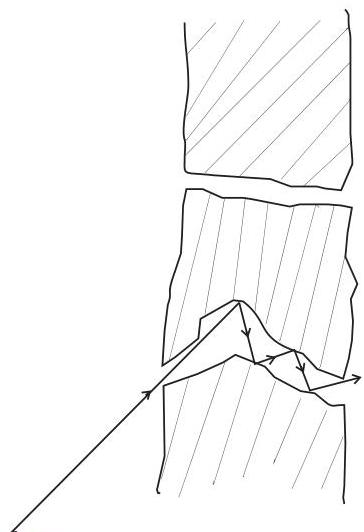 Fig. 12.5 Molecules going through a porous wall.
Example 12.7 (a) Consider a scenario where a molecule (or an elastic sphere) impacts a substantial wall; it will reflect with its initial velocity preserved. Similarly, when a sphere strikes a rigidly held, massive bat, an analogous outcome is observed. Nevertheless, if the bat is in motion, advancing towards the sphere, the sphere's rebound velocity will be altered. Will the sphere's speed increase or decrease? (Chapter 5 offers a review of elastic collision principles.)
(b) When a gas confined within a cylinder undergoes compression due to an inward-moving piston, its temperature is observed to increase. Formulate an explanation for this phenomenon, drawing upon kinetic theory principles and incorporating the insights from part (a). (c) Describe the events that transpire when a compressed gas propels a piston outward, thereby expanding. What changes would be discernible? (d) Sachin Tendulkar employed a substantial cricket bat during his play. Did this confer any advantage upon him?
Answer (a) Assume the ball's velocity is $u$ when measured relative to the wicket, positioned behind the bat. Should the bat approach the ball with a velocity $V$ relative to the wicket, the ball's speed relative to the bat becomes $V + u$, directed towards the bat. Upon rebounding from the massive bat, the ball's speed, when observed from the bat's frame of reference, remains $V + u$, now directed away from the bat. Consequently, relative to the wicket, the rebounding ball's velocity is calculated as $V + (V + u) = 2V + u$, receding from the wicket. Therefore, the ball's speed increases subsequent to its impact with the bat. Conversely, if the bat lacks substantial mass, the rebound speed would be lower than $u$. In the context of molecular interactions, this acceleration would correspond to an elevation in temperature.
It should be possible to formulate responses to sections (b), (c), and (d) by applying the principles established in the answer to section (a).
(Hint: Note the correspondence, piston → bat, cylinder → wicket, molecule → ball.)
12.5 LAW OF EQUIPARTITION OF ENERGY
The kinetic energy associated with a solitary molecule can be expressed as:
$ \varepsilon_{t} = \frac{1}{2} m v_{x}^{2} + \frac{1}{2} m v_{y}^{2} + \frac{1}{2} m v_{z}^{2} \tag{12.22} $
When a gas is in a state of thermal equilibrium at a temperature $T$, the mean energy, symbolized as
YoLearn.AI is India's #1 AI tutoring platform for Class 1 to 12, JEE, and NEET preparation.
Students talk to expert AI tutors in real time through live voice calls, solve doubts instantly
on an interactive sketch board, and practice with mock tests, flashcards, quizzes, and slide decks.
Learn from top educators including DC Pandey and other verified teachers who create AI avatars of themselves.
Unlike text-only chatbots, YoLearn.AI lets you speak naturally to your AI tutor — just like a real
one-on-one session. Get step-by-step explanations for Physics, Chemistry, Maths, and Biology
for board exams, JEE Main, JEE Advanced, and NEET.
Prepare for JEE 2026, NEET 2026, and CBSE board exams with personalized mock tests, AI-generated
quizzes, and flashcard makers. Build daily study habits with an AI study buddy designed for Indian students.
Whether you need a Class 10 CBSE tutor, Class 12 board exam help, or full JEE and NEET coaching online,
YoLearn.AI adapts to your grade, syllabus, and learning pace. Start free today on web, iOS, and Android.
Personal 1:1 AI Tutor for CBSE, JEE & NEET Students
Live voice tutoring and doubt solving
Mock tests, flashcards, and exam prep
For school, JEE, and NEET
$ \left\langle \varepsilon_{t} \right\rangle = \left\langle \frac{1}{2} m v_{x}^{2} \right\rangle + \left\langle \frac{1}{2} m v_{y}^{2} \right\rangle + \left\langle \frac{1}{2} m v_{z}^{2} \right\rangle = \frac{3}{2} k_{B} T \tag{12.23} $
Given the absence of any directional preference, Equation (12.23) leads to the conclusion that:
$ \begin{array}{l} \left\langle \frac{1}{2} m v_{x}^{2} \right\rangle = \frac{1}{2} k_{B} T, \left\langle \frac{1}{2} m v_{y}^{2} \right\rangle = \frac{1}{2} k_{B} T, \ \left\langle \frac{1}{2} m v_{z}^{2} \right\rangle = \frac{1}{2} k_{B} T \tag{12.24} \end{array} $
To define the position of a molecule unconstrained in three-dimensional space, three coordinates are necessary. Should its movement be restricted to a plane, two coordinates suffice; if confined to a linear path, a single coordinate is enough for its localization. This concept can be articulated differently: a molecule possesses one degree of freedom for linear motion, two for planar motion, and three for spatial movement. The displacement of an entire body from one location to another is termed translation. Consequently, a molecule that can move freely in space possesses three translational degrees of freedom. Each of these translational degrees of freedom introduces a component to the energy expression that involves the square of a relevant kinematic variable, such as $\frac{1}{2} m v_{x}^{2}$, with analogous components for $v_{y}$ and $v_{z}$. From Equation (12.24), it is evident that, under conditions of thermal equilibrium, the mean value of each such component is $\frac{1}{2} k_{B} T$.
While monatomic gases, such as argon, exhibit solely translational degrees of freedom, the situation differs for diatomic gases like $\mathrm{O}_2$ or $\mathrm{N}2$. An $\mathrm{O}2$ molecule, for instance, possesses three translational degrees of freedom, but it can also undergo rotation around its center of mass. As illustrated in Figure 12.6, there are two distinct axes of rotation (labeled 1 and 2) perpendicular to the internuclear axis connecting the two oxygen atoms, around which the molecule can rotate*. Consequently, the molecule exhibits two rotational degrees of freedom. Each of these contributes a component to the overall energy, which comprises both translational energy $\varepsilon{t}$ and rotational energy $\varepsilon{r}$:
$ \varepsilon_{t} + \varepsilon_{r} = \frac{1}{2} m v_{x}^{2} + \frac{1}{2} m v_{y}^{2} + \frac{1}{2} m v_{z}^{2} + \frac{1}{2} I_{1} \omega_{1}^{2} + \frac{1}{2} I_{2} \omega_{2}^{2} \tag{12.25} $
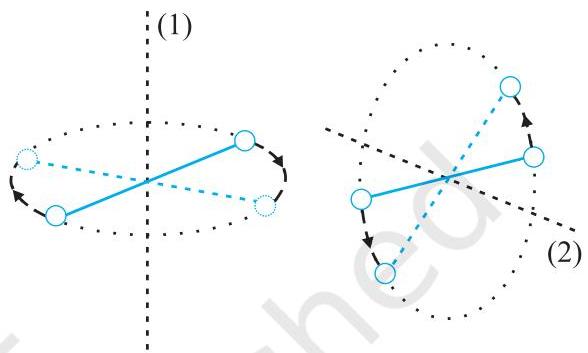 Fig. 12.6 The two independent axes of rotation of a diatomic molecule
Here, $\omega_{1}$ and $\omega_{2}$ represent the angular velocities around axes 1 and 2, respectively, with $I_{1}$ and $I_{2}$ denoting their corresponding moments of inertia. It is important to observe that every rotational degree of freedom adds an energy term that involves the square of a rotational kinematic variable.
Our preceding discussion presumed the $\mathrm{O}_2$ molecule to be a 'rigid rotator,' implying an absence of vibrational motion. While this premise holds true for $\mathrm{O}2$ under moderate thermal conditions, its applicability is not universal. Certain molecules, such as CO, exhibit a vibrational mode even at moderate temperatures, wherein their constituent atoms oscillate along the internuclear axis akin to a one-dimensional harmonic oscillator. This vibrational activity introduces a specific vibrational energy component, $\varepsilon{v}$, to the molecule's overall energy budget:
$ \varepsilon_{v} = \frac{1}{2} m \left(\frac{\mathrm{d} y}{\mathrm{d} t}\right)^{2} + \frac{1}{2} k y^{2} $
$ \varepsilon = \varepsilon_{t} + \varepsilon_{r} + \varepsilon_{v} \tag{12.26} $
Here, $k$ denotes the force constant characteristic of the oscillator, and $y$ represents the vibrational coordinate.
It is notable that the vibrational energy contributions in Equation (12.26) similarly comprise squared expressions involving the vibrational variables of motion, $y$ and $\mathrm{d}y / \mathrm{d}t$.
A crucial characteristic discernable in Equation (12.26
) is the manner in which energy contributions are structured. In contrast to each translational and rotational degree of freedom, which contributes a singular quadratic term, a single vibrational mode introduces two such terms: one corresponding to kinetic energy and another to potential energy.
Every quadratic term present within the energy expression signifies a distinct avenue for molecular energy absorption. We have previously established that, under conditions of thermal equilibrium at an absolute temperature $T$, each translational mode of motion possesses an average energy of $\frac{1}{2} k_{B}T$. A cornerstone principle of classical statistical mechanics, first rigorously demonstrated by Maxwell, asserts that this proportionality extends to every energy mode—be it translational, rotational, or vibrational. Consequently, in equilibrium, the total energy is uniformly distributed across all accessible energy modes, with each mode contributing an average energy of $\frac{1}{2} k_{B}T$. This fundamental concept is termed the law of equipartition of energy. In alignment with this principle, each translational and rotational degree of freedom of a molecule contributes $\frac{1}{2} k_{B}T$ to its total energy, whereas each vibrational frequency contributes $2 \times \frac{1}{2} k_{B}T = k_{B}T$, owing to the presence of both kinetic and potential energy components within a vibrational mode.
A comprehensive derivation of the law of equipartition of energy falls outside the purview of this text. Our immediate objective here is to employ this law for the theoretical prediction of the specific heats of gases. Subsequently, we will briefly explore its applicability to the specific heat of solids.
12.6 SPECIFIC HEAT CAPACITY
12.6.1 Monatomic Gases
A monatomic gas molecule possesses exclusively three translational degrees of freedom. Consequently, the mean energy per molecule at a temperature $T$ is given by $(3/2)k_{\mathrm{B}}T$. For one mole of such a gas, the aggregate internal energy can be expressed as:
$ U = \frac{3}{2} k_{B} T \times N_{A} = \frac{3}{2} R T \tag{12.27} $
The molar specific heat at constant volume, denoted as $C_{\nu}$, is determined by:
$ C_{\nu} \text{ (monatomic gas)} = \frac{\mathrm{d}U}{\mathrm{d}T} = \frac{3}{2} R T \tag{12.28} $
For an ideal gas, the relationship between specific heats is established by:
$ C_{p} - C_{\nu} = R \tag{12.29} $
Here, $C_p$ represents the molar specific heat under constant pressure conditions. This leads to:
$ C_{p} = \frac{5}{2} R \tag{12.30} $
The ratio of specific heats, $\gamma$, is therefore:
$ \gamma = \frac{C_{\mathrm{p}}}{C_{\mathrm{v}}} = \frac{5}{3} \tag{12.31} $
12.6.2 Diatomic Gases
As previously discussed, a diatomic molecule, when modeled as a rigid rotator (analogous to a dumbbell), possesses five degrees of freedom: three translational and two rotational. Employing the principle of equipartition of energy, the aggregate internal energy for one mole of such a gas is determined as:
$ U = \frac{5}{2} k_{B} T \times N_{A} = \frac{5}{2} R T \tag{12.32} $
Consequently, the molar specific heats are derived as:
$ C_{\nu} \text{ (rigid diatomic)} = \frac{5}{2} R, \quad C_{p} = \frac{7}{2} R \tag{12.33} $
$ \gamma \text{ (rigid diatomic)} = \frac{7}{5} \tag{12.34} $
Should the diatomic molecule not be considered rigid, but instead incorporate an additional vibrational mode, the internal energy becomes:
$ U = \left(\frac{5}{2} k_{B} T + k_{B} T\right) N_{A} = \frac{7}{2} R T $
Leading to the following values for $C_{\nu}$, $C_{p}$, and $\gamma$:
$ C_{\nu} = \frac{7}{2} R, \quad C_{p} = \frac{9}{2} R, \quad \gamma = \frac{9}{7} R \tag{12.35} $
12.6.3 Polyatomic Gases
A polyatomic molecule typically possesses 3 translational and 3 rotational degrees of freedom, along with a specific count $(\ell)$ of vibrational modes. Applying the principle of equipartition of energy, the internal energy per mole for such a gas is determined as:
$ U = \left(\frac{3}{2} k_{B} T + \frac{3}{2} k_{B} T + \ell k_{B} T\right) N_{A} $
$ \text{i.e., } C_{\nu} = (3 + \ell) R, \quad C_{p} = (4 + \ell) R, $
$ \gamma = \frac{(4 + \ell)}{(3 + \ell)} \tag{12.36} $
It is important to observe that the relationship $C_p - C_{\nu} = R$ holds universally for all ideal gases, irrespective of their monatomic, diatomic, or polyatomic nature.
Theoretical specific heat predictions for gases, neglecting vibrational contributions, are summarized in Table 12.1. These theoretical figures generally align well with experimental specific heat values for several gases, as presented in Table 12.2. However, discrepancies arise when comparing predicted and actual specific heats
for various other gases (not included in the table), such as $\mathrm{Cl}_2$, $\mathrm{C}_2\mathrm{H}_6$, and numerous other polyatomic species. Typically, the experimentally determined specific heats for these gases exceed the theoretical predictions found in Table 12.1. This suggests that incorporating vibrational modes of motion into the calculations could enhance the congruence between theoretical and empirical data. Consequently, the principle of equipartition of energy finds strong experimental corroboration under typical temperature conditions.
Table 12.1 Predicted values of specific heat capacities of gases (ignoring vibrational modes)
| Nature of Gas | Cv(J mol-1K-1) | Cv(J mol-1K-1) | Cv-Cv(J mol-1K-1) | γ |
|---|---|---|---|---|
| Monatomic | 12.5 | 20.8 | 8.31 | 1.67 |
| Diatomic | 20.8 | 29.1 | 8.31 | 1.40 |
| Triatomic | 24.93 | 33.24 | 8.31 | 1.33 |
Table 12.2 Measured values of specific heat capacities of some gases
| Nature of gas | Gas | Cv(J mol-1K-1) | Cv(J mol-1K-1) | Cv-Cv(J mol-1K-1) | γ |
|---|---|---|---|---|---|
| Monatomic | He | 12.5 | 20.8 | 8.30 | 1.66 |
| Monatomic | Ne | 12.7 | 20.8 | 8.12 | 1.64 |
| Monatomic | Ar | 12.5 | 20.8 | 8.30 | 1.67 |
| Diatomic | H2 | 20.4 | 28.8 | 8.45 | 1.41 |
| Diatomic | O2 | 21.0 | 29.3 | 8.32 | 1.40 |
| Diatomic | N2 | 20.8 | 29.1 | 8.32 | 1.40 |
| Triatomic | H2O | 27.0 | 35.4 | 8.35 | 1.31 |
| Polyatomic | CH4 | 27.1 | 35.4 | 8.36 | 1.31 |
Example 12.8 Consider a cylinder with a constant volume of 44.8 liters, containing helium gas under standard temperature and pressure conditions. Calculate the heat required to elevate the gas temperature within this cylinder by $15.0^{\circ}\mathrm{C}$, given ($R = 8.31\mathrm{Jmol}^{-1}\mathrm{K}^{-1}$).
Answer By applying the ideal gas law, $PV = \mu RT$, it can be readily demonstrated that one mole of any ideal gas occupies a volume of 22.4 liters at standard temperature (273 K) and pressure (1 atm = 1.01 × 10⁵ Pa). This standardized volume is termed the molar volume. Consequently, the cylinder described in this example holds 2 moles of helium. Moreover, given that helium is a monatomic gas, its theoretical (and empirical) molar specific heat at constant volume, $C_{\nu} = (3/2)R$, and at constant pressure, $C_p = (3/2)R + R = (5/2)R$. As the cylinder's volume is constant, the necessary heat input is governed by $C_{\nu}$. Therefore,
Heat required = no. of moles × molar specific heat rise in temperature
$ \begin{array}{l} = 2 \times 1. 5 R \times 1 5. 0 = 4 5 R \ = 4 5 \times 8. 3 1 = 3 7 4 \mathrm {J}. \ \end{array} $
12.6.4 Specific Heat Capacity of Solids
To ascertain the specific heat capacities of solid materials, the principle of equipartition of energy can be employed. Envision a solid composed of $N$ constituent atoms, each undergoing vibrational motion around its average spatial coordinate. The mean energy associated with a one-dimensional oscillation is established as $2 \times \frac{1}{2} k_{B}T = k_{B}T$. Extending this to three dimensions, the average energy increases to $3k_{B}T$. Consequently, for a molar quantity of the solid, where $N$ corresponds to Avogadro's number ($N_{A}$), the aggregate internal energy is given by:
$ U = 3 k _ {B} T \times N _ {A} = 3 R T $
Under conditions of constant pressure, the heat absorbed ($\Delta Q$) can be expressed as the sum of the change in internal energy ($\Delta U$) and the work done ($P\Delta V$). Given that the volume change ($\Delta V$) for a solid is typically negligible, this simplifies to $\Delta Q = \Delta U$. From this, the molar heat capacity ($C$) can be derived as:
$ C = \frac {\Delta Q}{\Delta T} = \frac {\Delta U}{\Delta T} = 3 R \tag {12.37} $
Table 12.3 Specific Heat Capacity of some solids at room temperature and atmospheric pressure
| Substance | Specific heat (J kg-1K-1) | Molar specific heat (J mol-1K-1) |
|---|---|---|
| Aluminium | 900.0 | 24.4 |
| Carbon | 506.5 | 6.1 |
| Copper | 386.4 | 24.5 |
| Lead | 127.7 | 26.5 |
| Silver | 236.1 | 25.5 |
| Tungsten | 134.4 | 24.9 |
The data presented in Table 12.3 indicates that this theoretical prediction largely corresponds with experimentally observed values at typical ambient temperatures, although carbon notably stands as an exception.
12.7 MEAN FREE PATH
Despite possessing velocities comparable to the speed of sound, gas molecules exhibit macroscopic phenomena such as slow diffusion from a kitchen cylinder across a room or the prolonged coherence of a smoke cloud. This apparent contradiction arises because gas molecules, though diminutive, occupy a finite volume, inevitably leading to frequent intermolecular collisions. Consequently, their trajectories are not linear and unimpeded, but rather
undergo continuous deflections.
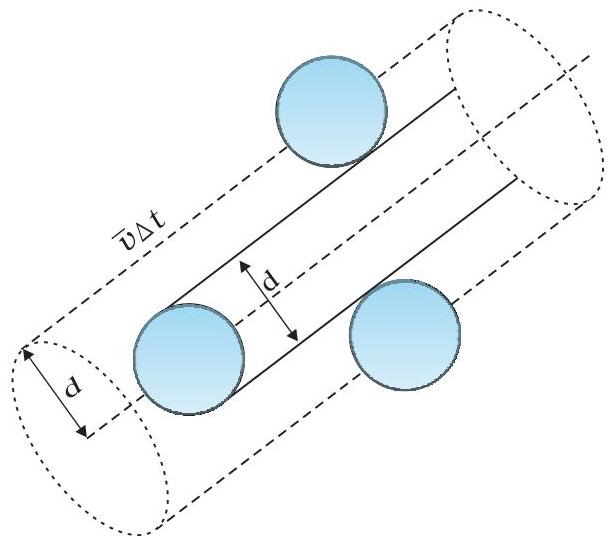 Fig. 12.7 The volume swept by a molecule in time $\Delta t$ in which any molecule will collide with it.
Consider gas molecules as spherical entities, each with a diameter $d$. If we isolate one molecule moving at an average speed $\langle \nu \rangle$, it will experience a collision with any other molecule whose center approaches within a distance $d$. Over a time interval $\Delta t$, this molecule effectively traverses a cylindrical volume of $\pi d^2 \langle \nu \rangle \Delta t$ (as depicted in Fig. 12.7), encompassing all other molecules it would collide with. Given a molecular number density $n$ (molecules per unit volume), the number of collisions encountered by the focal molecule within $\Delta t$ is $n\pi d^2 \langle \nu \rangle \Delta t$. Therefore, the collision frequency is $n\pi d^2 \langle \nu \rangle$, leading to an average time interval between successive collisions expressed as:
$ \tau = 1 / \left(n \pi < \nu > d ^ {2}\right) \tag {12.38} $
The average distance between two successive collisions, called the mean free path $l$, is:
$ l = < \nu > \tau = 1 / (n \pi d ^ {2}) \tag {12.39} $
The preceding derivation simplifies the scenario by assuming all other molecules remain stationary. In reality, all constituent molecules are in motion, and consequently, the true collision frequency is dictated by their average relative velocity. Hence, the average speed $\langle \nu \rangle$ in Eq. (12.38) must be adjusted to reflect this relative motion. A more rigorous theoretical approach yields the following expression:
$ l = 1 / \left(\sqrt {2} n \pi d ^ {2}\right) \tag {12.40} $
To illustrate, we can calculate the mean free path $l$ and collision time $\tau$ for air molecules, assuming an average speed of $\langle \nu \rangle = 485 \mathrm{~m/s}$ at Standard Temperature and Pressure (STP).
$ \begin{array}{l} n = \frac {\left(0.02 \times 10^{23}\right)}{\left(22.4 \times 10^{-3}\right)} \ = 2.7 \times 10^{25} \mathrm {m} ^ {- 3}. \ \end{array} $
Taking, $d = 2 \times 10^{-10} \mathrm{~m}$ ,
$ \begin{array}{l} \tau = 6.1 \times 10^{-10} \mathrm {s} \ \text {and} l = 2.9 \times 10^{-7} \mathrm {m} \approx 1500d \tag {12.41} \ \end{array} $
Consistent with theoretical predictions, the mean free path, as determined by Eq. (12.40), exhibits an inverse relationship with both the molecular number density and the molecular diameter squared. Consequently, within a highly evacuated vessel, where $n$ is considerably reduced, the mean free path can extend to magnitudes comparable to the dimensions of the container itself.
Example 12.9 Estimate the mean free path for a water molecule in water vapour at $373\mathrm{K}$ . Use information from Exercises 12.1 and Eq. (12.41) above.
Answer The $d$ for water vapour is same as that of air. The number density is inversely proportional to absolute temperature.
$ n = 2.7 \times 10^{25} \times \frac{273}{373} = 2 \times 10^{25} \mathrm{m}^{-3} $
Consequently, the mean free path is determined to be $l = 4 \times 10^{-7} \mathrm{~m}$.
It is noteworthy that this mean free path is approximately 100 times greater than the previously computed interatomic distance, which was roughly $40\mathrm{\AA}$, or $4 \times 10^{-9} \mathrm{m}$. This substantial mean free path is precisely what gives rise to the characteristic behaviour observed in gases, highlighting why gases cannot be contained without an enclosure.
The kinetic theory of gases enables the correlation of macroscopic, measurable quantities such as viscosity, thermal conductivity, and diffusion with microscopic properties like molecular dimensions. It was via these established relationships that initial estimations of molecular sizes were made.
PHYSICS
SUMMARY
- The ideal gas law, which establishes the relationship between pressure $(P)$, volume $(V)$, and absolute temperature $(T)$, is expressed as:
$ PV = \mu RT \quad = k_B NT $
Here, $\mu$ represents the quantity of moles, and $N$ denotes the total number of molecules. $R$ and $k_B$ are recognized as universal constants.
$ R = 8.314 , \mathrm{J} , \mathrm{mol}^{-1} , \mathrm{K}^{-1}, \quad k_B = \frac{R}{N_A} = 1.38 \times 10^{-23} , \mathrm{J} , \mathrm{K}^{-1} $
It should be noted that actual gases adhere to the ideal gas equation only approximately, with this approximation being more accurate under conditions of low pressure and elevated temperatures.
- The kinetic theory for an ideal gas provides the following relationship:
$ P = \frac{1}{3} n m \overline{v^2} $
In this expression, $n$ signifies the number density of molecules, $m$ is the mass of an individual molecule, and $\overline{v^2}$ corresponds to the mean of the squared speed. When this relation is integrated with the ideal gas equation, it offers a kinetic understanding of temperature.
$ \frac{1}{2} m \overline{v^2} = \frac{3}{2} k_B T, \quad v_{rms} = \left(\overline{v^2}\right)^{1/2} = \sqrt{\frac{3 k_B T}{m}} $
This implies that the temperature of a gas serves as an indicator of the average kinetic energy per molecule, irrespective of the specific type of gas or molecule involved. For a mixture of gases maintained at a constant temperature, molecules with greater mass will exhibit a lower average speed.
- The translational kinetic energy is given by:
$ E = \frac{3}{2} k_B NT. $
This formulation consequently establishes a relationship:
$ PV = \frac{2}{3} E $
- According to the law of equipartition of energy, for a system in thermal equilibrium at an absolute temperature $T$, the total energy is uniformly allocated among its various energy absorption modes. Each such mode possesses an energy equivalent to $\frac{1}{2} k_B T$. Specifically, every translational and rotational degree of freedom constitutes one energy absorption mode, each contributing $\frac{1}{2} k_B T$. Furthermore, each vibrational frequency encompasses two energy modes (one kinetic and one potential), with their combined energy amounting to:
$ 2 \times \frac{1}{2} k_B T = k_B T. $
By applying the law of equipartition of energy, it is possible to calculate the molar specific heats of gases. The obtained values align well with experimentally measured specific heats for various gases. Incorporating vibrational modes of motion can further refine this agreement.
The mean free path, denoted as $l$, quantifies the average distance traversed by a molecule between consecutive collisions:
$ l = \frac{1}{\sqrt{2} n \pi d^2} $
where $n$ is the number density and $d$ the diameter of the molecule.
POINTS TO PONDER
- The influence of fluid pressure extends beyond its boundaries with container walls; it is omnipresent throughout the fluid's volume. Consequently, any given stratum of gas within an enclosure maintains a state of equilibrium, owing to the uniformity of pressure exerted upon it from opposing sides.
- It is important to avoid overestimating the typical separation between molecules in a gaseous state. Under standard conditions of pressure and temperature, this spacing is merely about an order of magnitude larger than the interatomic distances observed in condensed phases (solids and liquids). The distinguishing characteristic, however, is the mean free path, which, for a gas, can be approximately 100 times the interatomic distance and roughly 1000 times the molecular dimension.
- The principle of equipartition of energy posits that, at thermal equilibrium, the energy associated with each degree of freedom is $\frac{1}{2} k_{B} T$. Any quadratic term present in a molecule's total energy formulation is to be classified as a degree of freedom. Consequently, each vibrational mode contributes two degrees of freedom (encompassing both kinetic and potential energy components), leading to an energy contribution of $2 \times \frac{1}{2} k_{B} T = k_{B} T$.
- Air molecules within an enclosed space do not uniformly descend and accumulate on the floor under gravitational influence; this is prevented by their considerable velocities and continuous collisional interactions. While a minor gradient in density, with slightly higher concentrations at lower altitudes, does exist at equilibrium (analogous to atmospheric conditions), this phenomenon is negligible because the gravitational potential energy ($mgh$) at typical elevations is significantly inferior to the average kinetic energy $\frac{1}{2} m v^2$ of the constituent molecules.
- The mean of the squared velocity, denoted as
Personal 1:1 AI Tutor for CBSE, JEE & NEET Students
YoLearn.AI is India's #1 AI tutoring platform for Class 1 to 12, JEE, and NEET preparation. Students talk to expert AI tutors in real time through live voice calls, solve doubts instantly on an interactive sketch board, and practice with mock tests, flashcards, quizzes, and slide decks. Learn from top educators including DC Pandey and other verified teachers who create AI avatars of themselves.
Live voice tutoring and doubt solving
Unlike text-only chatbots, YoLearn.AI lets you speak naturally to your AI tutor — just like a real one-on-one session. Get step-by-step explanations for Physics, Chemistry, Maths, and Biology for board exams, JEE Main, JEE Advanced, and NEET.
Mock tests, flashcards, and exam prep
Prepare for JEE 2026, NEET 2026, and CBSE board exams with personalized mock tests, AI-generated quizzes, and flashcard makers. Build daily study habits with an AI study buddy designed for Indian students.
For school, JEE, and NEET
Whether you need a Class 10 CBSE tutor, Class 12 board exam help, or full JEE and NEET coaching online, YoLearn.AI adapts to your grade, syllabus, and learning pace. Start free today on web, iOS, and Android.
EXERCISES
12.1 Determine the ratio of the volume occupied by oxygen molecules themselves to the total volume of oxygen gas at standard temperature and pressure (STP). Assume an oxygen molecule diameter of 3 Å. 12.2 Define molar volume as the space occupied by one mole of any ideal gas under standard temperature and pressure conditions (STP: 1 atm, $0^{\circ}\mathrm{C}$). Demonstrate that this value is 22.4 liters. 12.3 A graph illustrating the relationship between $PV/T$ and $P$ is presented in Figure 12.8, depicting data for $1.00 \times 10^{-3} , \mathrm{kg}$ of oxygen gas at two distinct temperatures.
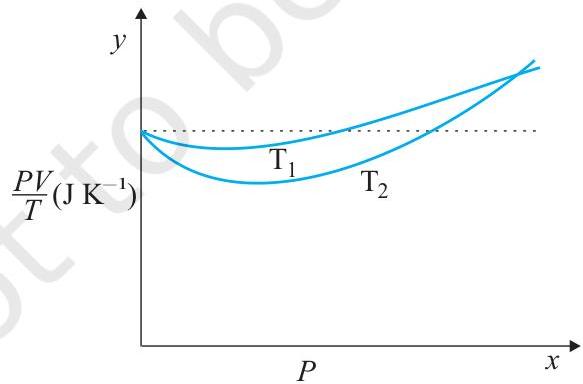 Fig. 12.8
(a) What characteristic or condition does the dashed line on the graph represent? (b) Establish the correct temperature relationship between $T_{1}$ and $T_{2}$: is $T_{1} > T_{2}$ or $T_{1} < T_{2}$? (c) Identify the specific value of $PV/T$ at the point where the plotted curves converge on the $y$-axis.
(d) Consider if an identical value for $PV/T$ would be observed at the y-axis intersection point if similar graphs were generated for $1.00 \times 10^{-3} , \mathrm{kg}$ of hydrogen. If the values differ, calculate the mass of hydrogen required to achieve the same $PV/T$ value (specifically in the low-pressure, high-temperature region of the graph). (Provided data: Molecular mass of $\mathrm{H}{2} = 2.02 , \mathrm{u}$, of $\mathrm{O}{2} = 32.0 , \mathrm{u}$, $R = 8.31 , \mathrm{J} , \mathrm{mol}^{-1} , \mathrm{K}^{-1}$.)
12.4 A cylindrical container holding oxygen, with a capacity of 30 liters, initially records a gauge pressure of 15 atm at a temperature of $27^{\circ}\mathrm{C}$. Following the removal of a portion of the oxygen, the gauge pressure decreases to 11 atm and the temperature falls to $17^{\circ}\mathrm{C}$. Determine the approximate mass of oxygen that was extracted from the cylinder. (Given constants: $R = 8.31 , \mathrm{J} , \mathrm{mol}^{-1} , \mathrm{K}^{-1}$, molecular mass of $\mathrm{O}_2 = 32 , \mathrm{u}$.)
12.5 An air bubble, initially having a volume of $1.0 , \mathrm{cm}^3$, ascends from the bed of a lake situated at a depth of $40 , \mathrm{m}$, where the water temperature is $12^{\circ}\mathrm{C}$. Calculate its expanded volume upon reaching the lake's surface, where the temperature is $35^{\circ}\mathrm{C}$.
12.6 Calculate the approximate aggregate count of air molecules (comprising oxygen, nitrogen, water vapor, and other components) present within a room measuring $25.0 , \mathrm{m}^3$ in volume, given a temperature of $27^{\circ}\mathrm{C}$ and an atmospheric pressure of 1 atm.
12.7 Determine the approximate average thermal energy for a single helium atom under the following conditions: (i) at ambient room temperature $(27^{\circ}\mathrm{C})$, (ii) at the surface temperature of the Sun $(6000\mathrm{K})$, and (iii) at a temperature of 10 million Kelvin (representative of a stellar core).
12.8 Consider three containers, each possessing identical volumes, and holding gases at uniform temperature and pressure. The first container holds neon (a monatomic gas), the second contains chlorine (a diatomic gas), and the third houses uranium hexafluoride (a polyatomic gas). Assess whether an equivalent quantity of molecules is present in each vessel. Furthermore, evaluate if the root mean square speed of the molecules is consistent across all three scenarios. If not, identify which case exhibits the highest $v_{\mathrm{rms}}$.
12.9 Determine the temperature at which the root mean square speed of an argon atom within a gas cylinder matches the root mean square speed of a helium gas atom at $-20^{\circ}\mathrm{C}$. (Given atomic masses: Ar = 39.9 u, He = 4.0 u).
12.10 For a nitrogen molecule situated within a cylinder of nitrogen gas maintained at a pressure of 2.0 atm and a temperature of $17^{\circ}\mathrm{C}$, calculate its mean free path and its collision frequency. Consider the radius of a nitrogen molecule to be approximately $1.0\mathrm{\AA}$. Subsequently, contrast the duration of a collision with the period during which the molecule travels unimpeded between consecutive collisions (The molecular mass of $\mathrm{N}_2$ is $28.0\mathrm{u}$).