Class 11 Chemistry Titration Experiment: Avoiding Common Mistakes
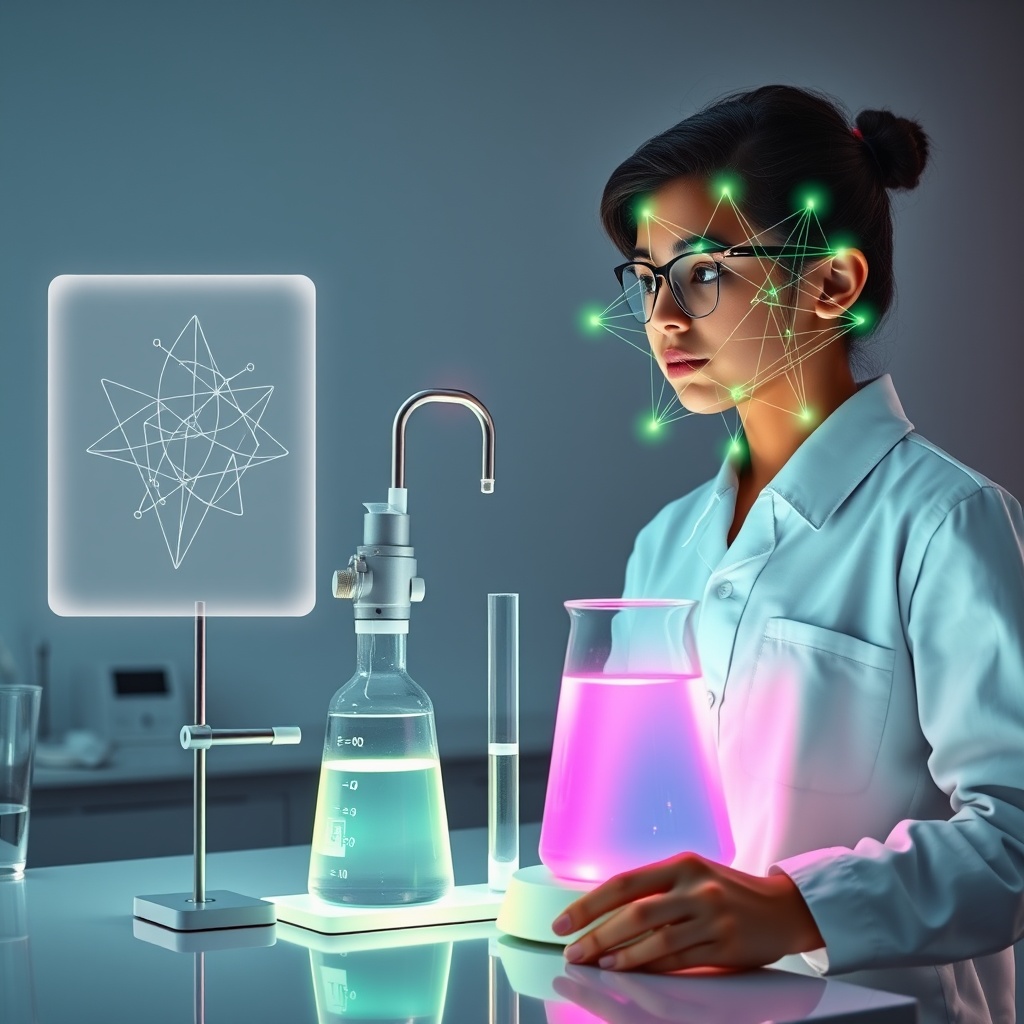
A student performing a titration in a Class 11 Chemistry lab might know the theoretical balanced equation, but a misplaced decimal in the burette reading or an incorrect drop count can lead to significantly skewed results. These seemingly minor errors in the titration experiment are precisely where marks are lost, often due to a lack of immediate feedback during the experiment itself.
Overview
A student performing a titration in a Class 11 Chemistry lab might know the theoretical balanced equation, but a misplaced decimal in the burette reading or an incorrect drop count can lead to significantly skewed results. These seemingly minor errors in the titration experiment are precisely where marks are lost, often due to a lack of immediate feedback during the experiment itself.
Beyond observational errors, many students struggle with the underlying stoichiometry of a reaction or choosing the correct indicator for a given acid-base pair. Understanding the 'why' behind each step, rather than just memorizing 'how,' is crucial for success in the CBSE Class 11 practicals. YoLearn AI offers targeted guidance to bridge these conceptual and procedural gaps, making complex steps clearer.
History & Background
Traditionally, practical chemistry learning involved watching live teacher demonstrations, diligently following lab manuals, and seeking direct help from a teacher during specific lab sessions. Doubts encountered outside these hours, particularly concerning a missed procedural step or a confusing observation, often went unresolved until the next scheduled class or practice session.
The advent of online educational videos and animated simulations offered a visual walkthrough of experiments like a titration, allowing students to replay steps. However, these resources are passive; they demonstrate "how" but cannot actively diagnose a student's specific mistake, like identifying a parallax error in their actual burette reading or correcting their calculation sheet based on their own recorded values. This is where modern AI tutoring tools provide dynamic, interactive assistance.
Benefits
Accurate Results: Developing a meticulous approach during each step minimizes experimental errors, leading to more precise and reliable results. Conceptual Clarity: Understanding the underlying chemical reactions, stoichiometry, and calculations involved in a titration reinforces theoretical knowledge of Chapter 11 Class 11 Notes. Confidence in Practicals: Mastering the practical steps and troubleshooting common issues builds significant confidence, which is vital for performing well under exam conditions. Strong Foundation: A solid grasp of titration techniques is fundamental for advanced quantitative analysis and further chemistry studies.
Instant Error Correction: YoLearn AI's photo doubt solving immediately highlights procedural or calculation mistakes, allowing students to learn from errors as they happen, which is crucial for developing practical skills effectively. Personalized Explanations: The AI mentor can explain complex titration concepts in detail, breaking down the theory found in CBSE Class 11 Notes in an accessible way, even in multiple Indian languages. Practice Reinforcement: Students can generate instant quizzes on titration calculations, indicator properties, or procedural steps, ensuring concepts are fully understood and retained before the actual lab. 24/7 Availability: Get help with practical dilemmas or conceptual clarifications at any hour, removing the common frustration of being stuck outside of lab or class hours.
Applications
Incorrect Endpoint Detection: Students frequently overshoot the endpoint, resulting in a dark pink solution instead of the desired faint, persistent pink in an acid-base titration using phenolphthalein. Calculation Errors: Misinterpreting the stoichiometric ratio from the balanced chemical equation or incorrectly applying dilution formulas often leads to incorrect molarity or normality calculations. Apparatus Handling & Reading: Common mistakes include not properly rinsing the pipette with the solution to be transferred, or recording a burette reading of 24.0 mL as 23.9 mL due to parallax error, impacting final volume.
With YoLearn AI's Photo doubt solving, a student can snap a picture of their titration calculation sheet, and the AI can pinpoint specific mathematical or stoichiometric errors, explaining where the mistake occurred step-by-step. A real-time voice conversation with the AI tutor can help clarify the exact color change to look for at the endpoint or discuss best practices for apparatus handling, like ensuring the pipette tip is clean and dry. For understanding the theoretical basis of acid-base reactions or redox principles, the AI can provide section-wise explanations and summaries directly relevant to Some Basic Concepts Of Chemistry Class 11 Notes.
Future
The future of chemistry practical learning will likely integrate advanced haptic feedback with virtual reality (VR) or augmented reality (AR) overlays within laboratory settings. This would allow students to feel the resistance of a burette tap or experience a simulated exact endpoint, providing a multi-sensory learning experience without consuming actual reagents.
YoLearn AI is constantly building towards a more immersive and diagnostic learning experience, potentially integrating with such future AR/VR tools to provide contextual assistance directly within a simulated or real lab environment. For now, it continues to offer Comprehensive CBSE Class 11 Physics and Chemistry Support for Success across various subjects. Get immediate help with your next titration problem or any Class 11 Chemistry doubt: Android: https://play.google.com/store/apps/details?id=com.yolearn.student&hl=en_IN iOS: https://apps.apple.com/in/app/YoLearn-ai/id6759192307