Read Balance Sheets: Go Beyond Formats with Conceptual Understanding
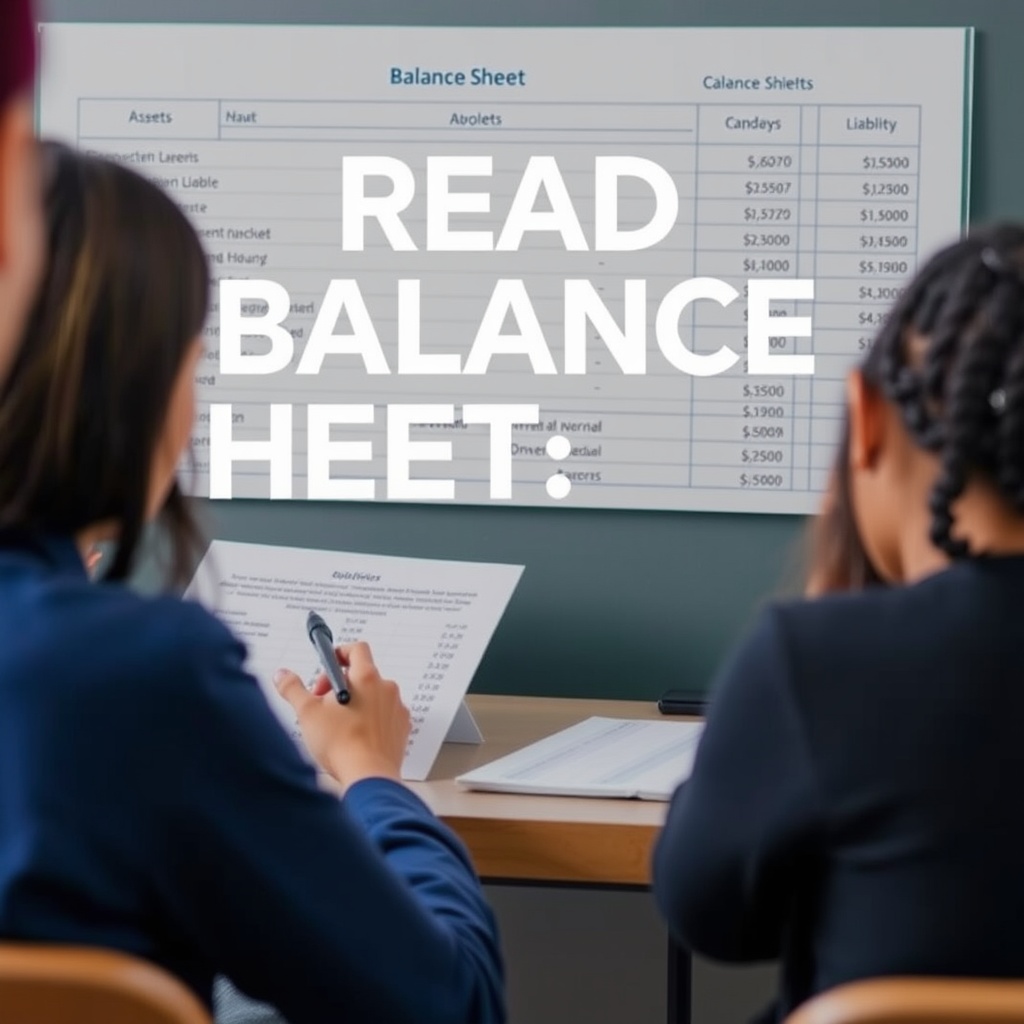
Many students find balance sheets intimidating, often resorting to memorizing the "T-form" or "vertical format" layout in their textbooks. This approach works for specific practice problems but falls apart when encountering real-world company balance sheets like those of Infosys or State Bank of India, which might categorize elements differently. The core challenge in learning how to read balance sheets without memorizing formats is moving past rote recall to grasp the fundamental accounting equation: Assets = Liabilities + Owner's Equity.
Overview
Many students find balance sheets intimidating, often resorting to memorizing the "T-form" or "vertical format" layout in their textbooks. This approach works for specific practice problems but falls apart when encountering real-world company balance sheets like those of Infosys or State Bank of India, which might categorize elements differently. The core challenge in learning how to read balance sheets without memorizing formats is moving past rote recall to grasp the fundamental accounting equation: Assets = Liabilities + Owner's Equity.
This reliance on memorized structures, instead of understanding the nature of Current Assets versus Non-Current Assets, or long-term versus short-term liabilities, leaves students ill-equipped for advanced accounting or financial analysis. The goal isn't just to make the debits and credits balance, but to interpret what those figures actually mean for a business's health. YoLearn AI helps students decode these financial statements by focusing on the underlying principles, ensuring they understand "why" an item appears where it does, not just "where."
History & Background
For decades, learning accounting primarily involved physical ledgers, textbooks with static examples, and classroom chalkboards. Early digital tools mirrored this, providing practice problems that expected students to plug numbers into predefined templates. The emphasis remained on correct placement within a given format, rather than a deeper understanding of economic events. This perpetuated the cycle of memorizing formats for tasks like preparing a balance sheet after a trial balance.
The shift began with interactive software that could generate various financial reports and flag errors. However, these tools often corrected mistakes without explaining the underlying accounting principle. Modern AI tutors, like YoLearn AI, represent a significant leap. They move beyond mere error identification to dynamic, conversational explanations. This allows students to ask "Why is this a liability?" or "What's the difference between share capital and retained earnings?" directly, fostering conceptual mastery.
Benefits
Applications
Future
The future of learning financial statements will increasingly involve interactive simulations that allow students to manipulate business transactions and immediately visualize their impact on the balance sheet, income statement, and cash flow statement. This dynamic approach will replace static exercises, helping students understand the interrelationships between these core financial documents.
YoLearn AI is already moving towards this interactive, scenario-based learning for accountancy students, particularly for those preparing for Class 11 and 12 exams. Imagine not just understanding the rectifying entries for errors but seeing how those changes flow directly through to the balance sheet. This will make topics like Trial Balance And Rectification Of Errors Class 11 Notes far more intuitive. If you're ready to master balance sheets conceptually, download YoLearn AI today: https://play.google.com/store/apps/details?id=com.yolearn.student&hl=en_IN