Why Some Doubts Need a Whiteboard, Not Just Text
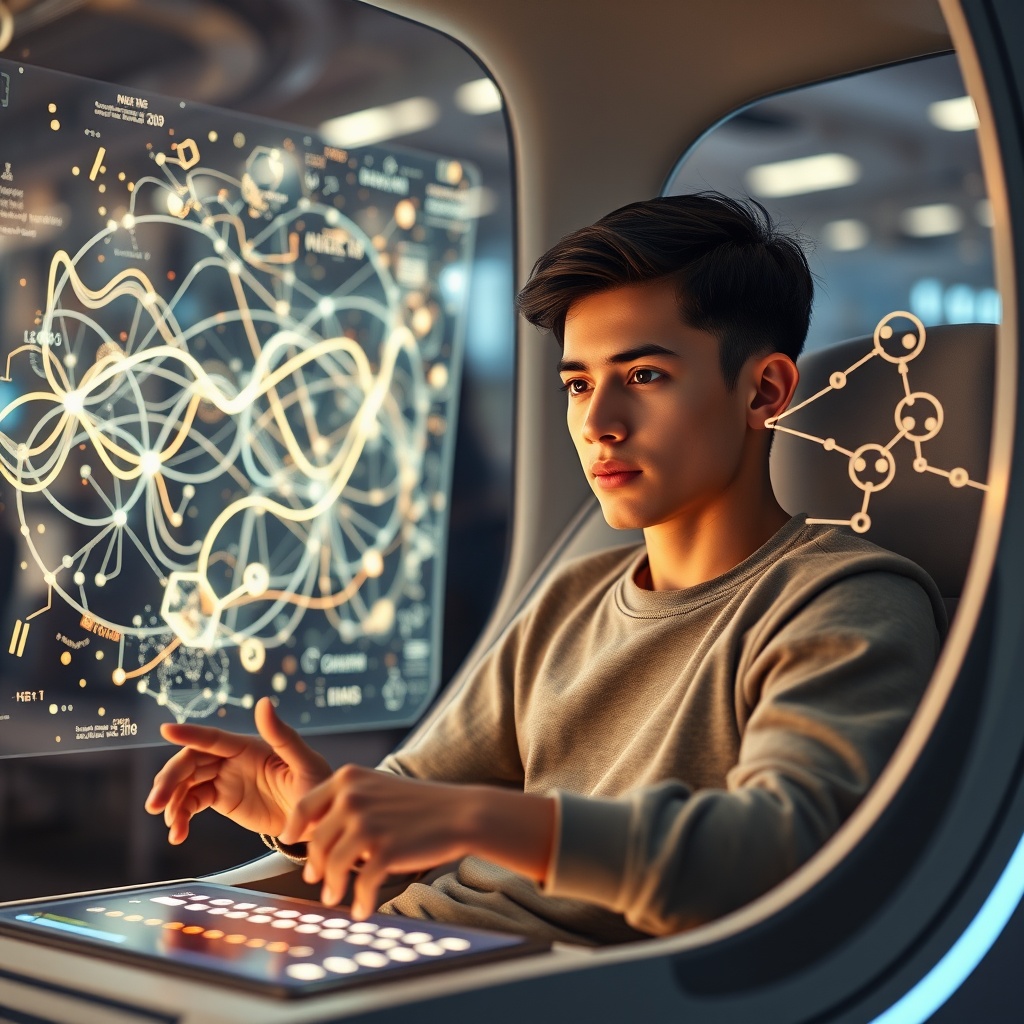
Imagine trying to understand the process of meiosis or the intricate steps of an organic reaction mechanism like SN1 from a wall of text alone. While definitions and facts are important, certain academic doubts, particularly in STEM subjects, demand a visual breakdown. A text-only explanation often falls short when a student needs to see the spatial arrangement of atoms or the dynamic flow of an electrical current. This is precisely where a good whiteboard explanation for doubts becomes indispensable.
Overview
Imagine trying to understand the process of meiosis or the intricate steps of an organic reaction mechanism like SN1 from a wall of text alone. While definitions and facts are important, certain academic doubts, particularly in STEM subjects, demand a visual breakdown. A text-only explanation often falls short when a student needs to see the spatial arrangement of atoms or the dynamic flow of an electrical current. This is precisely where a good whiteboard explanation for doubts becomes indispensable.
For generations, educators have relied on whiteboards or blackboards to demystify complex topics—drawing diagrams, annotating equations, or illustrating multi-stage problems. This human approach to visual teaching is now being replicated and enhanced by AI tutors. YoLearn AI was developed to bridge this gap, ensuring that students get not just an answer, but a dynamically explained, step-by-step visual journey through their toughest questions, going beyond mere textual replies.
History & Background
Early digital doubt-solving platforms were essentially glorified search engines or static Q&A forums. Students would input their question and receive a pre-existing textual answer or a link to a solved example. This approach worked for straightforward factual queries but largely failed for problems requiring iterative steps, spatial reasoning, or understanding cause-and-effect sequences, where the student needed to follow a visual progression.
The landscape evolved from static text to interactive text, where AI could provide adaptive responses. However, a significant leap occurred when AI began generating dynamic, step-by-step visual solutions, mimicking a teacher's drawing on a board. This marked the shift from "what is the answer?" to "how do I get the answer, and why?". This capability is crucial, especially for challenges like Conquer JEE Doubts with YoLearn.ai AI Solver, which often involve complex diagrams.
Benefits
Applications
Future
The evolution of AI tutoring will lean heavily into multimodal interaction, enabling students not just to view solutions, but to manipulate variables within a problem, draw their own intermediate steps, and receive real-time feedback on their visual inputs. Imagine a dynamic 3D simulation for a Chemistry reaction or an interactive graph for Calculus concepts.
YoLearn AI is constantly refining its visual explanation capabilities, aiming for increasingly interactive and personalized "whiteboard" experiences. Soon, the AI will not only show you the solution path but allow you to explore alternative approaches with visual guidance, adapting to your specific learning rhythm. For a smarter way to tackle your doubts, especially those needing a visual touch, download YoLearn AI today: https://play.google.com/store/apps/details?id=com.yolearn.student&hl=en_IN